
Full Wrap vs Partial Wrap for Commercial Vehicles
Choose coverage by the job the graphics need to do. A full wrap offers broad control over a vehicle's appearance; a partial wrap makes suitable existing paint part of the design. Both approaches need a readable message, sound surfaces and a plan for future additions. This comparison helps commercial buyers prepare that decision before requesting a quote.
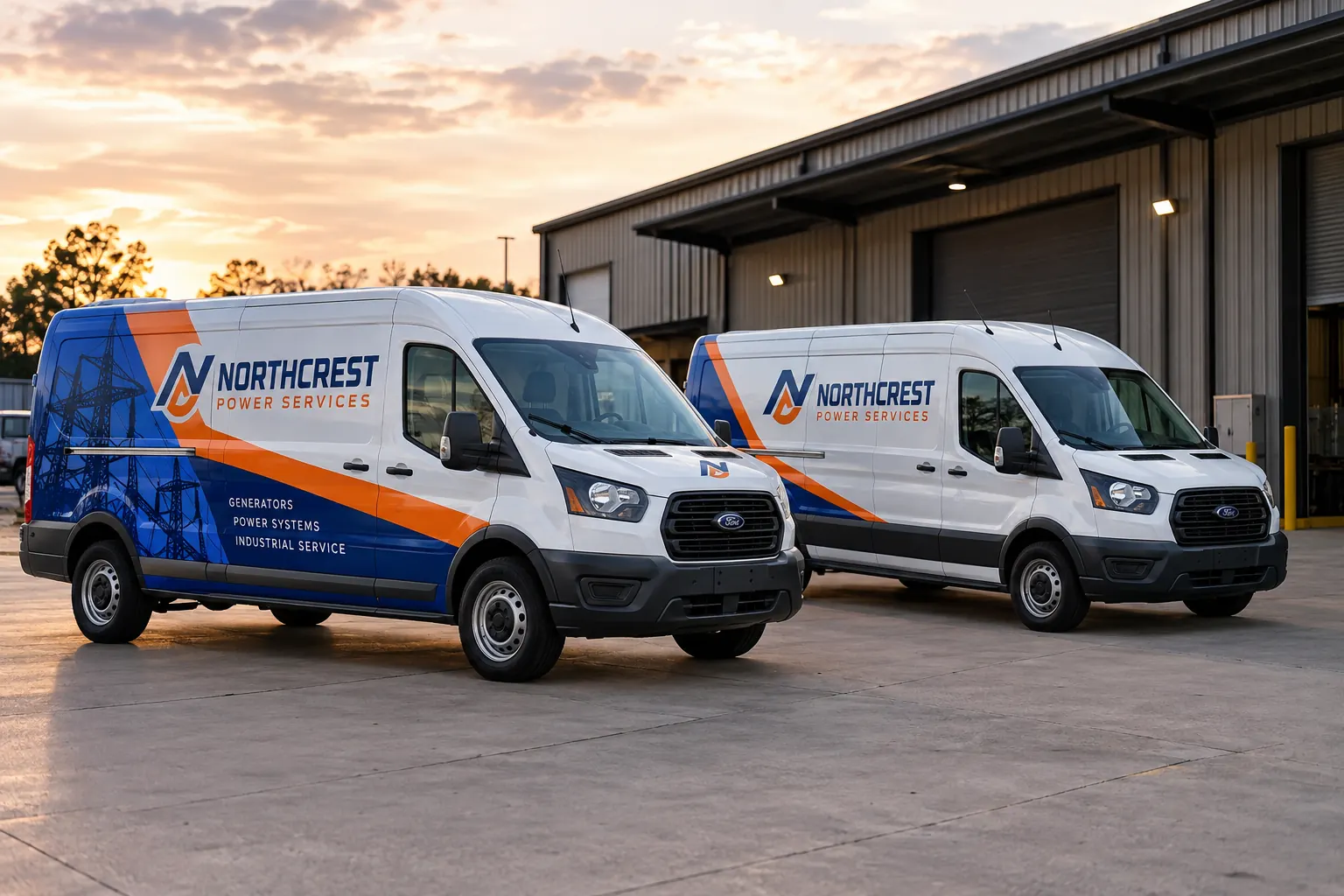
Fictional commercial wrap design concept; not a completed customer installation.
Start with the appearance change you actually need
A full-wrap proposal and a partial-wrap proposal may solve different problems. If the goal is to replace the appearance of mixed original paint colors, more coverage may support that goal. If the vehicles already have suitable matching paint, selected panels and lettering may provide a coherent identity without changing every visible surface.
Write down the reason for the project before choosing the category. A rebrand, a new service vehicle, a temporary campaign and a growing mixed fleet do not necessarily need the same treatment. Ask the design to demonstrate how the proposed coverage communicates the business, rather than comparing vinyl area in isolation.
Define full and partial coverage in the proposal
Coverage labels are not a substitute for a panel-by-panel scope. Confirm whether the roof, bumpers, cab, rear doors, recesses and other areas are included or excluded. On a box truck, the cargo body and cab are separate design and production questions. On a van, windows and complex accessories may need separate treatment.
A useful proof shows the boundaries of the work on each surface. Ask where the existing paint remains visible and whether that arrangement changes between vehicle versions. Two proposals using the same word can include different areas, so compare the drawings and written scope before drawing a price conclusion.
Make the existing paint part of the partial-wrap decision
A partial layout relies on the original finish as part of the final composition. Review its color, condition and consistency across the fleet. A white van and a dark-colored replacement van may require different coverage even when they use the same logo. Decide whether those differences are acceptable in the fleet standard.
Inspect scratches, fading, previous repairs, corrosion and peeling clear coat before approving either option. A larger amount of film does not correct an unstable substrate. Disclose the condition and let the preparation review establish whether repair, a revised boundary or another approach is needed before installation.
Judge readability before decorative detail
People should recognize the company and the main service without having to study the vehicle. A full wrap can still be difficult to read if every panel contains busy imagery. A partial wrap can be strong when the name, contrast and service message have clear priorities. Review the design at a reduced viewing size as well as close up.
Consider the side and rear separately. A large truck side has more room for identity, while rear doors bring hinges, handles and different viewing conditions. Keep the primary contact route deliberate. More coverage and more information are separate decisions, and neither automatically produces a clearer commercial message.
Compare the whole project scope, including removal
Price is influenced by more than square footage. The vehicle shape, body condition, old graphics, artwork needs, material system and installation arrangement all belong in the comparison. A partial design with complicated boundaries may involve different work from a simple large-panel treatment, so avoid assuming a fixed percentage saving based only on the coverage name.
Ask each proposal to state what is included, what requires inspection and how a scope change will be handled. Identify removal and preparation responsibilities before scheduling. If timing matters, confirm the actual sequence after the design and vehicle review rather than treating less coverage as a guaranteed installation duration.
Plan additions, repairs and vehicle turnover
A fleet standard should explain how each coverage option adapts to later vehicles. Keep logo placement priorities, color references, approved wording and the boundaries of the wrap with the artwork record. New body versions may need adaptation even when the original design is retained.
Think about the intended ownership period and any lease restrictions. Ask the equipment owner to approve the planned work when required. Keep care and removal expectations tied to the actual material and vehicle condition. A later damaged panel or replacement vehicle should be reviewed against the documented standard instead of guessed from a distant photograph.
Prepare a comparison brief instead of guessing the answer
Send photographs, body details, paint colors, vehicle count, existing graphic condition and the main business goal. State which areas you want covered and which can remain as original paint. Ask to compare alternatives against the same fleet and communication requirements so the difference is clear.
Use the commercial wrap cost guide to organize pricing questions, and the materials guide to review the proposed film system. For vehicle-specific constraints, see van wraps or box truck wraps. Pelican Wraps can review the actual equipment and help define a coverage scope from Harvey before production is approved.
Frequently Asked Questions
Turn Your Vehicle Details Into a Clear Project Brief
Send current photographs, vehicle quantities, logo files, coverage preferences and timing. Identify old graphics and paint concerns so the project review can address the actual equipment.
Explore planning resources or request your commercial wrap quote.
