
Box Truck Wraps Built Around Your Fleet
Your box truck has a large advertising surface. The right graphics give that space a clear job: identify your business, explain what you do, and make the next step easy to remember.
Pelican Wraps handles design, printing, and installation in-house. We plan box-truck graphics around your actual body dimensions, doors, hardware, paint condition, and operating schedule. Start with one truck or define a repeatable system for a growing fleet.
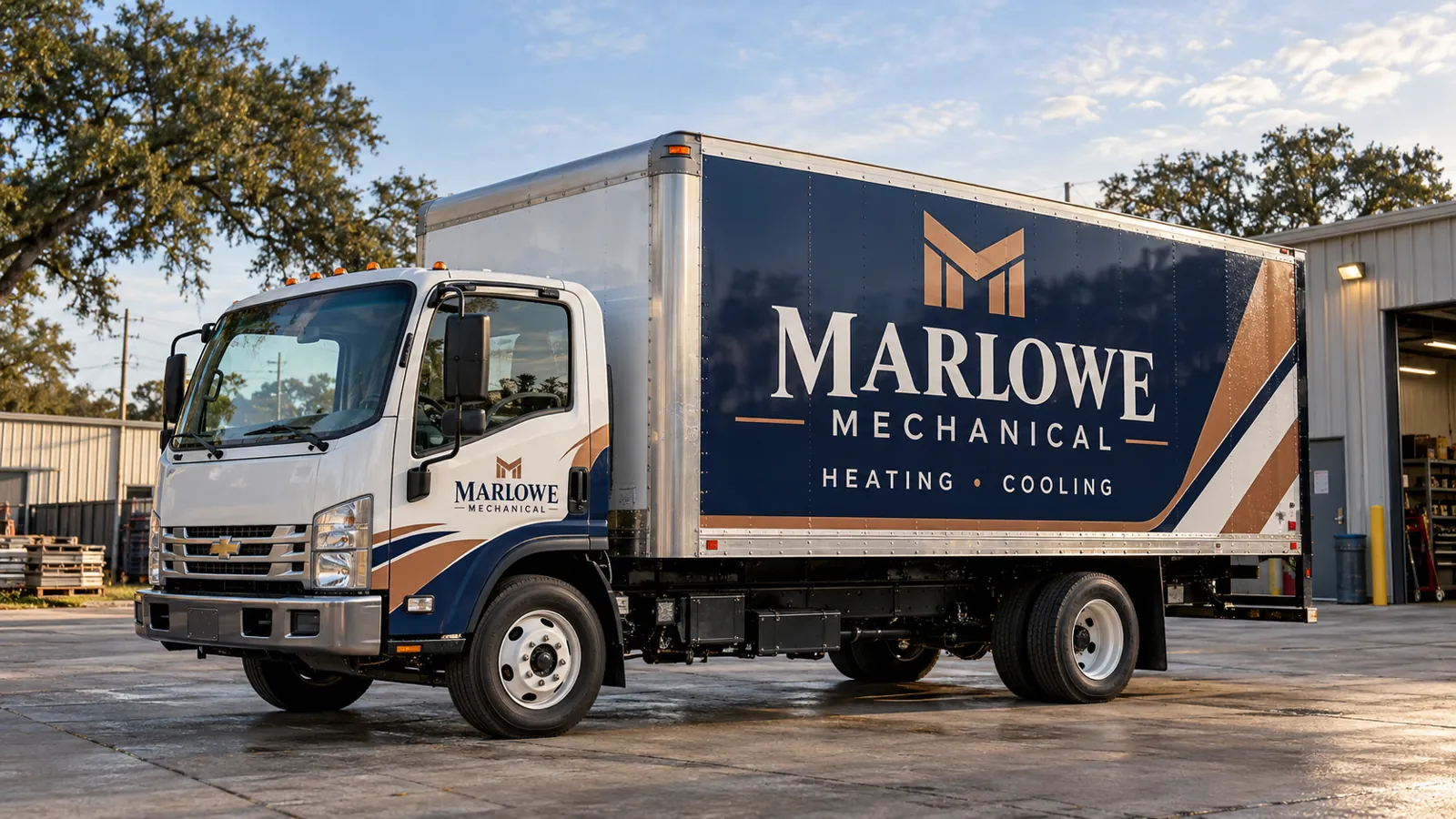
Illustrative commercial wrap design concept.
From a Weathered Box Truck to a Clear Business Identity
Move the slider to compare the same box truck with an illustrative new wrap design.
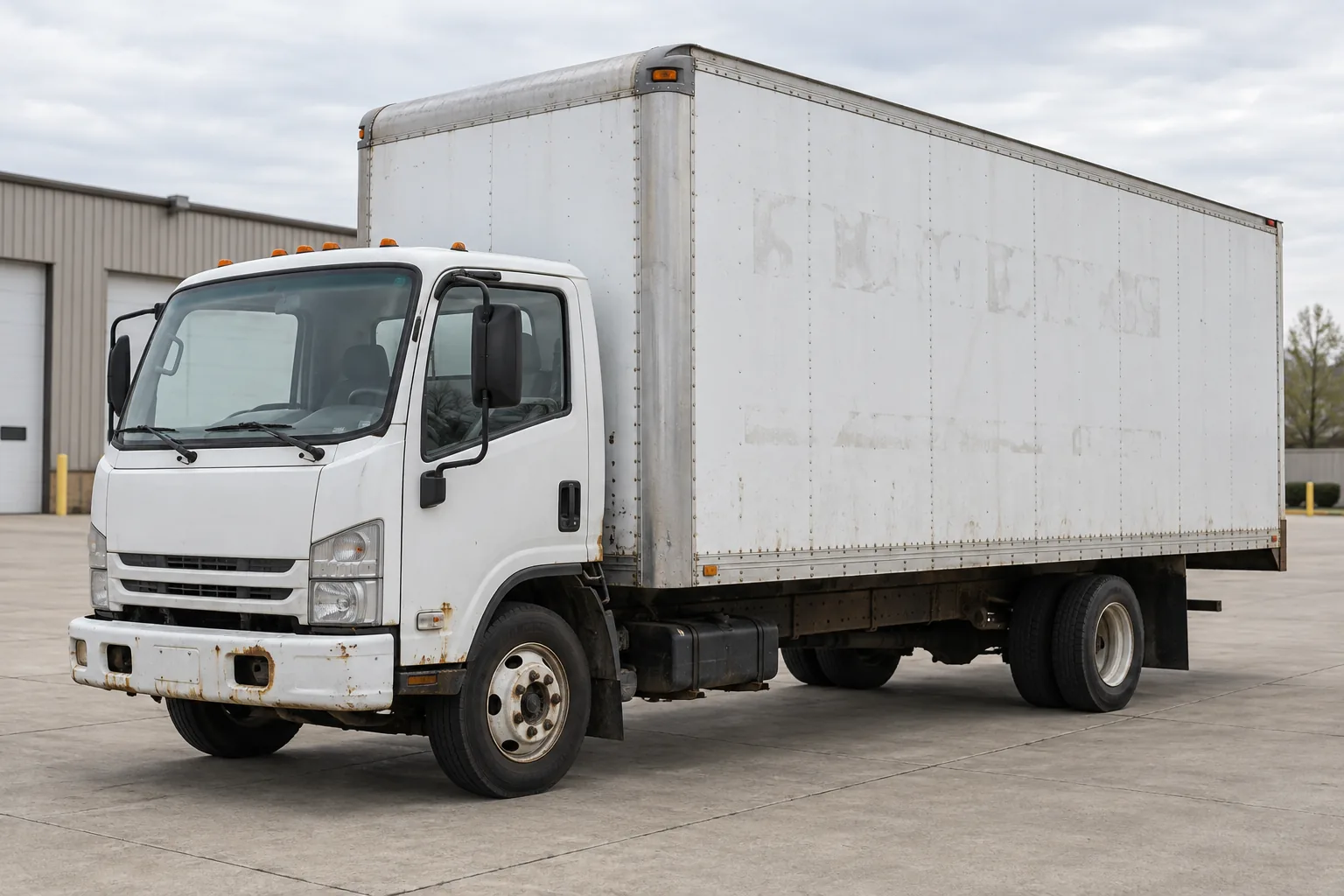
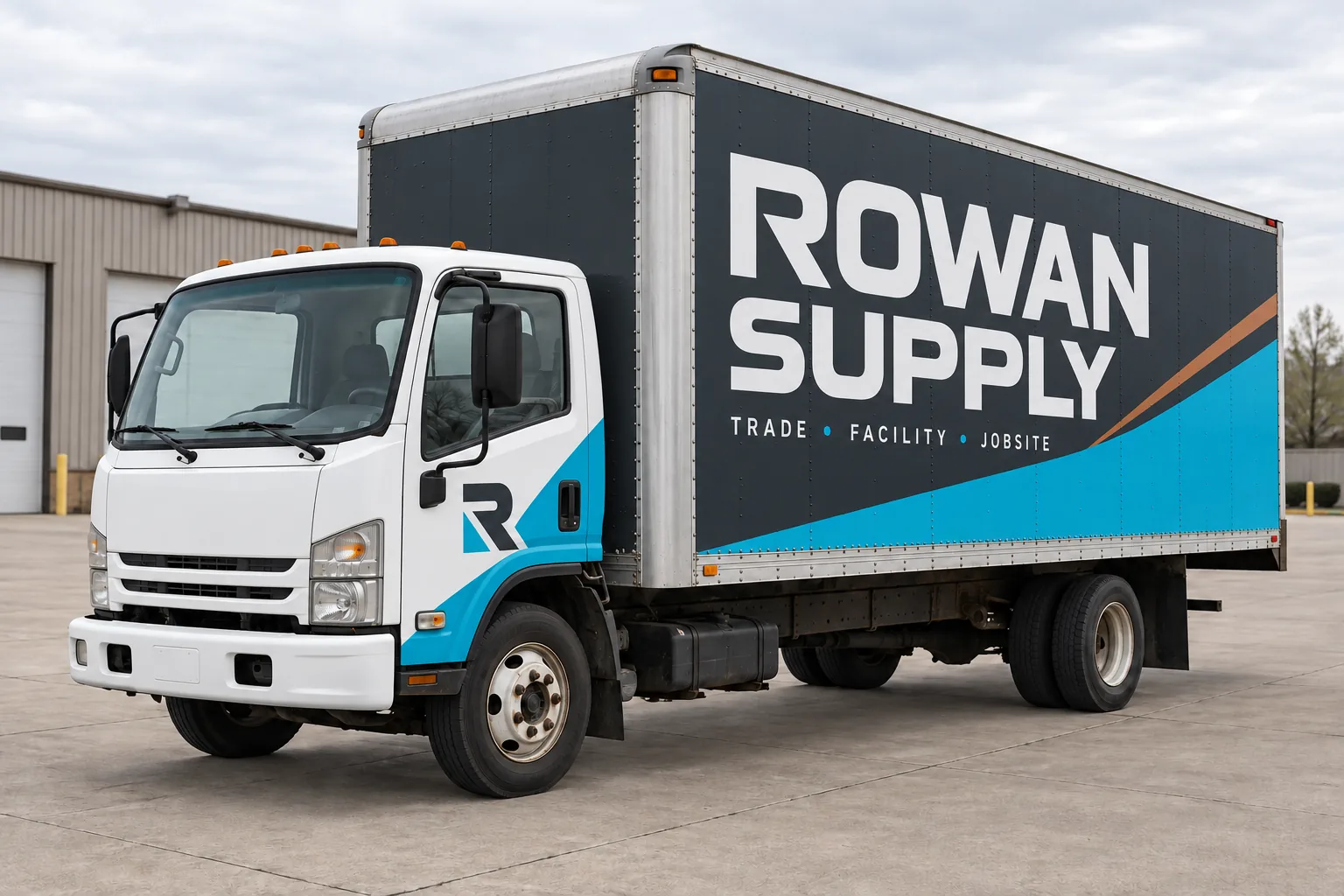
Illustrative rebrand concept with a fictional business; not a customer installation. The after-view assumes a sound, properly prepared surface. Rust, failed paint and damaged panels need assessment and appropriate repair before graphics.
What Makes a Box Truck Wrap Work?
A successful commercial layout starts with a readable message, then adapts that message to the vehicle. It should not be a business card enlarged until every available inch is filled. Someone seeing your truck in traffic may only have time to recognize the company name, one useful service message, and a simple contact route.
We separate the roles of the side panels, rear doors, and cab. The broad sides can introduce the brand and its main offer. The rear can carry a focused message for people stopped behind the truck. Cab graphics can connect the driver area to the box without forcing the same composition onto differently shaped surfaces.
For a fleet, consistency matters alongside individual layout quality. Two trucks with different bodies can share the same brand hierarchy without using identical artwork dimensions. A repeatable design system gives you a practical starting point for the next purchase, replacement panel, or vehicle added to the fleet.
Start with the vehicle and the audience
Tell us whether the truck makes deliveries, travels between job sites, serves customers at their homes, or regularly parks in a visible location. Share the services you want to promote and the way customers should contact you. These details help determine which message deserves the most space and which information can stay on your website.
Explore fleet wraps and coordinated branding if the job includes several trucks, vans, or trailers. For mixed assets, our commercial vehicle hub helps organize the different vehicle types within one program.
Full Wrap, Partial Wrap, or Lettering?
The largest coverage option is not automatically the best option for every truck. Compare the design objective, available paint color, expected time in service, and budget before deciding how much printed film is needed.
- Full coverage: useful when you want a broad visual change across the intended wrap surfaces or a strong, continuous brand composition. Confirm the exact areas included; cab, roof, bumpers, and unusual body components are separate scope decisions.
- Partial coverage: uses the truck’s existing finish as part of the design. It can give the business a strong identity while reserving printed coverage for the areas that carry the most useful message.
- Lettering and logo graphics: can suit straightforward identification, unit information, or a clean design that does not need a full printed background.
- A combined system: may use printed panels for branding and separate lettering for information that changes more often. That distinction can make future updates easier to plan.
Compare options in our wrap coverage planning guide. The final recommendation needs a vehicle review and a written scope. Coverage names alone do not tell you which surfaces, removal work, artwork revisions, or installation steps a quote includes.
Measure the Body, Not Just the Truck Model
The chassis make and model do not fully describe a box truck. Body manufacturers, dimensions, door configurations, repairs, and accessories can differ. A design approved for one truck should not be sent directly to print for another truck without checking those details.
Rivets, seams, and panel transitions
Rivets and seams can interrupt a fine line, small type, or a photograph. They also influence the installation approach and film selection. Plan important lettering where it remains readable, and review transitions between the body panels before approving the artwork.
Rear doors and loading equipment
A roll-up door divides a graphic into moving sections. Hinged doors introduce different breaks, handles, and hinges. Liftgates, dock bumpers, latches, and rails can cover parts of a design or reduce the usable surface. A rear-door layout should be checked with the actual hardware visible, rather than approved from a perfectly flat rectangle.
Required information and access
Identify reflectors, lights, safety labels, unit numbers, and any markings that must remain readable or unobstructed. We can plan the graphics around the information you supply. Confirm regulatory requirements with the responsible fleet or compliance contact; a wrap design is not a substitute for that review.
Use our body details guide and box-truck fleet branding standards to organize the questions before the design stage.
Surface Condition and Material Selection
Graphics depend on the surface underneath them. Send close photographs of damaged paint, corrosion, dents, repaired areas, existing graphics, and adhesive residue. A review may identify preparation or repairs that need to happen before the truck is ready for installation. Printed vinyl should not be presented as a repair for failing paint or rust.
Film and laminate selection should suit the surfaces, intended service period, exposure, and cleaning routine. Manufacturer guidance is specific to the material system. For example, 3M’s fleet graphics guidance identifies surface type, intended use, and time in service as material-selection factors. That is guidance for planning, not a claim that every Pelican Wraps quote uses a particular manufacturer or carries the same warranty.
Ask which film and laminate are included, which surfaces are approved for that system, and what care and warranty documents apply to your project. Any warranty description should match the actual products and written terms supplied with the job.
From Quote Request to Installation
- Define the job. Send your vehicle list, photographs, brand files, coverage priorities, and timing constraints. Identify who can approve the artwork and scope.
- Review surfaces and measurements. Confirm the specific box bodies, door layouts, accessories, existing graphics, and preparation requirements.
- Approve the design. Review vehicle-specific proofs for logo placement, text, contact details, panel transitions, and required markings. Resolve changes before production.
- Print and prepare the graphics. Produce the approved material system and organize the pieces by vehicle or unit so the correct graphics reach the correct truck.
- Schedule installation and handover. Coordinate vehicle availability, complete the installation scope, review the finished graphics, and retain the project records for future additions or repairs.
For multiple vehicles, decide how much downtime your operation can absorb at once. A staged rollout may fit the fleet better than bringing every truck in together. Discuss vehicle availability and approval deadlines early; do not rely on a universal turnaround promise before the scope and surfaces have been reviewed.
Our fleet installation scheduling guide helps organize the rollout. For a purchase process involving several decision-makers, the fleet graphics RFP guide can help you compare scopes consistently.
What Affects a Box Truck Wrap Quote?
Pricing depends on the actual scope. Truck length is only one part of it. Coverage area, surface details, existing graphic removal, preparation, design work, material system, and installation access all affect the work involved. Two trucks of similar size can need different production and installation plans.
For a fleet quote, identify the number of matching bodies and the number of exceptions. Repeating an approved design across matching trucks is different from developing a unique layout for each body style. Specify whether the quote includes new design, adaptation of supplied artwork, future unit additions, or replacement panels.
Compare proposals by their included work. Ask about exclusions, proof approvals, surface readiness, scheduling, care information, and warranty terms. A lower headline price does not explain those differences. Read the box-truck wrap cost guide, then request a project-specific quote rather than treating an online estimate as a fixed offer.
What to send with your request
- Truck quantity, year, chassis model, body dimensions, and unit identifiers.
- Clear photographs of both sides, rear doors, cab, hardware, and surface defects.
- The best available logo files, brand colors, required wording, and contact details.
- Your preferred coverage and the parts that must stay unwrapped.
- Existing graphic details, desired timing, and the person responsible for approval.
If some details are unavailable, say so. An initial conversation can identify the measurements or photographs still needed. Sharing uncertainty is more useful than approving artwork against guessed dimensions.
