
Fleet Wraps That Keep Every Vehicle Working for Your Brand
Your vehicles should look like one company, even when the fleet includes different models, drivers and routes. Pelican Wraps plans commercial fleet graphics around the vehicles you actually operate, the message customers need to recognize, and the time your business can release each unit for installation. Start with a clear vehicle list and a practical goal: better identification, a new brand launch, consistent additions, or a phased replacement program. Design, print production and installation belong in the same conversation so the approved artwork can become a repeatable working system.
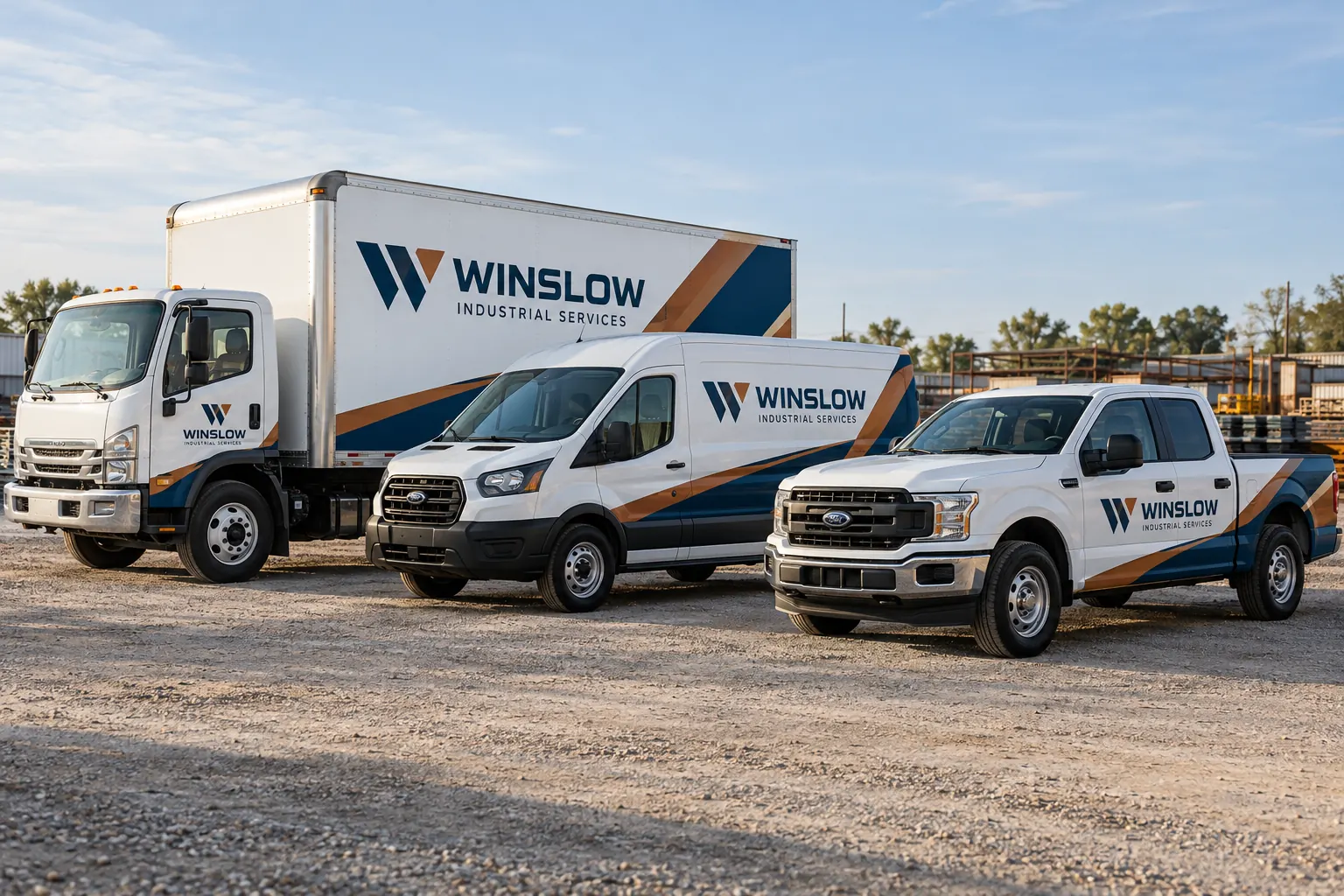
Illustrative commercial wrap design concept.
Build a recognizable system, not a collection of one-off designs
A mixed fleet does not need identical rectangles of artwork. It needs a consistent visual hierarchy. Decide which parts of the brand remain fixed: the company name, recognizable colors, service message, contact route and placement priorities. Then adapt that hierarchy to the usable surfaces on each van, pickup, box truck, trailer or specialty unit. A sliding van door, a box-truck roll-up door and a trailer side ask different questions, even when they carry the same identity.
Use the broadest visible panel to establish the company and main service. Reserve supporting details for places where someone has time to read them. A passing driver should not have to sort through a complete service menu before understanding the business. On the rear, plan for people waiting in traffic: a readable name, a useful offer and one memorable next step usually deserve more attention than decorative detail.
Model-specific proofs matter. Roof racks, ladders, handles, vents, lights, wheel arches and door breaks can interrupt important lettering. Artwork that looks balanced on a flat presentation may lose information when fitted to a working vehicle. Review each body style before approving production and identify which units need exceptions. This is especially important when your fleet has grown through several different vehicle purchases.
Choose coverage for the job your fleet needs to do
Full wraps, partial wraps and lettering can all support commercial identification. Compare them against the vehicle finish, budget, time remaining in service and the message you want customers to remember. A clean white van with disciplined logo and service placement may not need the same coverage as a box truck launching a new regional brand. The right choice is the one that solves the communication problem within the agreed scope.
Partial coverage can use the original paint color as a deliberate part of the design. Printed side panels may carry the brand while separate lettering handles unit numbers or information that changes. Full coverage can create a stronger visual change, but it also introduces more material, surface and installation decisions. Ask exactly which surfaces are included; a coverage label does not automatically include roofs, bumpers, door jambs or accessories.
Compare proposals by what they include. Identify graphic removal, preparation, new design, artwork adaptation, proofs, print materials, laminate, installation and handover information. Fleet quantities can change the production plan, but matching artwork does not erase differences in vehicle condition or body shape. A useful quote explains the work and exclusions rather than leaving the customer to compare headline prices alone.
Collect the fleet information once
Create one inventory that your operations, purchasing and design teams can all use. Record the unit identifier, year, make, model, body manufacturer where relevant, vehicle location, condition and intended coverage. Add clear photographs of both sides and the rear, plus close views of doors, equipment and damaged surfaces. For box bodies and trailers, supply actual body dimensions rather than relying on the chassis model.
Mark existing graphics, adhesive residue, paint repairs, corrosion and failing finishes. These details can affect preparation and scheduling. A wrap should not be presented as a repair for structural damage or unstable paint. If you are unsure about a surface, say so and arrange a review before committing to a production date. Undisclosed preparation work creates avoidable uncertainty for everyone involved.
Send the best available brand files with the inventory. Vector logos, approved colors, required wording and a clearly identified contact route help establish the master design. Name the person who can approve artwork and the person who controls vehicle availability. If those are different people, agree on the approval process early. A fleet program becomes easier to manage when responsibilities are explicit.
Use the vehicle inventory guide · Compare box truck wraps · Explore service van wraps
Plan the rollout around vehicle availability
The installation plan should protect the work your fleet is already doing. Discuss how many vehicles can be released at once, which units must remain available, and whether the rollout needs phases. A delivery operator may organize the job around route coverage; a service contractor may prioritize spare vans or quieter work periods. Those operational constraints belong in the quote conversation.
Build milestones around confirmed information: vehicle review, design approval, surface readiness, production and installation appointments. Do not schedule from an assumed universal turnaround time. Mixed fleets, removal work, repairs, approval changes and access restrictions can alter the work. Ask which dependencies must be resolved before a date becomes firm.
For vehicles outside the Harvey area, discuss installation location and access before promising a rollout arrangement. A multi-market program needs consistent files and documented scope, but the available installation plan still has to be confirmed for the specific project. Keep the vehicle inventory current so each unit receives the correct revision and returns to service with the intended identity.
Approve the details customers will actually see
Review spelling, phone numbers or website details, service wording and logo placement before artwork goes to print. Check the proof at more than one scale. The vehicle should make sense as a whole, and the important lettering should remain readable when viewed at the distance relevant to its use. Do not rely only on a close-up view of attractive graphics.
Inspect both sides and the rear separately. Equipment, asymmetrical doors and fuel locations can mean the two sides need different arrangements. Confirm that required markings, reflectors, lights and safety information remain visible and usable. Have the responsible fleet or compliance contact verify required information; graphic design approval is not a substitute for that review.
Keep written approval linked to a specific vehicle version. If you change the contact route or brand language midway through the rollout, identify which units use the new revision and what happens to graphics already produced. Version control is a practical commercial benefit: it helps prevent outdated information from appearing on the next vehicle added to the fleet.
Keep the program useful after the first installation
Treat the approved artwork and vehicle records as fleet assets. Retain the version used for each model, the material information supplied with the job and the decisions behind coverage or placement. When a new unit arrives, that record provides a starting point. The new vehicle still needs a measurement and surface review, but the brand hierarchy does not have to be reinvented.
Replacement graphics need their own assessment. Sun exposure, cleaning and age can change the appearance of existing panels, so a new panel may not be an invisible match. Send photographs of the affected area and surrounding graphics before choosing a repair scope. Sometimes replacing a larger related section is the better visual decision; the answer depends on the condition and design.
Follow the care guidance for the installed film and laminate system. Report edge lifting, impact damage or cleaning concerns promptly instead of treating every problem as normal wear. Ask for the applicable written product and workmanship terms rather than assuming that all materials carry the same coverage. The fleet's washing and storage routine belongs in the material-selection discussion.
Start with a clear fleet-wrap brief
Tell Pelican Wraps what success looks like for your operation: a recognizable service fleet, a new delivery brand, a consistent contractor identity or a planned rebrand. Include the number of vehicles, body types, service area, preferred coverage and timing constraints. If the artwork is still being developed, identify that as part of the scope.
Our shop location is 1201 MacArthur Avenue, Suite B, Harvey, Louisiana 70058. Discuss vehicle access and an appointment before bringing a large truck or several units to the shop. Customers traveling from Gretna, Marrero, Belle Chasse, New Orleans or another market should confirm the drop-off plan for their specific vehicles. A service-area page describes coverage, not an additional branch office.
Use the quote form to begin the discussion. It is fine to submit an initial brief before every measurement is available, provided the missing information is identified. We can then define what must be reviewed before artwork, production and scheduling can be confirmed. The goal is a useful, comparable scope—not a promise based on guessed vehicle details.
Fleet Wrap Questions
Ready to Plan Your Fleet?
Tell us what you operate, what your customers need to recognize and when the vehicles are available. Start with one unit or a coordinated commercial fleet.
