
Commercial Fleet Graphics by Industry
The right vehicle message depends on the work you want customers to recognize. A contractor, delivery operator, public agency and charter business use different equipment and answer different buying questions. Choose your industry below, then connect that operating situation to the relevant vehicle or graphics service. Pelican Wraps builds commercial inquiries around the actual fleet, approved business wording and a clear next step.
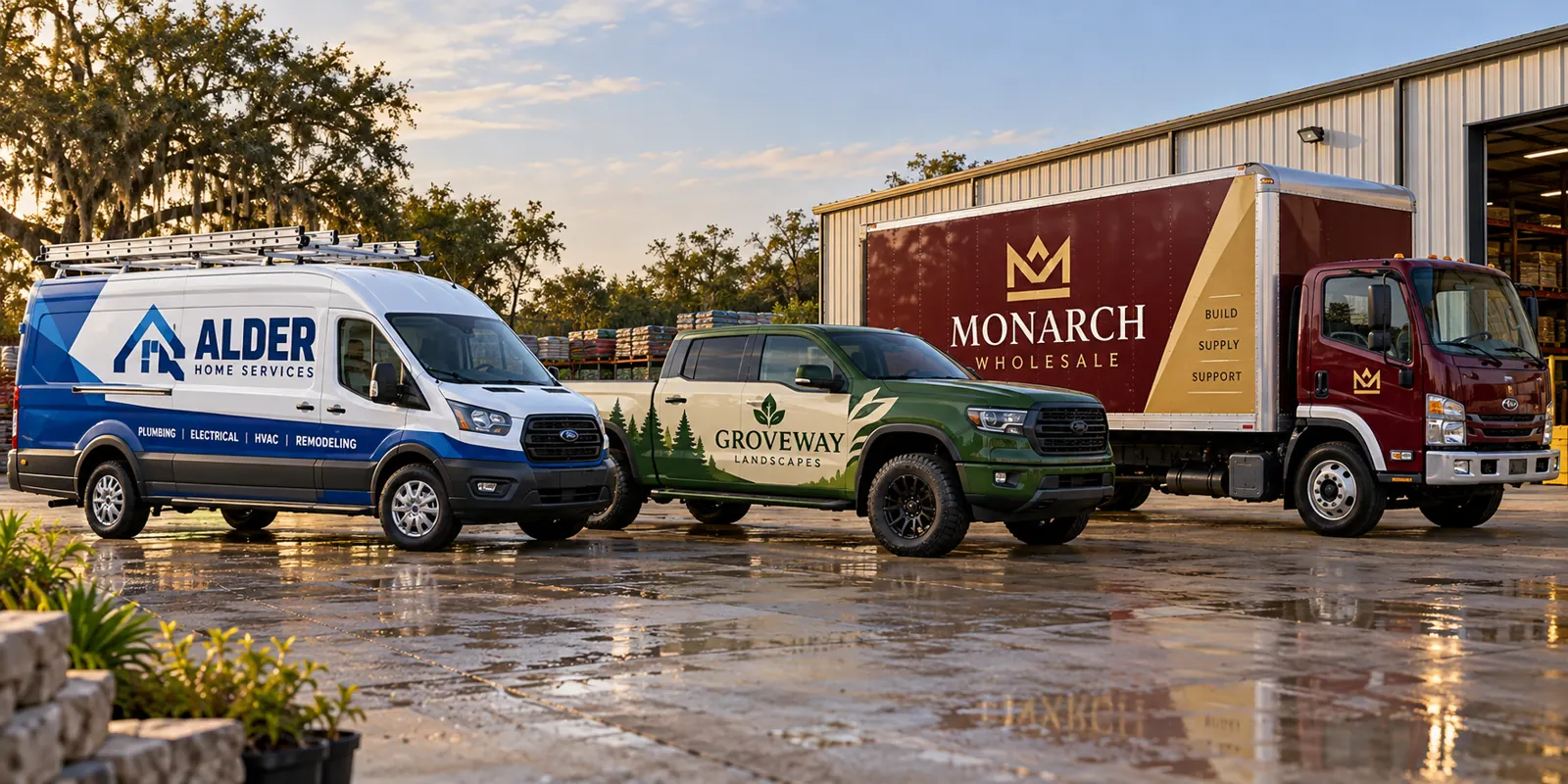
Fictional commercial wrap design concept; not a completed customer installation.
Start with the work customers should remember
A business name may not explain the service on its own. Decide whether the vehicle needs a clear trade description, a product category or an institutional identity alongside the name. Choose wording that accurately describes the work rather than adding an unverified claim about response time, licensing, emergency availability or service coverage.
Think about the action a viewer should take. A homeowner seeing a van, a procurement manager encountering a delivery truck and a passenger approaching a shuttle have different information needs. Set that priority before choosing graphics coverage. The industry route helps explain the operating situation; the vehicle route checks how the message fits the actual equipment.
Home services and contractors need readable trade identity
For HVAC, plumbing and electrical fleets, the company name and trade should be recognizable without reading a long service menu. Vans, pickups and box trucks may need different layouts while sharing one brand system. Roofers, remodelers, painters and other contractors also need to account for racks, toolboxes and trailers that interrupt otherwise useful panels.
Review the vehicle as it is used, including door-open and parked conditions. Keep contact information approved and easy to find. A photo-realistic design concept can help discuss direction, but it does not establish a finished customer project or prove a claimed business result. Browse the trade-specific links below for the next set of practical questions.
Delivery and distribution fleets need repeatable assignments
Logistics and delivery graphics may span cab doors, box bodies, trailers and rear-door views. Identify which company identity, service line and contact route belong to each unit. Vehicles working across different operating groups should not receive branch-specific details by assumption. Connect the final proof to the fleet register before production.
For food and beverage operations, distinguish distribution equipment from a food truck where customers approach the service window. The physical surfaces and viewing conditions differ. Refrigeration units, liftgates, latches and vents need to be part of the scope. The industry message should lead into the relevant truck, trailer or food-truck service rather than replace that equipment review.
Field crews and equipment operators need working access
Landscaping, construction, rental and utility fleets carry equipment that can cover graphics or change the way the vehicle is viewed. A pickup and enclosed trailer can look coordinated while preserving each body’s usable surfaces. The landscaping fleet guide addresses a trade where trucks, trailers and changing equipment are often considered together.
List handles, tie-down points, safety information and areas that need frequent access. Do not place decorative graphics over identification or operating information without the responsible party’s review. Provide photographs of the current equipment rather than a showroom image. A sound layout supports the work the crew does and the information customers need to recognize.
Institutional fleets need approved language and responsibilities
Municipal, education, healthcare and public-safety projects may involve several approvers and more formal purchasing requirements. Ask the organization to provide its approved identity, vehicle assignments and any applicable marking specification. Decorative wrap design should not be treated as authority to invent regulatory or safety requirements. Those requirements need the appropriate responsible review.
Keep procurement, brand approval and operational release responsibilities distinct. A visually approved proof does not, by itself, authorize purchasing or confirm vehicle availability. If a solicitation or purchasing process applies, identify it early. Do not infer qualifications, contracts, manufacturer status or buying-program eligibility from a general service page; request the current documentation relevant to the actual inquiry.
Give a mixed business fleet one coherent system
The same company may operate service vans, sales vehicles, delivery trucks and specialty equipment. Choose the fixed identity elements, then decide what changes by role. A dispatch phone number, recruiting message or product line should have an approved assignment rule. Otherwise a mixed fleet can become a collection of unrelated advertisements even when every vehicle carries the same logo.
Use fleet solutions when the need extends beyond one vehicle. Rebrands, recurring additions and replacement panels benefit from a current unit register and controlled artwork revisions. Keep the message relevant to the industry while checking every body for fit. Industry consistency is a process of approvals as well as a visual design choice.
Choose the industry route and prepare the actual equipment
Use the directory below to find the closest operating situation. If your business spans several categories, explain that in the inquiry instead of forcing the fleet into one label. Provide the vehicle list, photographs, business message, contact details, artwork status and timing constraints. Identify existing film or paint concerns that could change preparation.
Then visit the relevant vehicle service and request a scoped project review. Pelican Wraps is based in Harvey; confirm arrangements for equipment operating elsewhere. The purpose of this directory is to help you select the right discussion and supply a useful brief, not to imply a separate product or an unverified track record for every industry listed.
Choose Your Industry
- Auto Dealership Fleet Graphics
- Beverage Distribution Fleet Graphics
- Cleaning Company Vehicle Wraps
- Concrete & Paving Vehicle Wraps
- Construction
- Education
- Equipment Rental Fleet Graphics
- Food & Beverage
- Healthcare & Medical
- HVAC, Plumbing & Electrical
- Landscaping Company Vehicle Wraps
- Last-Mile Delivery Fleet Graphics
- Logistics & Delivery
- Mobile Pet Grooming & Veterinary Wraps
- Moving Company Truck Wraps
- Municipal & Public Works
- Nonprofit & Community Organization Vehicle Wraps
- Painting Contractor Vehicle Wraps
- Pest Control Vehicle Wraps
- Pool Service Vehicle Wraps
- Property Management Vehicle Wraps
- Public Safety
- Remodeling Company Vehicle Wraps
- Restoration Company Vehicle Wraps
- Retail & Franchise
- Roofing Company Vehicle Wraps
- Security Company Vehicle Graphics
- Solar Installer Vehicle Wraps
- Telecom Contractor Vehicle Wraps
- Towing & Roadside Assistance Graphics
- Utilities & Energy
- Waste Management Fleet Graphics
Frequently Asked Questions
Turn Your Vehicle Details Into a Clear Project Brief
Send current photographs, vehicle quantities, logo files, coverage preferences and timing. Identify old graphics and paint concerns so the project review can address the actual equipment.
Explore planning resources or request your commercial wrap quote.
Explore Related Project Guides
- Appliance Repair Van Graphics
- Building Inspection Vehicle Graphics
- Commercial Laundry Delivery Graphics
- Elevator Service Vehicle Graphics
- Fire Protection Contractor Vehicle Graphics
- Garage Door Company Vehicle Graphics
- Industrial Testing Fleet Graphics
- Locksmith Service Vehicle Graphics
- Septic Service Truck Graphics
- Water Treatment Service Vehicle Graphics
