
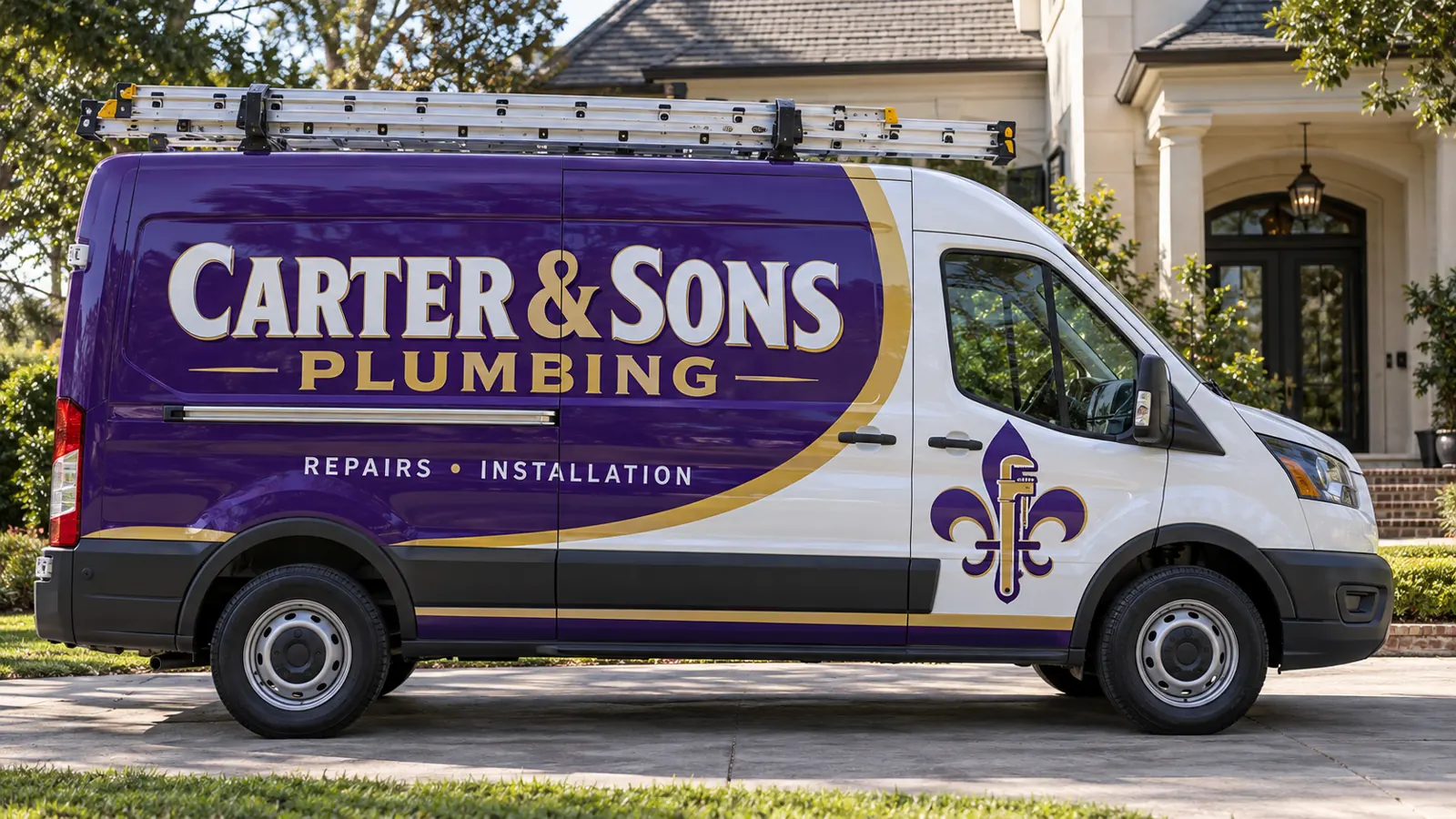
Illustrative commercial wrap design concept.
Van Wrap Planning
Pelican Wraps • Commercial Graphics
Commercial Van Wraps Built For Real-World Visibility
Commercial Van Wraps from Pelican Wraps deliver daily local visibility for service businesses for cargo vans, high-roof vans, compact vans and mixed service fleets. We plan the message, coverage, materials, production and installation around how the asset is actually seen and used.
Strategy Before Production
Successful commercial van wraps begin with the business objective rather than decoration. Pelican Wraps reviews the audience, operating area, viewing distance, brand standards, vehicle or surface condition, expected service life and future expansion plans. The result is a graphic system that communicates quickly without crowding every available panel.
Primary branding, the most valuable service message and a direct response path receive the strongest visual priority. Secondary details are organized so they remain useful without weakening recognition. This approach is especially important for cargo vans, high-roof vans, compact vans and mixed service fleets, where motion, distance, door seams, hardware and changing light affect readability.
Design, Materials And Production
Artwork is prepared to the documented dimensions of the vehicle, equipment or architectural surface. We account for contours, windows, rivets, handles, panel breaks and areas that should remain free of important text. Clients review scaled proofs before production so placement, hierarchy and brand consistency can be confirmed.
Material selection depends on surface type, exposure, removability, finish and planned service life. Professional films, compatible inks and protective laminates are matched as a system. Production files, approved colors and placement references can be retained for repeat orders, damaged-panel replacements and fleet additions.
- Scaled artwork and placement review
- Commercial-grade films and laminates
- Color and production documentation
- Surface preparation and installation planning
- Repeatable files for future additions
- Final inspection and care guidance
Built Around Operations
Installation planning matters as much as design. Vehicles and working assets must be clean, dry and available long enough for proper preparation and application. Multi-unit programs can be phased to reduce operational disruption, while clearly labeled production packages help keep assignments organized.
For growing businesses, consistency becomes a management issue. New vehicle models may require adapted layouts, but the core identity, color, message priority and placement logic should remain recognizable. Pelican Wraps connects each project to broader fleet wrap planning, local service and replacement support.
Common Questions
Commercial Van Wraps FAQs
How is this project priced?
Pricing is based on dimensions, coverage, material system, design requirements, surface condition, installation complexity and quantity. Request a quote with photos and vehicle or site details for an accurate scope.
Can existing branding be matched?
Yes. Logos, colors and standards can be reviewed and adapted for better visibility while preserving the established identity.
Can the design be repeated later?
Yes. Approved production files and reference information can support future vehicles, locations, replacement panels or campaign updates.
What information should be provided first?
Provide vehicle year, make and model or surface measurements, clear photos, fleet quantity, artwork files, operating locations and the desired timeline.
Continue Planning
Related Solution→Wrap Cost Guide→Request A Quote→Commercial Graphics That Work
Build A Clear, Repeatable Brand System.
Make the service clear before the decorative detail
A service van is usually seen while moving between appointments, parked at a customer property or waiting in traffic. Those settings ask for a readable business identity rather than a crowded catalogue of every service you offer. Give the company name and primary trade enough space to be recognized, then establish one contact route. Supporting details should help someone decide whether you are relevant to their need.
An electrician, plumbing contractor, HVAC company and delivery operator do not need the same visual priorities. Electrical-service graphics may emphasize the trade and service area; a delivery van may emphasize the brand being delivered. The design should reflect the work the vehicle actually supports. Use attractive colors and imagery deliberately, but judge the layout by what a customer can understand quickly.
Check the rear doors as a separate communication surface. The rear often faces someone who has more time to read, while the side needs a stronger broad visual impression. Avoid hiding the contact route behind door handles, dividing essential wording across moving sections or relying on small text to explain the main service. A vehicle-specific proof helps identify those problems before printing.
Plan around doors, windows and roof equipment
Cargo vans, passenger vans and high-roof vans have different usable surfaces. Sliding doors introduce breaks, rear windows reduce printed areas and trim may limit installation options. Measure the actual model and photograph both sides, because the two sides are not always symmetrical. An artwork template is a useful starting point, not evidence that every vehicle matches the same dimensions.
Ladder racks and roof equipment change how a van is viewed. Consider the visible surfaces when the van is parked with equipment loaded, not only the clean empty vehicle in a design presentation. Let the installation team review accessories, handles, seals and surface condition. The wrap should support normal vehicle use without covering lights, required markings or equipment that must remain accessible.
Existing lettering, paint repairs and adhesive residue belong in the quote. Include close photographs of the affected areas and ask which preparation is included. If a van is leased, confirm any restrictions with the responsible lease contact before changing its appearance. Do not assume that eventual graphic removal will leave every repaired or aged finish unchanged.
Compare the right scope for your van or small fleet
Lettering, partial printed coverage and full wraps can all identify a service business. The original paint color may become part of the design, allowing a clean commercial layout without printing every possible surface. Compare coverage by the message it carries, the vehicle condition and the time you expect to keep the van in service. More coverage is a scope choice, not a universal measure of better advertising.
For a small fleet, establish a master brand hierarchy and review each model separately. Keep logo, trade description and contact details consistent while allowing the layout to adapt. Maintain unit identifiers and approved artwork versions so a replacement van can join the fleet without restarting every design decision. Ask how future additions and repair graphics would be handled.
Send Pelican Wraps the vehicle year, model, quantity, photographs, existing graphics, brand files and timing needs. Tell us whether you need a new design or adaptation of existing artwork. The quote should distinguish removal, preparation, design, print materials and installation. Confirm the Harvey drop-off arrangement before traveling with a van or releasing several vehicles from service.
Commercial Van Wrap Questions
Put Your Van to Work for Your Brand
Send the vehicle details and the service you want customers to remember. Start with one van or a repeatable small-fleet program.
Related Planning Guide
Continue with Planning a service van fleet for additional questions to organize before the project review.
