
Request a Commercial Wrap Quote
Tell us about your vehicles, graphics and timing. Start with what you know; we can clarify the remaining project details together.
Tell Us About Your Project
What Happens Next?
Your inquiry starts a scope review. We will use the equipment details to clarify coverage, artwork, preparation and installation arrangements before a proposal and approvals.
The shop is at 1201 MacArthur Avenue, Suite B, Harvey, Louisiana 70058. Confirm the appointment and vehicle-access details before traveling. Open shop directions.
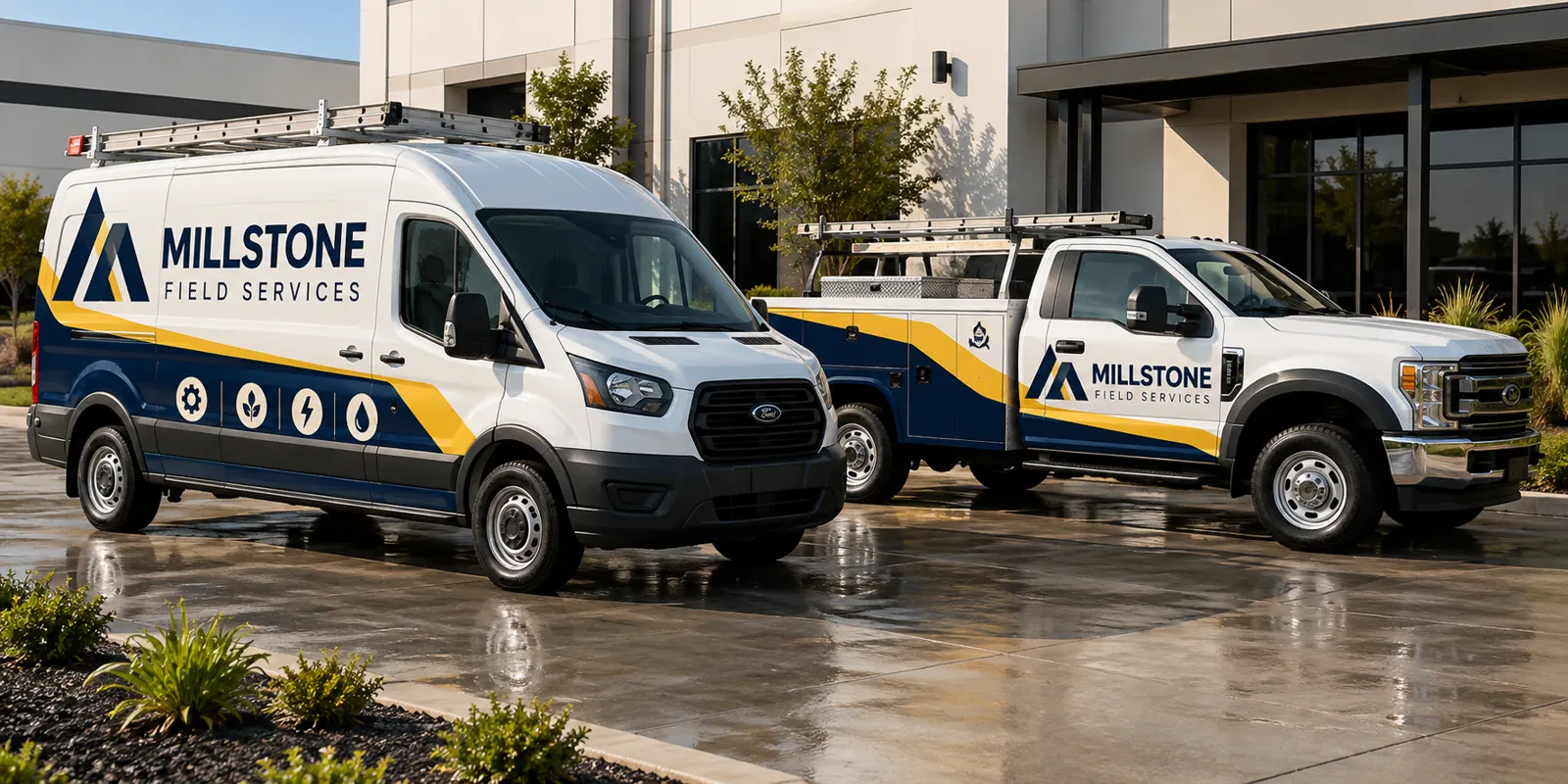
Fictional commercial wrap design concept; not a completed customer installation.
Describe the equipment and the job you want it to do
Begin with the vehicles or surfaces, not a guessed package name. Include year, make, model, body type and quantity, and explain the business message you want people to remember. If the project includes a truck and trailer, a mixed fleet or several commercial applications, describe them together. Identify which equipment is ready now and which units are still being purchased or repaired.
Tell us whether you prefer full coverage, selected panels, lettering or a recommendation. It is fine to be undecided. A useful inquiry explains the outcome and the information you have; the scope review can identify the remaining choices. For a fleet, use unit identifiers so photographs and later proofs can be connected to the correct vehicles. Start with the actual equipment rather than assuming similar-looking bodies will use identical layouts.
Prepare clear photographs and approved business information
Have current photographs of both sides, front and rear ready for the project review. Add close views of handles, racks, liftgates, existing film and surface concerns. A straight view helps explain the available panels; a wider view shows how equipment affects them. Identify any photographs that show a similar vehicle rather than the one being quoted, so a reference does not become an accidental fit specification.
Gather the best logo and brand files available, approved spelling, service language and contact details. If the artwork is unfinished or only a low-resolution reference exists, explain that. Design development and file preparation should be visible in the scope. For several decision makers, choose the person who can consolidate feedback and authorize the final direction. This helps the next discussion resolve real questions instead of repeating conflicting instructions.
Explain the vehicle condition and timing constraints
Disclose existing graphics, previous paint repairs, rust, dents, peeling finish and any work planned before installation. Photographs support the first review, while inspection may still be required. Keep removal, preparation, body repair and new graphics as separate tasks when describing the project. This makes it easier to identify who is responsible and which conditions could change the proposal.
Share your target date and the operating constraints behind it. Explain which units can be released together and which need to remain in service. Artwork approval, surface readiness, production and installation availability are different milestones. The brief should make those dependencies clear. If vehicles operate outside Harvey, include their actual bases and who can move them. Confirm the appointment and access arrangement before dispatching equipment to the shop.
Review the proposal as a defined scope
The next useful step is a proposal that connects the approved project details to the work being supplied. Review the included surfaces, quantities, design adaptation, material system, preparation, installation and exclusions. Compare coverage choices on the same vehicle and with the same message so the decision reflects the actual difference in scope. Ask for clarification wherever an assumption would affect the result.
For a fleet, confirm which proof belongs to each body or unit group and how changes will be authorized. Keep the approval trail and final artwork revision with the vehicle register. Pricing approval and artwork approval answer different questions; both should be understood before the work moves forward. A submitted inquiry begins this process. It is an opportunity to establish the right details and recommendation for the equipment you actually operate.
Follow the project through approval and installation
Once the scope is agreed, check the final wording, vehicle assignment, coverage and contact details on the artwork proof. Confirm the preparation and release plan before installation. If a vehicle changes, needs further repairs or cannot be made available, tell the project contact promptly so the sequence can be reviewed. Accurate updates are more useful than sending a substitute unit with unconfirmed specifications.
After completion, retain the approved files, unit photographs, material information and supplied care instructions. These records help when another vehicle is added or a panel needs review. Explore fleet graphics management if recurring additions and repairs are part of the operation. Use the resource guides whenever a specific buying question needs more detail, while keeping the working proposal as the reference for your actual project.
