
Box Truck Wrap Design That Reads Clearly
A large cargo box creates room for a strong commercial message, but size alone does not make that message readable. Good box-truck design gives the name, service and contact route distinct roles, then fits them around the real body. Use this guide to prepare a design brief and review the proof before it becomes a production file.
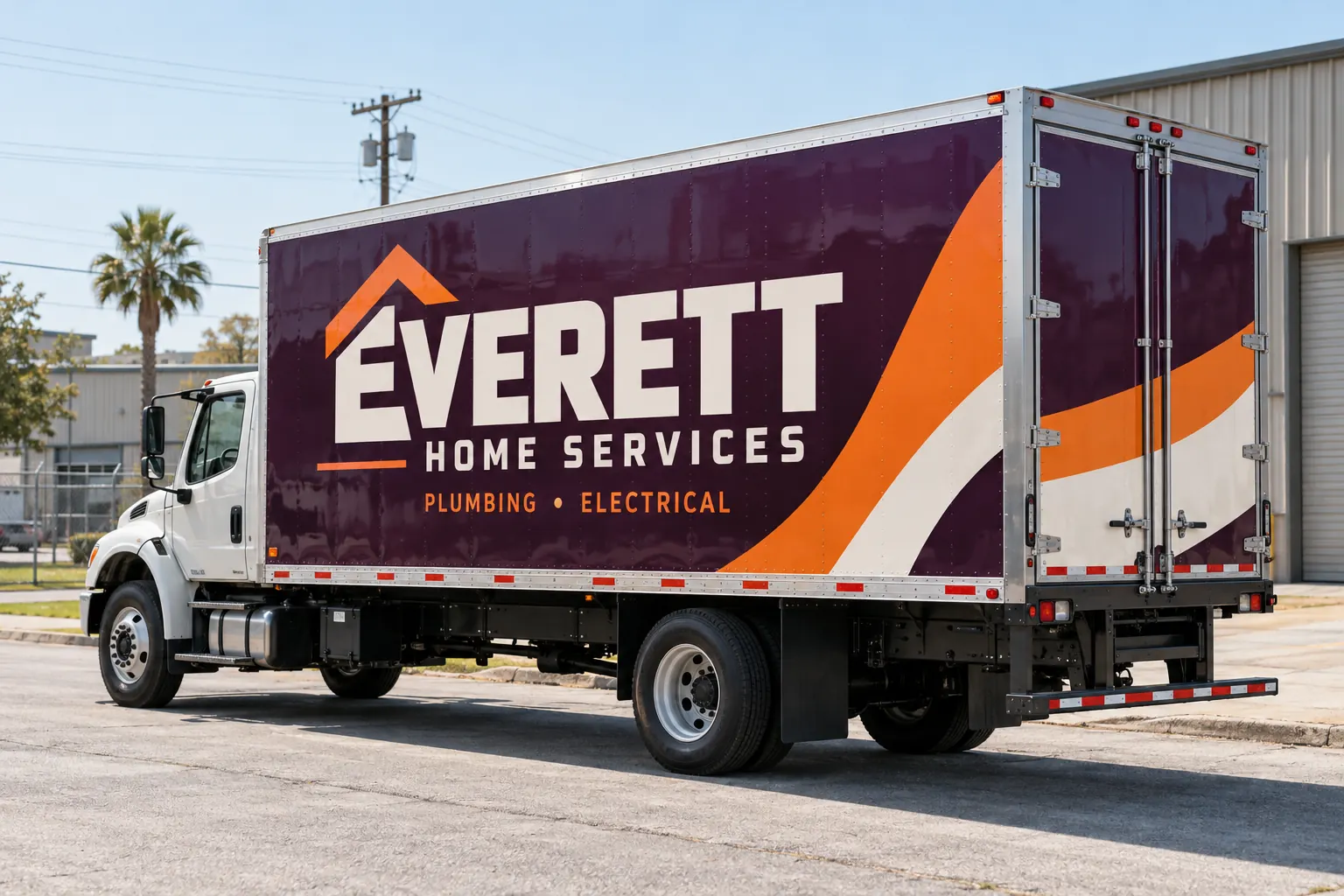
Fictional commercial wrap design concept; not a completed customer installation.
Choose one main job for the design
Decide what someone should recognize first: the business name and the kind of work it provides. A truck for a refrigeration company should not require a long look to establish the trade. Give that identity a clear visual priority before deciding which additional services, images or contact details belong on the vehicle.
A helpful brief states the desired customer and main commercial goal. A contractor seeking larger installation work may need a different service emphasis from a delivery operator building general recognition. Editing the message at this stage is more effective than asking a designer to enlarge every line after a crowded concept has already been approved.
Use hierarchy and contrast rather than more words
Review the company name, trade description and contact route at a reduced viewing size. If all three compete at the same weight, the layout may need clearer priorities. The broad side can carry a strong identity without reproducing an entire brochure, price list or collection of social-media handles.
Check lettering against its actual background. Detailed photographs and decorative textures can compete with words, especially when the truck is viewed briefly. A physical sample may also help with color and finish decisions. The point is to review how the information reads, rather than judging the design only by how much empty space it fills.
Give the side, rear and cab their own compositions
The cargo side is a large identity surface. The rear is interrupted by different hardware and is often viewed by people behind the truck. Cab graphics need to work on a much smaller area and should still identify the business if the truck body is replaced or the cab is viewed on its own.
Ask for separate proofs showing each included surface. Keep important words clear of high-interruption areas where practical. A layout that looks effective on a smooth side elevation should not be automatically reduced onto rear doors or stretched across the cab without a separate review.
Design around the actual truck body
Supply current photographs of rivets, seams, hinges, roll-up doors, liftgates and any refrigeration or accessory equipment. Show the equipment in operating positions when movement changes what is visible. The designer should know which surfaces remain usable when doors or gates are open.
A generic template is a planning aid, not evidence that the production artwork fits the truck. Confirm how actual measurements and body variations will be checked. For fleets, record which file belongs to each body version so the next truck does not receive a layout prepared for a similar-looking but different cargo box.
Use imagery that belongs to the business
Choose photographs or illustrations that help explain the offer and leave room for the identity. A single clear image can support recognition better than many small photographs competing behind service lists. If the design uses actual project photos, confirm ownership and commercial-use permission before production.
Do not present an invented scene as completed customer work. Concepts are useful for comparing creative directions when their status is clear. The finished artwork should accurately represent the business and use assets it is entitled to reproduce. Keep third-party logos and qualification marks subject to the appropriate approval.
Review the proof as an operating document
Check exact spelling, approved service wording, web addresses, phone digits and unit identification. Review all body versions and coverage boundaries, not only the most attractive angle. One named approver should gather corrections and confirm which version is released to production.
Separate a visual approval from unresolved measurements or surface concerns. Record exclusions and any conditions that still need inspection. Retain the approved proof and the agreed production-file arrangement after installation so additional trucks, damaged panels and later rebrands can begin from a known design standard.
Turn the design decision into a project brief
Send the business goal, vehicle list, current photographs, logo files, approved contact details, preferred coverage and timing. Identify whether this is the first branded truck or a continuation of an existing fleet. If an earlier provider created the artwork, explain which usable files and permissions are available.
Continue to box truck wrap services for production planning and the box truck cost guide for proposal inputs. The coverage comparison helps separate design choices from the amount of film. Pelican Wraps reviews commercial briefs from Harvey before the final scope and artwork release are agreed.
Frequently Asked Questions
Turn Your Vehicle Details Into a Clear Project Brief
Send current photographs, vehicle quantities, logo files, coverage preferences and timing. Identify old graphics and paint concerns so the project review can address the actual equipment.
Explore planning resources or request your commercial wrap quote.
