
Roofing Company Vehicle Wraps for Trucks, Vans and Trailers
A roofing vehicle often becomes the most visible brand marker outside a customer's property. Give it a clear company identity, a recognizable roofing message and a contact route that works around ladder racks, utility compartments and the realities of a busy service fleet.
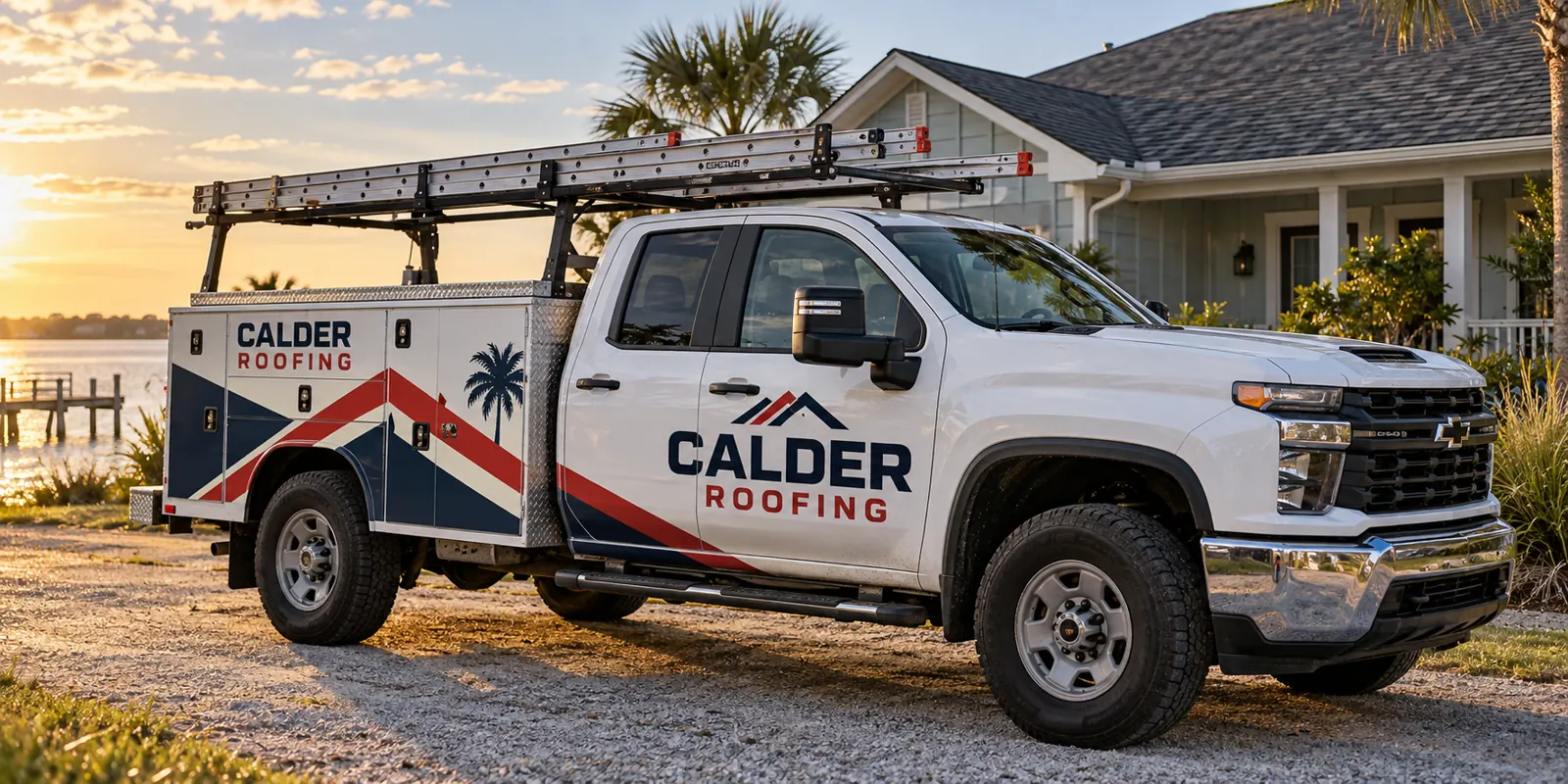
Fictional commercial wrap design concept; not a completed customer installation.
Lead with the roofing company customers should remember
A roofline illustration can support the brand, but it should not replace a readable company name. State the work clearly enough that a person seeing the truck understands the business. If the company focuses on particular services, choose the description that matters most to the intended customer rather than printing every service on every panel.
Keep the primary contact route easy to identify. A domain or phone number needs space around it, especially on a service body with many divisions. Treat unverified badges, rankings and performance claims carefully: use only accurate business information that you can substantiate. A strong layout can communicate professionalism without inventing proof or implying a qualification the company does not hold.
Design around ladders, racks and utility-body hardware
Photograph the roofing vehicle with its usual rack and equipment in place. Ladder rails can obscure upper graphics, while utility compartments and handles divide the lower body. Show fuel doors, tool storage, steps and any aftermarket panels. These features influence both the visual layout and the work needed to access the agreed surfaces.
Check how the business name appears from the side and the rear. Do not rely on a logo placed where ladders normally block it. For a pickup or service-body project, start with the truck graphics route and include the body manufacturer’s details if known. The cab specification alone may not identify the surfaces being branded.
Give pickups, vans and trailers distinct roles in the fleet
A supervisor pickup may need a compact identity, while a service van provides a broader uninterrupted surface. An enclosed trailer may remain at the property while the truck is elsewhere. Plan the message for the way each unit is used, then connect the designs through color, logo treatment and clear hierarchy.
Include van configurations and trailer details in a mixed-fleet brief. Door locations, wheelbases and rear hardware matter. Avoid forcing an identical composition onto every body. The aim is to recognize the same company across the fleet while preserving readability on each specific vehicle.
Compare lettering, partial coverage and fuller branding
Clean white paint can be part of an intentional roofing design. Lettering may provide the necessary identity with a restrained appearance, while partial graphics can create a more prominent branded area. Fuller coverage can support a larger visual treatment or help connect a fleet with different starting colors. Choose the scope around the message and the available surfaces.
Compare options using the same vehicle photographs and required wording. Ask which panels are included and how rear doors, compartments and the roof are treated. The partial wrap guide and full wrap guide explain the coverage decision. A package name alone does not define the final installation area.
Keep business information and approval records accurate
Gather the best available logo sources, colors and approved wording before layout work begins. Choose one person to verify the business name, phone number, domain and any identification the business must display. Confirm applicable requirements from your own current records and appropriate authorities. Do not let an example image become the source for legal or commercial details.
Review each proof view for interruptions from compartment gaps, ladder racks and door hardware. Keep a dated version and return consolidated feedback. If a vehicle changes after the proof is prepared, disclose it before production. The artwork guidelines provide a practical checklist for files and proof review without assuming every roofing truck has the same body.
Plan for working vehicles and changing job schedules
Identify which vehicles can be released first and how work will be covered while a unit is unavailable. Provide the desired timing and any firm operational constraints, then coordinate around a confirmed project arrangement. Tool access, vehicle delivery and collection responsibilities should be discussed before the installation visit, particularly when trucks carry essential equipment.
Disclose old graphics, repairs, peeling paint and heavily worn areas in the first brief. A wrap should not be treated as a repair for unsuitable surfaces. If the fleet is being refreshed in stages, keep a record of approved vehicle versions and brand changes so later units follow the same system rather than drifting into a different identity.
Build a brief that supports a clear roofing fleet quote
Send current photos from all sides, the vehicle and body specifications, quantities, logo files and the essential message. Note ladder racks, compartments, trailer equipment and existing graphics. State which coverage options you want considered. A complete brief lets the proposal address design, production, installation and condition-related work with fewer assumptions.
Read the commercial wrap cost guide for a scope comparison, then request a roofing fleet quote. The page’s truck image is a fictional branding concept, not a customer job or evidence of roofing performance. It is intended to show a design direction that can be adapted to the actual equipment and business identity.
Frequently Asked Questions
Turn Your Vehicle Details Into a Clear Project Brief
Send current photographs, vehicle quantities, logo files, coverage preferences and timing. Identify old graphics and paint concerns so the project review can address the actual equipment.
Explore planning resources or request your commercial wrap quote.
