
What Determines the Cost of a Box Truck Wrap?
A useful box-truck estimate starts with the actual truck and a defined coverage plan. Box length matters, but the cab, rear doors, surface condition, old graphics and artwork also affect the work. This guide helps you collect the information needed to compare proposals and request a commercial wrap quote from Pelican Wraps in Harvey.
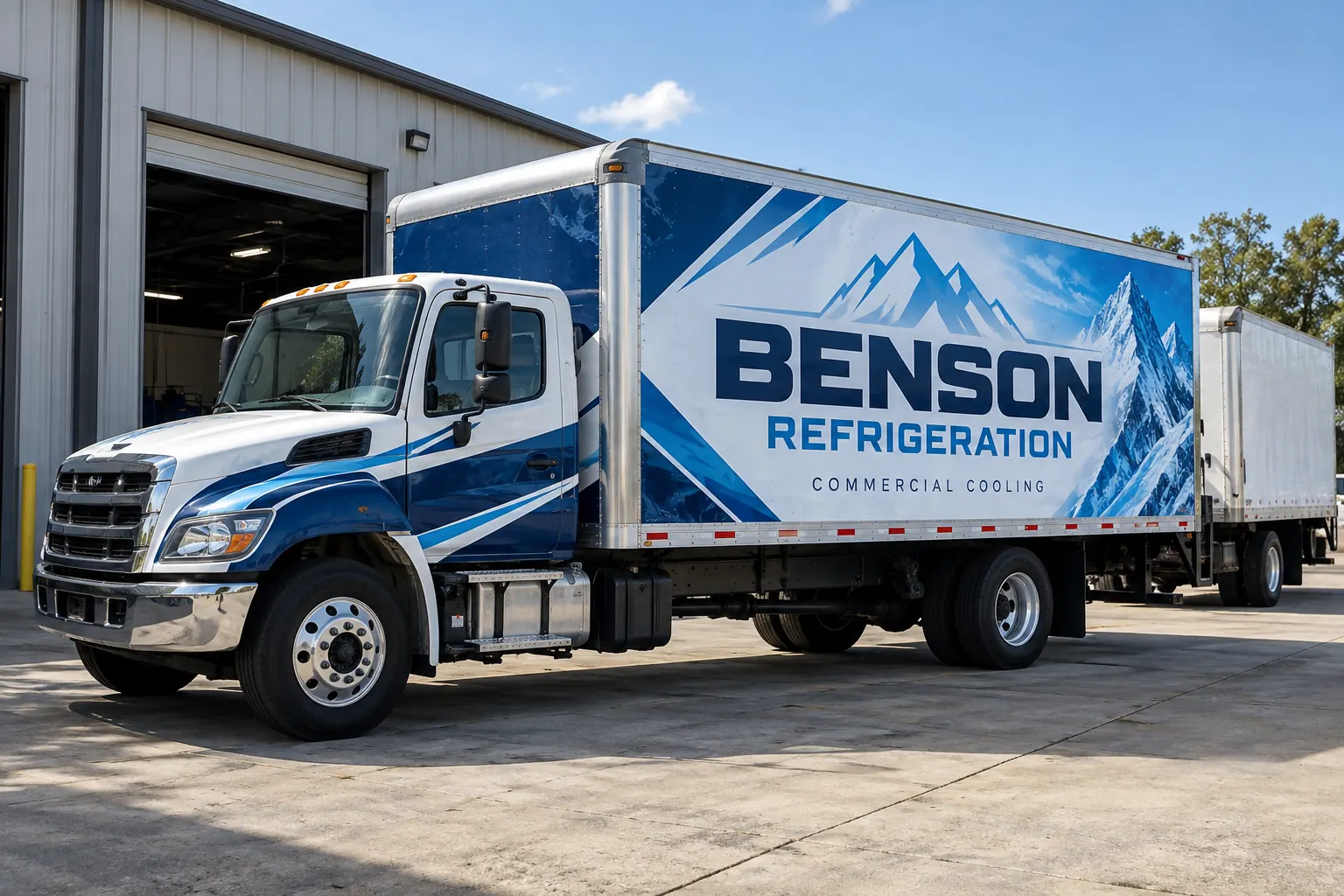
Fictional commercial wrap design concept; not a completed customer installation.
Define exactly which truck surfaces are included
Start by separating the cargo box from the cab. A quote for two box sides is a different scope from one including the rear doors, cab doors, hood and other selected surfaces. Identify the desired appearance for each area before comparing totals. Full-wrap and partial-wrap labels do not replace that panel-by-panel discussion.
Send photographs of both sides, the rear and the cab. Include any liftgate, step, refrigeration equipment or unusual body extension. Ask the proposal to identify coverage boundaries and exclusions. That makes it easier to distinguish a genuine price difference from two providers describing different work.
Record body dimensions and hardware
The chassis model alone does not identify the cargo body. Trucks built on the same chassis can have different box lengths, heights, door styles and panel construction. Record the body manufacturer when known and provide approximate dimensions to start the conversation. Final production still requires an agreed measurement and verification process.
Photograph rivets, seams, roll-up doors, hinges, locking bars and damaged panels. These details influence how the artwork is divided and how the graphics are installed. A smooth rectangular side and a rear interrupted by working hardware should not be treated as identical surfaces simply because their measured area is similar.
Separate design development from a repeat installation
A first-time identity may need logo preparation, message editing, image licensing and a new layout. A repeat fleet unit may begin with approved files, but those files still need to fit the current body. Tell the provider whether you have editable artwork, only a small image of a logo or production files from a previous job.
Identify the person who can approve the business wording and the design. State which corrections are needed before production and ask what the proposal includes for artwork development or adaptation. A clear approval process helps prevent a simple repeat request from becoming an undefined redesign.
Include removal and surface preparation in the comparison
Disclose existing graphics, adhesive residue, rust, peeling clear coat and previous paint repairs. Photographs help establish the questions to review, but unusual or damaged surfaces may need an inspection before the scope is finalized. A new wrap is not a repair for an unstable finish.
Ask whether removal, adhesive cleanup and any required preparation are included, excluded or subject to condition review. Keep those assumptions visible when comparing proposals. A lower initial total can represent a different preparation allowance rather than a lower cost for the same completed project. Do not schedule around an assumption that every old graphic will remove in the same way.
Compare the proposed material system and finish
Ask the estimate to identify the proposed film, laminate and finish, along with the surfaces for which they are intended. General terms such as premium vinyl do not explain the whole system. Product suitability, print production and installation scope belong in the comparison alongside the visible design.
Keep written care and warranty information for the actual proposed products. A general lifespan statement is not a substitute for the terms that apply to the project. If a procurement requirement calls for a particular product or credential, identify that requirement before asking suppliers to price the work.
Explain quantities, body variations and scheduling
A fleet count becomes useful when it is broken down by matching body type. Ten truly matching box bodies are different from ten trucks with several sizes, repairs and cab configurations. Provide the inventory and show which units can share an approved layout and which require a new adaptation.
Describe when the trucks can leave service and whether they will arrive together or in phases. Artwork approval, production, removal and installation are separate milestones. Ask how repeat units and exceptions are priced rather than assuming a universal volume discount or a fixed installation duration from the number of trucks alone.
Send a brief that makes proposals comparable
Collect the unit count, body details, photographs, logo files, approved wording, coverage preference and timing. Mark any information that remains unknown. A useful request does not need to pretend all measurements are final; it needs to make the uncertainties visible so the remaining review can be organized.
Review box truck wrap services, the full-versus-partial comparison and materials guidance before submitting the brief. Pelican Wraps can review the actual project from Harvey. This guide explains quote inputs; it does not present an unverified universal price or a guaranteed saving.
Frequently Asked Questions
Turn Your Vehicle Details Into a Clear Project Brief
Send current photographs, vehicle quantities, logo files, coverage preferences and timing. Identify old graphics and paint concerns so the project review can address the actual equipment.
Explore planning resources or request your commercial wrap quote.
