
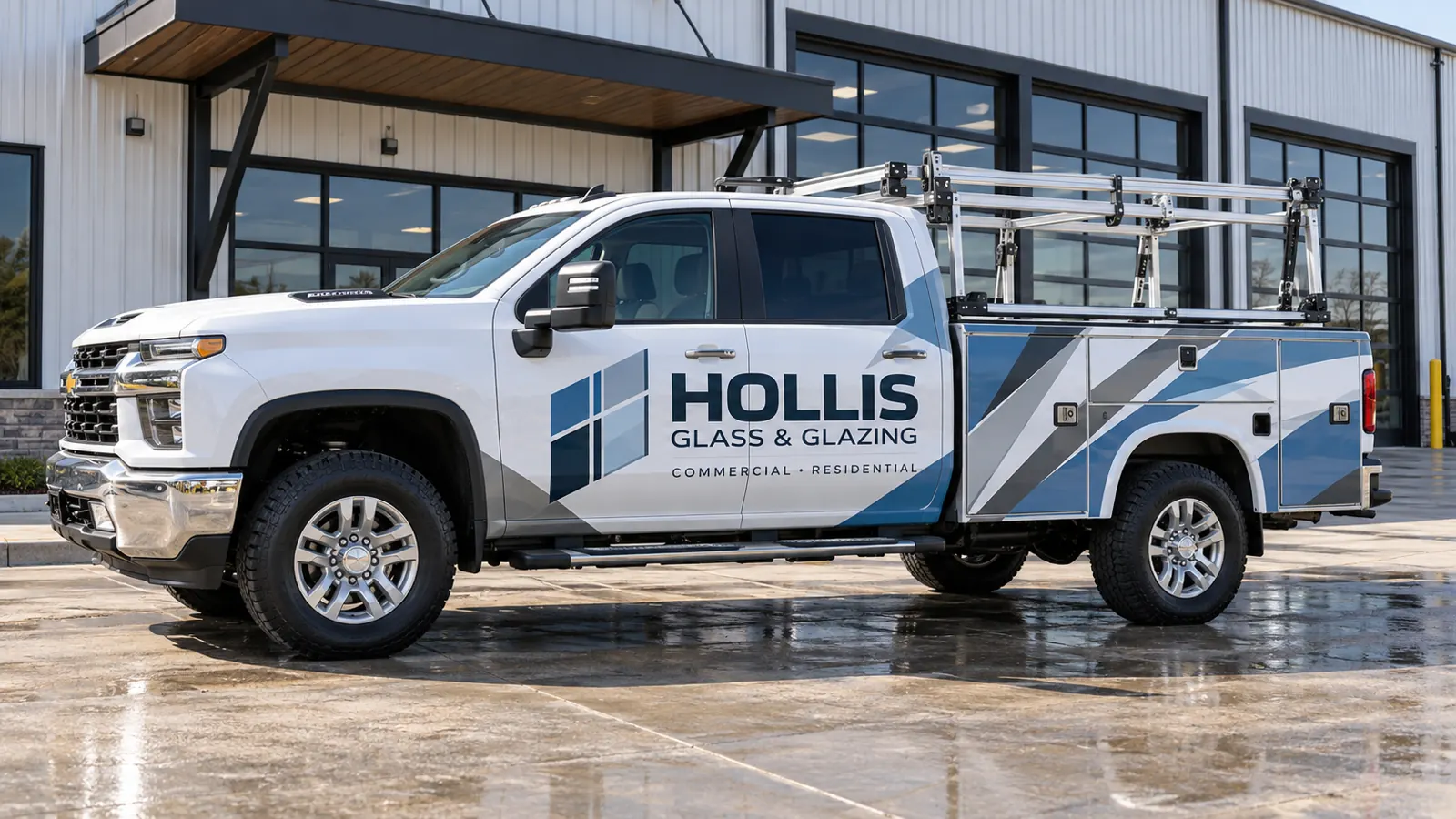
Illustrative commercial wrap design concept.
What to Know
Pelican Wraps • Commercial Graphics
Commercial Truck Wraps Built For Real-World Visibility
Commercial Truck Wraps from Pelican Wraps deliver bold roadside recognition for pickup trucks, utility bodies, flatbeds and work trucks. We plan the message, coverage, materials, production and installation around how the asset is actually seen and used.
Strategy Before Production
Successful commercial truck wraps begin with the business objective rather than decoration. Pelican Wraps reviews the audience, operating area, viewing distance, brand standards, vehicle or surface condition, expected service life and future expansion plans. The result is a graphic system that communicates quickly without crowding every available panel.
Primary branding, the most valuable service message and a direct response path receive the strongest visual priority. Secondary details are organized so they remain useful without weakening recognition. This approach is especially important for pickup trucks, utility bodies, flatbeds and work trucks, where motion, distance, door seams, hardware and changing light affect readability.
Design, Materials And Production
Artwork is prepared to the documented dimensions of the vehicle, equipment or architectural surface. We account for contours, windows, rivets, handles, panel breaks and areas that should remain free of important text. Clients review scaled proofs before production so placement, hierarchy and brand consistency can be confirmed.
Material selection depends on surface type, exposure, removability, finish and planned service life. Professional films, compatible inks and protective laminates are matched as a system. Production files, approved colors and placement references can be retained for repeat orders, damaged-panel replacements and fleet additions.
- Scaled artwork and placement review
- Commercial-grade films and laminates
- Color and production documentation
- Surface preparation and installation planning
- Repeatable files for future additions
- Final inspection and care guidance
Built Around Operations
Installation planning matters as much as design. Vehicles and working assets must be clean, dry and available long enough for proper preparation and application. Multi-unit programs can be phased to reduce operational disruption, while clearly labeled production packages help keep assignments organized.
For growing businesses, consistency becomes a management issue. New vehicle models may require adapted layouts, but the core identity, color, message priority and placement logic should remain recognizable. Pelican Wraps connects each project to broader fleet wrap planning, local service and replacement support.
Common Questions
Design for the Truck You Actually Use
A work truck is part of daily operations, so its graphics should be planned around the body and equipment that customers will see. A pickup, a service-body truck, a dump truck and a box truck have very different available areas. Identify the cab, bed, utility compartments, tailgate, toolboxes and racks in the initial brief. Do not approve a generic pickup rendering for a different truck configuration and expect the placement to translate automatically.
For a contractor, the central message might be the trade, business name and booking route. Keep that information away from frequently obscured areas. Photograph the truck loaded as well as unloaded when ladders, equipment or materials change the visible panels. Review both sides separately: fuel doors, service compartments and equipment mounts may not be symmetrical. Good planning starts with the way the vehicle works, then uses the remaining space effectively.
Give Cab, Body and Rear Views Separate Jobs
Cab-door graphics often identify the company while the body carries a larger service message. The rear view may need a concise contact route rather than a repeat of every side-panel detail. Decide which information must remain readable with a tailgate open, a compartment in use or a trailer attached. A wrap can use more than one panel without treating every panel as a miniature advertisement.
Look at the proof from a distance as well as at full size. Avoid placing important letters across handles, hinges or deep panel changes. Ask how the production layout will handle the truck's actual seams and hardware. If mandatory markings already exist, identify them early and confirm the applicable requirements with the responsible operator. Marketing graphics should be coordinated with working equipment and required information rather than simply placed over them.
Compare Coverage with the Vehicle's Remaining Service
A truck expected to stay in service for years may justify a different graphics program from a leased or soon-to-be-replaced unit. Full coverage, partial graphics and lettering can all present a clear identity. Compare the design and included surfaces instead of assuming the largest package is always the strongest choice. The existing paint color can be part of the layout when the business is comfortable using it consistently.
A useful proposal separates artwork, material, preparation, installation and removal where those items apply. Disclose existing graphics, body repairs and replacement panels. Ask whether matching additions or later panel replacements will require new measurements or artwork changes. Planning the graphics around the equipment's remaining role helps avoid investing in areas that will soon be replaced or obscured by new accessories.
Coordinate the Truck's Release from Work
Provide the date the truck is available, its normal route and who can deliver and collect it. Separate the artwork approval deadline from the installation appointment. If the truck is essential to daily dispatch, identify a practical release window before the project is scheduled. A preliminary inquiry should explain these constraints without assuming a universal same-day turnaround or guaranteed slot.
For multiple work trucks, build a unit list and identify the first vehicle for review. Keep one responsible proof approver and record variations such as crew names, unit numbers or different service lines. The Harvey shop directions help with travel planning, but the access and appointment arrangements still need confirmation. Send the truck details and photographs through the project inquiry to begin a scoped commercial discussion.
Commercial Truck Wraps FAQs
Continue Planning
Related Solution→Wrap Cost Guide→Request A Quote→Commercial Graphics That Work
Build A Clear, Repeatable Brand System.
Get a Project-Specific Recommendation
Tell Pelican Wraps about your vehicles or commercial graphics project, the message you need to communicate and your timing. We can identify the details still needed for an accurate scope.
