
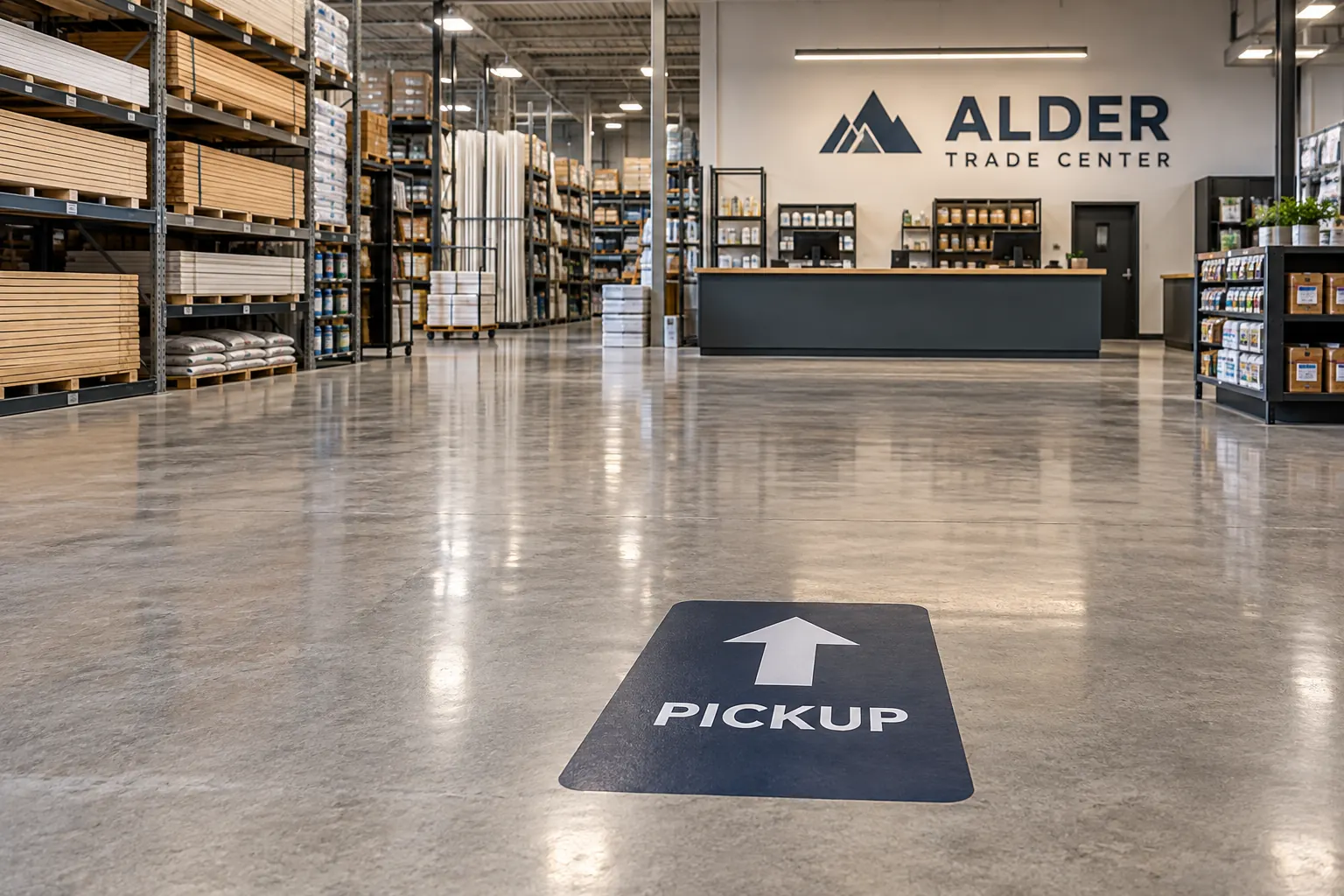
Fictional commercial graphics design concept; not a completed customer installation.
Define the decision the floor graphic should support
A useful floor graphic can direct a visitor toward collection, identify a queue starting point or reinforce a campaign close to a relevant display. Give each graphic one job and place it where the customer has enough context to act. A repeated arrow with no clear destination can create confusion rather than improve the route.
Walk the proposed path in ordinary operating conditions and photograph the decision points. Include doors, display changes, furniture and intersecting routes. Where the destination is not visible, coordinate the floor message with a sign or counter identifier. Floor graphics should fit the complete customer journey through the property rather than become an isolated decoration selected only because a blank area is available.
Review the exact floor and intended graphic system
Record the floor material, coating or finish if known, condition, joints and any existing treatment. Photograph the proposed position closely as well as within the room. Identify whether the location is indoors or outdoors and whether moisture or contamination is a recurring issue. The word floor does not describe a single compatible surface.
The 3M floor graphics application bulletin ties suitability and slip-resistance information to specific constructions and surfaces. It also warns that wet or contaminated floor graphics can become slippery. Review the current guidance for the proposed system and site; do not describe every printed vinyl as slip-resistant or suitable for every floor simply because it is sold as a graphic.
Separate pedestrian messaging from equipment traffic
Describe the actual traffic through the location: customers on foot, carts, rolling displays, pallets or powered equipment. Record where objects are dragged or turn sharply. This information can affect whether a proposed placement is appropriate and how it should be maintained. A clean showroom photograph taken before opening may conceal the ordinary operating conditions.
Do not use a promotional floor graphic as a substitute for a site safety assessment or a required traffic-control system. Where the project involves operational markings, provide the responsible site specification and approval process. Keep the scope clear about whether it is a brand message, customer wayfinding or a marking governed by the facility requirements. Those jobs should not be treated as interchangeable.
Keep the artwork readable at walking distance
Use a brief destination or action and a simple visual direction. Review the orientation from the path people actually follow rather than only from above on a proof. Keep important content within the usable graphic area and discuss shapes, edges and panel arrangement against the chosen production system.
Coordinate words with the destination labels elsewhere in the room. If the floor says pickup while the counter uses a different term, the visitor still has to interpret the route. Use the same identity as the business signage without forcing a detailed company description into a small walking surface. A concise message makes later campaign updates easier to manage.
Include cleaning and inspection in the plan
Ask the facility contact to describe the normal cleaning process, equipment, chemicals and schedule. Review that routine against the selected system before installation. Record how the graphic area will be prepared and when it can be kept clear for the agreed work. Do not assume that a visually clean floor is ready under every product instruction.
Assign someone to inspect the graphic during routine site checks and report lifting, damage or changed floor conditions. Establish a response and removal process for a compromised item. The maintenance plan matters throughout use, including short campaigns. A planned end date does not eliminate the need to observe the graphic while pedestrians are using the area.
Build a location schedule for a meaningful quote
List the message, quantity, approximate dimensions and exact floor position for every item. Attach matching photographs and identify the floor finish, traffic and intended duration. Include removal of existing graphics and responsibility for preparation where those tasks are relevant. Label unknown conditions so the review can address them before the order is finalized.
For several stores or departments, use consistent location codes and a separate placement record for each. Ask the proposal to identify the selected construction and any site dependencies instead of comparing prices for an undefined floor sticker. A shared campaign design can still need different placement or coverage at individual properties. Record the final approved version and quantity for each site.
Plan the campaign ending before the graphic is installed
Decide when the message should be reviewed, changed or removed. A dated promotion that remains on the floor after the offer ends creates a communication problem even if the graphic remains visually present. Keep a replacement or removal owner and retain the relevant product information and location photographs.
Review removal expectations against the actual floor and selected material rather than promising an unchanged finish under every condition. For a new project, send the floor graphics brief with surface photographs, traffic information and the proposed message. If the destination also needs a counter, window or wall identifier, include it in the coordinated graphics plan so the entire route works together.
Frequently Asked Questions
Turn Your Site Details Into a Clear Project Brief
Send current site photographs, an item schedule, logo files, dimensions and timing. Identify existing graphics and surface concerns so the project review can address the actual location.
Explore planning resources or request your business graphics quote.
