
Building Inspection Vehicle Graphics
Building inspection vehicle graphics should identify the inspection business without suggesting an authority or qualification it does not hold. The practical design question is what a property owner, site contact or facility manager needs to recognize when the vehicle arrives. Define that message, the actual inspection roles and the public contact route, then assess coverage against the specific SUV, car, van or pickup your team uses.
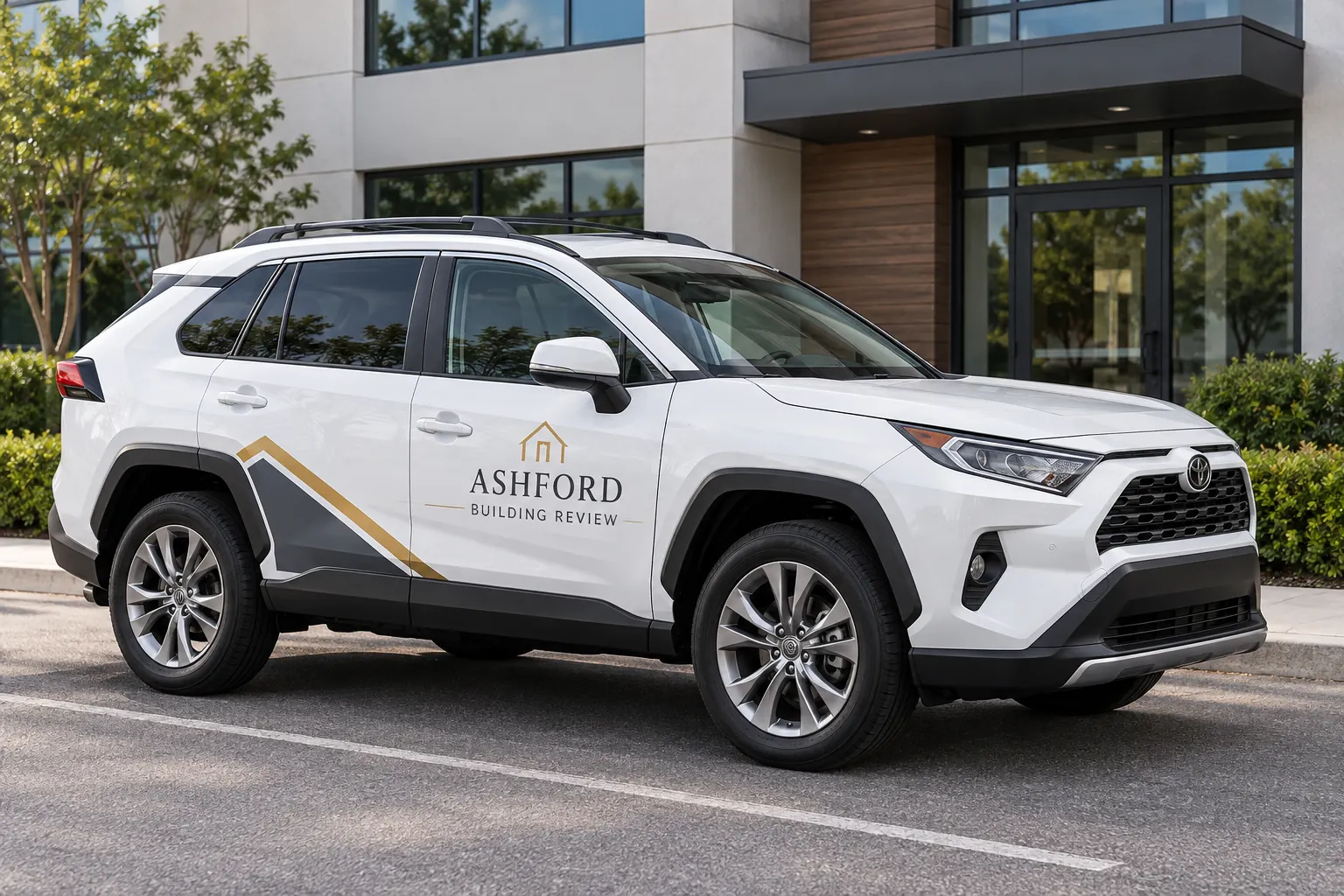
Original fictional commercial planning concept; not a completed customer installation.
Define the inspection business in plain language
Start with the approved company name and an accurate description of its work. Residential inspection, commercial property review and construction-related observations can represent different services and audiences. Decide which description belongs on the vehicle rather than asking the artwork to explain every report the business can produce. Confirm the wording with the person responsible for the actual offer.
Write a short message brief before comparing designs: who should recognize the vehicle, what category should they understand, and how should they contact the business? This gives a designer a useful priority order. A logo, a service descriptor and a current booking route often provide a clearer foundation than a dense list of report types and technical abbreviations.
Separate arrival identification from permission to enter
Vehicle branding can help a site contact recognize a business name, but it does not grant access to a property or establish that an inspection has been authorized. Keep appointment confirmation, personal identification and site access procedures in the business’s normal operating process. Do not add language or imagery intended to make an independent vehicle resemble a public authority.
Ask the business owner to review seals, badges and titles carefully. If a professional designation is proposed, supply the exact approved wording and the owner responsible for verifying its current use. A graphics layout should not turn a personal qualification into a company-wide claim or imply an endorsement that has not been established.
Choose the visibility policy for cars and SUVs
An inspection business may use passenger vehicles as well as dedicated work vans. Discuss how prominently the company wants each asset identified and obtain the relevant owner’s permission. A vehicle used for several purposes may require a different coverage choice from a dedicated fleet unit. Record the decision so the design review starts from an agreed business objective.
Compare limited door identification with a coordinated partial treatment against the actual body. Check windows, trim, roof rails and the interruptions around the proposed wording. Do not judge only from the largest empty panel in a stock image. The fictional Ashford Building Review SUV illustrates a restrained identity; its proportions are a concept rather than measurements for your own vehicle.
Prepare survey images without exposing property details
Photograph the vehicle from both sides, the front and rear, with close views of relevant hardware and existing graphics. Use a location that does not reveal unnecessary customer information. If a project photo includes a property address, report, access instruction or other sensitive detail, prepare a suitable copy for the graphics assessment before sharing it.
Identify the exact vehicle and note known paint repairs, existing adhesive graphics and planned equipment. A roof ladder or external carrier can affect the visible identity even when it does not touch the proposed panel. Describe those normal conditions. The survey should establish the actual vehicle configuration, not disclose the contents of a customer inspection file.
Use qualification wording that can be maintained
If qualifications are part of the approved public identity, define who checks the wording and how changes will be communicated to the artwork owner. Keep the exact text and any permitted marks with the proof record. Avoid using a tiny cluster of unexplained badges as decoration. The viewer should still understand the business name and service category without interpreting a seal.
Review whether a claim applies to the company, a named person or a particular service. That distinction should be resolved by the responsible business contact before production. When staff or affiliations change, identify affected units and decide whether an update is needed. A saved artwork file should not become the only evidence used to justify a continuing claim.
Compare scope for an individual vehicle or a team
State whether you need one owner-operated vehicle, several inspectors’ cars or a standardized fleet program. List the body configurations and the coverage requested on each. Ask the provider to describe included artwork adaptation, any existing graphic removal, relevant surface review and installation arrangements. A common identity does not make a sedan and a high-roof van the same job.
If the buyer wants options, define the decision: modest recognition, a stronger shared fleet identity or another specific goal. This makes a quote more useful than an undefined request for several unrelated designs. Keep quantities and ownership permissions attached to the scope so purchasing knows which assets and approvals the proposed work actually covers.
Coordinate the work with inspection appointments
Identify the person who can release each vehicle and the actual appointment constraints. Provide preferred windows and explain whether another vehicle can cover the work. Ask the supplier to assess the project arrangement before confirming a date. Do not build inspection commitments around a guessed installation duration or an assumed same-day vehicle return.
If the vehicle is awaiting repair or a new carrier, explain the dependency before final layout approval. At handoff, confirm the unit, current configuration and approved artwork reference. A colleague’s similar SUV should not arrive under another inspector’s proof without the relevant body, ownership and wording checks being deliberately completed.
Prepare a clear first project inquiry
Send current exterior photographs, vehicle details, approved company files, accurate service wording and the intended contact route. State the desired visibility level and any qualification marks requiring verification. Include quantities, ownership permissions and release constraints. Mark unresolved wording or equipment questions so the review can address them before dependent decisions are made.
Use the broader vehicle and fleet resources for general coverage choices. For Pelican Wraps, explain whether the request concerns a single inspection vehicle or a team identity that must adapt across several bodies. A focused brief helps move from recognition goals to a defined proposal while keeping property access, professional qualifications and customer report information within their proper business processes.
Frequently Asked Questions
Take the Next Step with a Clear Project Brief
Continue with the resource that matches your next decision:
- Vehicle Wraps
- Fleet Wraps
- Commercial Vehicle Photo & Measurement Guide
- Fleet Wrap Design Standards
- Request a Quote
- Industries
Send the actual vehicle or surface photographs, quantities, approved brand files, requested coverage and timing constraints. Identify open questions so the project review can address your equipment and business needs.
