
Commercial Laundry Delivery Graphics
Commercial laundry delivery graphics should identify the supply business and make the next inquiry useful. A route van, a box truck and a supervisor vehicle may share an identity while serving different customers and loading patterns. Define those roles, the approved service categories and the public contact route before choosing coverage. Then assess the layout against the actual doors, lift equipment and body condition.
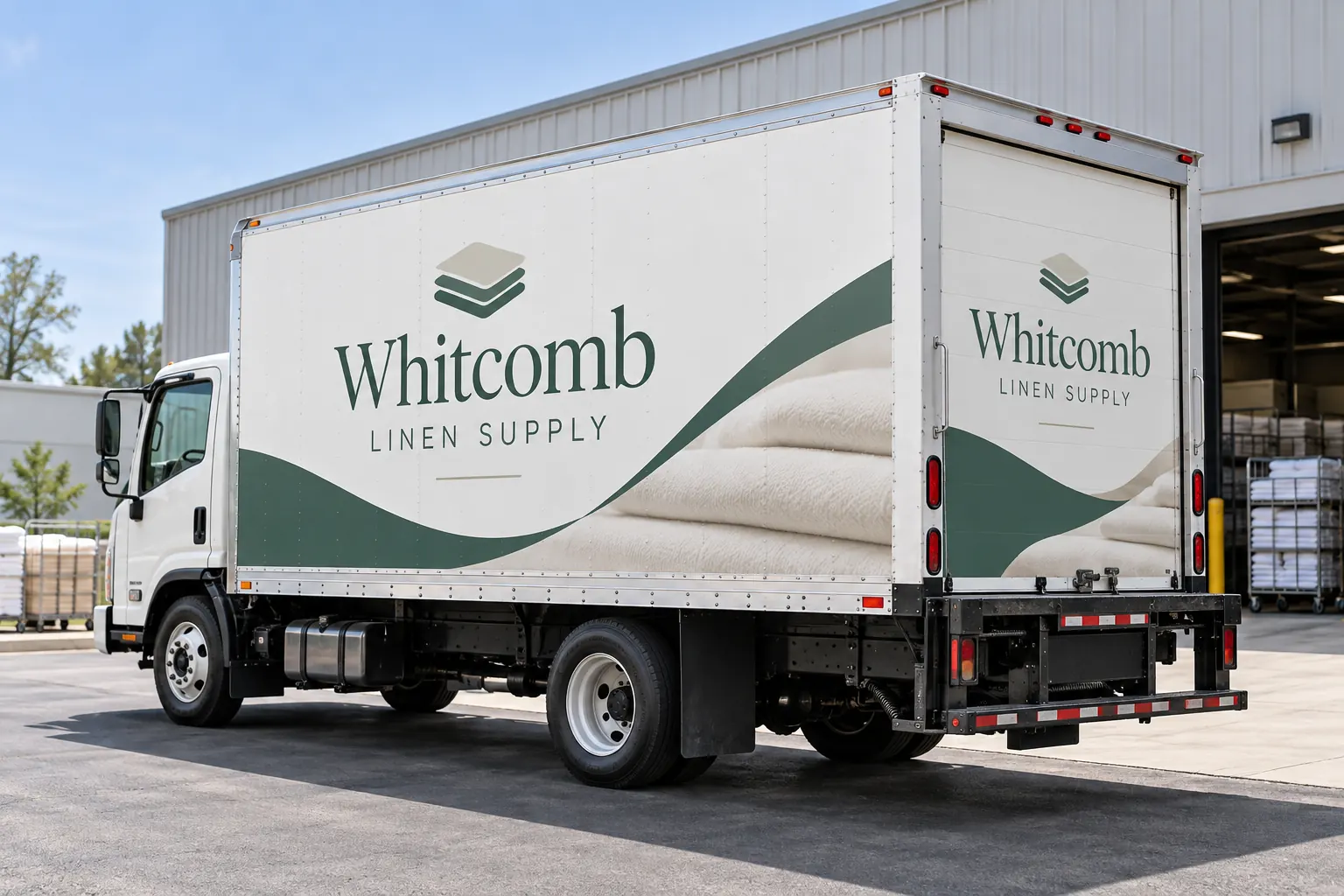
Original fictional commercial planning concept; not a completed customer installation.
Choose the service category your vehicles should communicate
Decide whether the public message describes linen supply, commercial laundry, workwear service or another actual part of the business. A company serving several markets can choose a broad accurate descriptor or controlled versions for specific fleets. Confirm the wording with sales and operations rather than collecting every available service into a crowded side panel.
Identify the next inquiry you want: a prospective account, a general service question or another approved action. A driver’s delivery instructions and the public sales route are different kinds of information. Keep the vehicle identity focused on the audience it is meant to reach while the company’s account and route records handle the details of individual customers.
Keep hygiene and performance promises under explicit review
A clean visual style can communicate an orderly business without making unsupported claims about sanitization, infection control or specific processing results. Have the responsible business contact review any proposed technical or health-related wording. If a certification mark is requested, provide the current permitted asset and identify who verifies its use in the intended context.
Avoid borrowing product or customer marks to make the fleet look established. Permission and approved presentation need to come from the relevant business owner. A graphics provider can organize the approved content, but a proof does not establish processing performance, qualification or a customer relationship. Keep the company identity accurate enough to remain useful when service arrangements change.
Survey the body in its normal delivery configuration
Provide clear photographs of both sides, cab and rear, plus details of door hardware, tracks, steps and lift equipment. Identify the actual body manufacturer or configuration where available. Explain normal loading arrangements and the areas obscured by equipment. A box truck’s large side does not eliminate the need to review the rear and moving components separately.
For vans, show windows, handles, racks and any existing graphics. List known repairs or surface concerns. If the fleet includes several body sizes, identify each group and quantity. A stock image of a clean empty truck cannot establish the condition or equipment arrangement of the asset that will actually receive graphics.
Make side and rear messages serve different spaces
Use the broad side to establish the company identity and a concise service category. Review the rear as its own composition around doors, hinges and equipment. Essential wording should remain coherent on the actual surfaces selected for treatment. Do not compress the entire side design into the rear without checking the divisions and practical obstructions.
The fictional Whitcomb Linen Supply box truck illustrates a restrained name, folded-linen motif and jade visual theme. It is an original concept, not a customer installation or a measured production layout. Use it to discuss an overall direction, then rely on current photographs and project review to define the actual areas and placement on your delivery vehicles.
Separate public contact information from route management
Choose the approved public inquiry destination and verify every occurrence from one current source. If branch contact details differ, record the applicable units and keep those versions controlled. Avoid placing temporary route phone numbers or customer-specific instructions into a permanent master without an explicit business decision about their purpose and update process.
Use stable unit references in the project file so photographs, proofs and future panel requests can be matched reliably. Do not publish customer lists, route schedules or access details to fill spare space. Those records belong in the company’s operating process. A clear public identity can remain consistent while dispatch makes the daily adjustments needed for deliveries.
Compare coverage across vans and delivery bodies
Request defined options with quantities and included areas for each configuration. Identify whether the scope covers a cab, box sides, rear doors or another asset. Ask how artwork adaptation, existing graphic removal, relevant condition assessment and installation arrangements are addressed. Compare those details alongside the totals so a buyer can understand what changes between proposals.
If leased or substituted vehicles are part of the operation, identify the relevant permissions and intended use before committing to coverage. Do not assume a temporary unit can receive the same treatment as an owned long-term asset. Keep those decisions visible in the brief, especially when a fleet program is being priced from a representative truck.
Schedule around routes using actual release authority
Ask operations which units can be taken out of delivery service and who can approve the sequence. Provide preferred windows and fixed constraints, then have the graphics provider assess the project arrangement. Keep any tentative date linked to artwork approval, vehicle readiness and the defined work. Do not build route promises around a generic estimate of installation time.
Confirm the unit and body at handoff. A different truck arriving from the same depot may have another rear-door arrangement or an older contact version. Review substitutions deliberately before work proceeds. Retain the agreed contact and sequence so the depot, purchasing team and supplier are working from the same current plan.
Create a useful record for fleet additions and replacements
Retain the approved proofs, unit list, service wording source and contact variants. Add current photographs after body repairs or equipment changes. For a replacement request, identify the affected panel, current condition and relevant artwork reference. Ask for the actual scope to be assessed rather than assuming a small graphic patch or complete body refresh is automatically the appropriate response.
For Pelican Wraps, send the actual asset list, photographs, approved brand files, requested coverage and route release constraints. Flag leased units, existing graphics and any claims requiring review. Use the broader logistics, box truck and fleet resources for general decisions, then make the laundry business’s service categories and delivery hardware clear enough to support a practical proposal.
Frequently Asked Questions
Take the Next Step with a Clear Project Brief
Continue with the resource that matches your next decision:
- Logistics & Delivery
- Box Truck Wraps
- Fleet Wraps
- Fleet Wrap Design Standards
- Request a Quote
- Industries
Send the actual vehicle or surface photographs, quantities, approved brand files, requested coverage and timing constraints. Identify open questions so the project review can address your equipment and business needs.
