
Crew Cab Pickup Door Graphics Layout
Crew cab pickup door graphics layout needs to account for several doors, handles and panel breaks within a relatively compact identity area. Decide which message should remain together, then compare it with the actual cab configuration. This guide helps the buyer organize the layout review and handoff. It does not prescribe a universal gap, transfer an older truck’s dimensions or treat a concept as a measured production template.
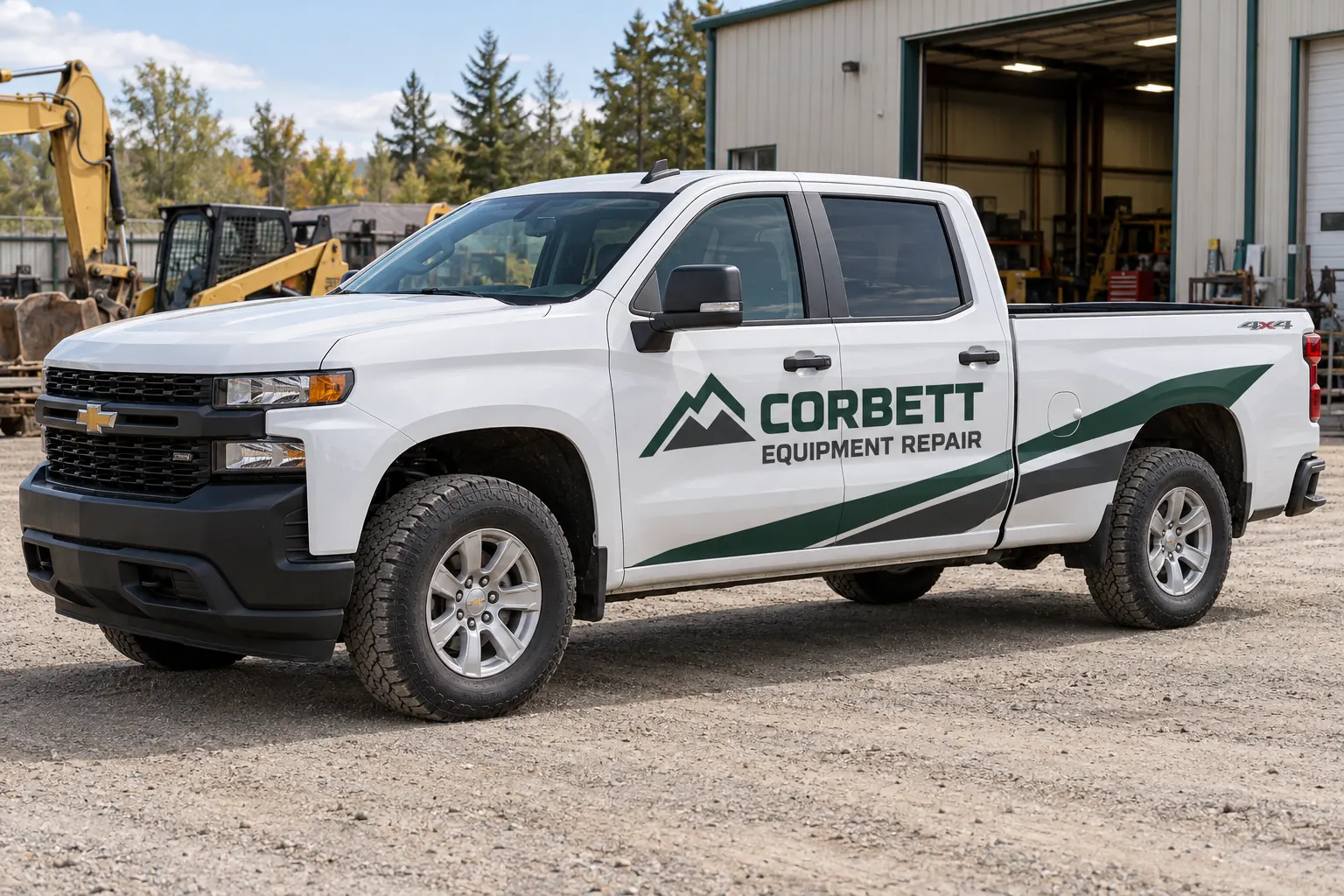
Original fictional commercial planning concept; not a completed customer installation.
Identify the actual cab before reviewing a door composition
Record the truck reference and current photographs of both sides and the rear. Identify the actual cab and door arrangement rather than relying only on a broad pickup model name. Show handles, trim, existing graphics and any accessories that affect the proposed area. If several cab versions are in the fleet, keep them as separate reviewed groups.
List planned changes such as a different bed, utility body or exterior fit-out. The door identity may need to relate visually to those areas even when the immediate request concerns the cab. Mark provisional information clearly. A provider can discuss direction from a reference, but the actual truck information is needed before dependent placement and scope decisions are treated as confirmed.
Choose which parts of the message should remain together
Write the company name, descriptor and contact action separately, then decide which elements form one essential unit of meaning. A name split by a door boundary can create a different reading problem from a decorative stripe crossing the same gap. Ask the layout review to address the actual words and symbol rather than applying one rule to every element.
For fictional Corbett Equipment Repair, the concept uses a shared identity across a crew cab. It illustrates one visual direction, not a measured result or a recommendation for every pickup. Your business may prefer a more compact door identity or a different arrangement. State the communication priority and provide approved text so the designer can assess the actual body and message together.
Compare the available composition choices deliberately
One direction may keep a complete identity on a defined door area; another may coordinate several cab panels while maintaining a coherent name. Ask what each direction is meant to accomplish and which actual areas it uses. Keep the comparison tied to the same truck and approved content so the buyer can assess a meaningful layout choice.
Avoid deciding from a flattened rectangle alone. Review the real door boundaries, handles and body shape in the supplied views. A wider composition is not automatically more useful, and a compact arrangement is not automatically too small. The project discussion should connect the design to the business goal instead of choosing solely by how much of the cab appears covered.
Review ordinary door states without creating operating instructions
Identify whether the business needs a relevant parked open-door reference as part of the communication review. Use photographs obtained through the company’s normal authorized safe process. Keep the purpose clear: the buyer wants to understand what happens to essential wording in an ordinary situation, not to establish a new way of operating or positioning the truck.
If an open-door view changes the message, describe the specific effect. Distinguish it from how the identity reads with doors closed. The business can then choose its priorities with the provider. Do not demand visual continuity in every imaginable state or assume one reviewed arrangement establishes suitability for all other cab versions and future accessories.
Keep cab wording and bed graphics versions connected
If the pickup also carries a bed or service-body design, identify its relevant artwork reference and current contact information. Check that the two areas use the same approved identity or a deliberately controlled variation. A new cab proof should not unknowingly revive a retired descriptor because the bed file came from an older project folder.
Record the version by actual unit or controlled body group. When another pickup enters the fleet, verify the cab, bed and equipment before reusing the earlier files. A shared model badge or company color does not establish that the complete layout is interchangeable. Keep general brand rules distinguishable from the specific arrangement approved for one truck configuration.
Compare proposals against included areas and artwork work
State whether the request covers cab doors only, a coordinated cab treatment or defined bed and rear areas as well. Identify quantities and body groups. Ask how artwork adaptation, existing graphic removal, condition assessment and installation arrangements are addressed. A rendering that shows several areas should not silently become the scope for a quote described only as door graphics.
If options are requested, explain the decision the buyer needs to make. Compare the actual descriptions alongside the totals. Keep optional coverage and unresolved body information visible. A useful proposal lets purchasing understand which assets and work are included while the artwork owner can see the message and version each group will use.
Prepare a door-layout decision handoff
Retain the actual truck photographs, selected composition, approved wording source and proof reference. Record why the arrangement was selected and any limits associated with the cab or equipment. When a concern appears, identify the specific view and message component instead of sending a general instruction to move everything away from the doors.
For Pelican Wraps, send the real cab and body details, current exterior photographs, approved identity files and requested areas. Include fleet quantities, equipment changes and release constraints. Use the broader pickup and fleet standards resources for the overall program. This focused handoff makes the crew-cab door question clear enough to assess without turning a concept or remembered older truck into a universal layout rule.
Frequently Asked Questions
Take the Next Step with a Clear Project Brief
Continue with the resource that matches your next decision:
- Pickup Truck Wraps
- Truck Wraps
- Fleet Wrap Design Standards
- Commercial Vehicle Photo & Measurement Guide
- Request a Quote
- Vehicle Wraps
Send the actual vehicle or surface photographs, quantities, approved brand files, requested coverage and timing constraints. Identify open questions so the project review can address your equipment and business needs.
