
Dually Pickup Bed Graphics Planning
Dually pickup bed graphics planning should begin with the actual bed profile and the business message. Wider rear body features change the available composition compared with an uninterrupted flat side illustration. Use current side and rear-quarter views to describe the layout question, then ask for the specific surfaces and coverage to be assessed. Keep the cab, bed and tailgate connected through a controlled identity and unit record.
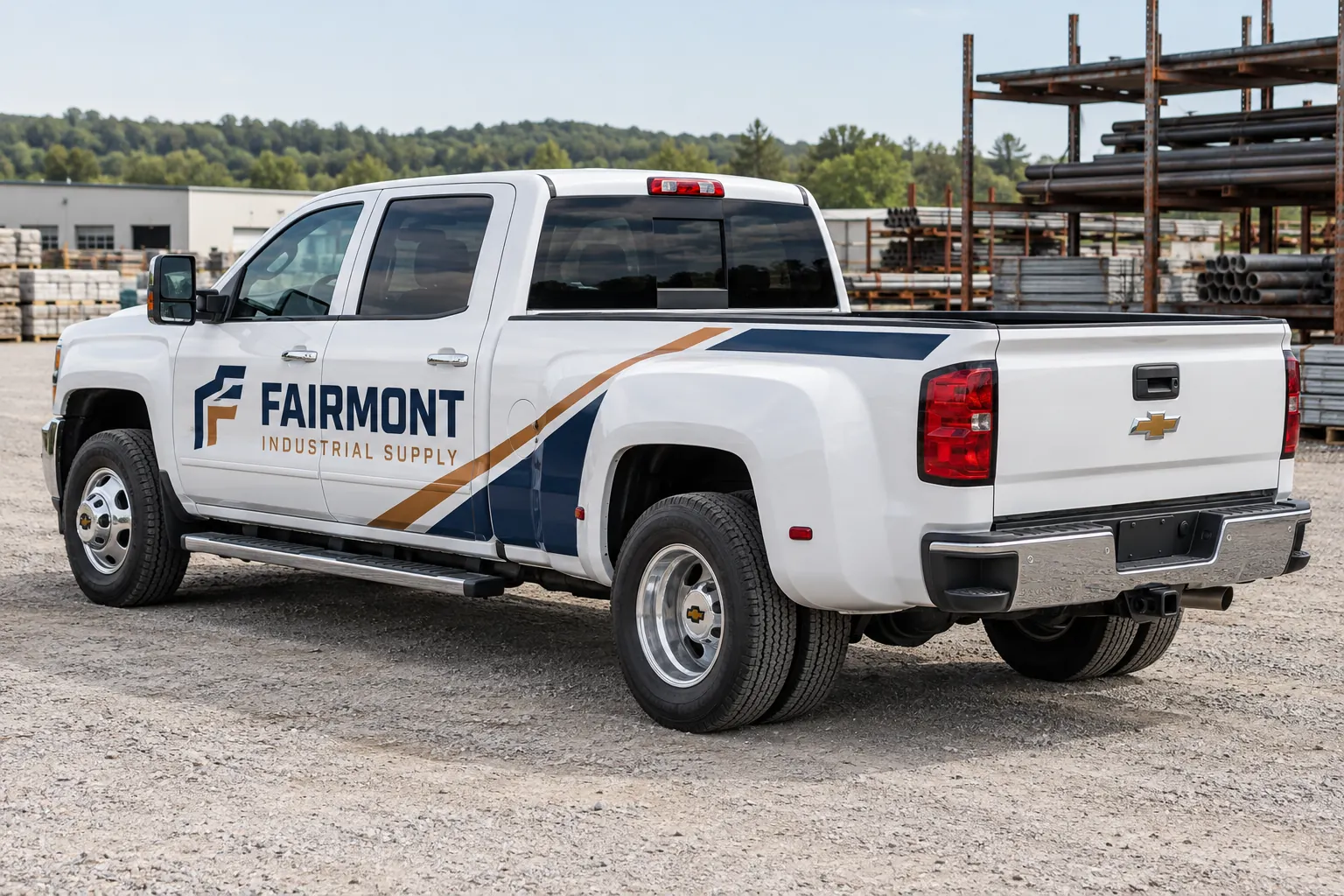
Original fictional commercial planning concept; not a completed customer installation.
Identify the bed that is actually on the truck
Record the unit and current body configuration. Provide side, rear and rear-quarter photographs showing the fender profile, fuel area, trim, lights and relevant accessories. If the truck carries a replacement bed or another body type, identify that explicitly. A chassis model and the word dually do not describe every proposed application surface.
List known repairs, existing graphics and condition concerns. Keep uncertain history labeled. If a toolbox, rack or other fit-out is planned, explain the intended arrangement before dependent placement is finalized. The provider needs to review the actual body and message rather than infer the complete project from a stock pickup photograph.
Choose the role of the bed within the identity
Decide whether the bed carries a secondary visual theme, a business name, a service descriptor or another approved component. Identify which information must remain coherent independently and which relates to the cab. Avoid using the bed as a leftover area for every service line that did not fit on the doors. A clear hierarchy gives the designer a useful problem to solve.
For fictional Fairmont Industrial Supply, the concept coordinates navy and copper graphics across the cab and wide rear profile. It illustrates one visual direction, not a measured template or completed customer truck. Your own brief should state the actual approved identity and the intended role of each area so the project can be assessed without borrowing the illustration’s proportions.
Review the profile in more than one relevant view
Compare the side view with a rear-quarter view and the actual rear. Identify where the shape changes the apparent relationship between the wording, wheel area and decorative elements. Describe any concern against the actual photograph rather than demanding that the design look flat from every angle. The buyer can set a communication goal while the provider evaluates the relevant layout and surfaces.
Keep essential wording distinguishable from the decorative treatment. A visual theme can follow the body while a service line may need a more deliberate location. Do not invent a universal placement or allowance from one example. The actual bed, message length and surrounding equipment need project-specific review, especially when several different truck configurations share the company identity.
Treat the tailgate as a separate message area
Provide a clear current rear photograph with handles, lights and other relevant features visible. Decide what the intended rear viewer should recognize and which contact action belongs there. Do not assume that the side composition can simply be reduced onto the tailgate. Check the approved wording and hierarchy in the actual rear proof.
If equipment or a trailer normally changes the useful rear view, explain that context without treating every possible arrangement as one guaranteed sightline. The project can identify the relevant business priority and its limits. Keep operational markings or features that must remain visible under the responsible fleet contact’s review rather than asking the designer to infer their status.
Compare cab, bed and rear scope explicitly
State whether the request is for bed areas only or a coordinated treatment including cab and tailgate. Identify quantities, actual body groups and any existing graphic work. Ask how artwork adaptation, condition assessment and installation arrangements are handled. A concept showing the whole truck does not establish that every area belongs in the quoted work.
If the buyer wants options, define the purpose of each: a restrained identity, a stronger side theme or another concrete business goal. Compare the full descriptions with the totals. Keep unconfirmed body details and optional coverage visible so purchasing does not interpret a preliminary visual idea as a complete production specification.
Retain a body-specific reference for future changes
Keep the approved proof, current photograph set and actual bed reference together. Identify the public wording and contact source. If the truck receives a replacement bed, new accessories or changed branch information, review the affected assumptions before reordering. A shared cab or similar exterior color does not establish that the earlier bed layout remains applicable.
For a later panel concern, provide factual photographs and identify the specific area and artwork version. Ask for the actual replacement scope to be assessed instead of assuming a small piece or a whole side is automatically required. Retain the reviewed decision so future work begins with the actual history rather than a remembered description of the original design.
Prepare a bed-layout brief with useful evidence
Use the working record below to collect the unit, profile photographs, message role, rear priority, requested areas and open questions. Download the text and retain supporting evidence through your normal project process. The record is a buyer’s layout handoff, not a measurement sheet or confirmation that a particular treatment is suitable for every curve or surface.
For Pelican Wraps, send the actual truck and bed details, current photographs, approved identity files, coverage goals and release constraints. Use the broader pickup and fleet resources for the overall program. A focused brief makes the dually bed question assessable while keeping the physical surface review, business content approval and actual commercial scope connected to their proper sources.
Draft and Download Your Working Record
Draft your entry, then download a copy before leaving. Send any project decision through the communication process agreed with your supplier.
Frequently Asked Questions
Take the Next Step with a Clear Project Brief
Continue with the resource that matches your next decision:
- Pickup Truck Wraps
- Truck Wraps
- Fleet Wrap Design Standards
- Commercial Vehicle Photo & Measurement Guide
- Request a Quote
- Vehicle Wraps
Send the actual vehicle or surface photographs, quantities, approved brand files, requested coverage and timing constraints. Identify open questions so the project review can address your equipment and business needs.
