
Commercial Entrance Wayfinding Graphics
Commercial entrance wayfinding graphics should answer the first arrival question using a destination and approach selected by the responsible premises team. This brief maps that question to actual views, current names and the proposed graphics areas. It focuses on finding the intended entrance, while the visitor-route record follows later decisions inside the facility. Use the actual site instruction rather than asking a designer to infer the right door or invent an arrival route from a frontage photograph.
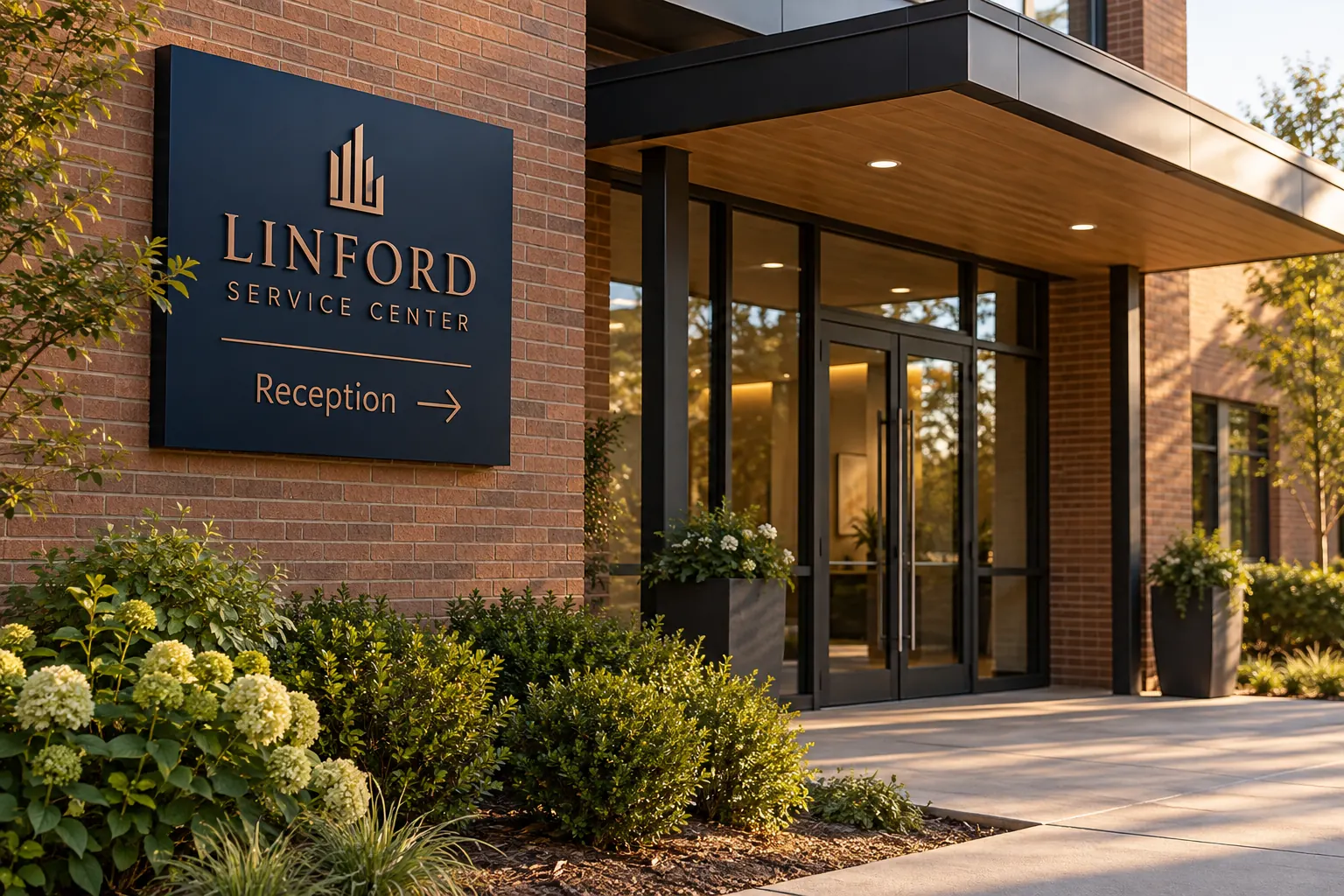
Original fictional commercial planning concept; not a completed customer installation.
Define the arrival question and destination
Ask who is arriving and what entrance they should identify through the business’s actual process. A customer looking for reception may need a different instruction from a delivery contact. Name the destination with its current source and owner. Keep the requested message concise enough to answer the specific first decision.
State the start context supplied by the premises team, such as the visitor arrival point or an identified approach. Do not select an entrance merely because it appears most prominent in the photo. The business needs a coherent current arrival instruction before the graphics provider can assess how the proposed message might communicate it. Keep unsettled route or destination questions visibly pending.
Collect actual approach and entrance views
Provide photographs showing the relevant approach context, the intended entrance and nearby doors or features that could create confusion. Identify each view in the brief. Keep a clear relationship between a proposed sign area and the destination it is meant to identify. A close image of a blank panel alone may not explain the arrival problem.
An illustrative record can state start context visitor arrival area, destination Reception, source current facility arrival instruction and photograph north-entry-context. These are example fields, not directions for a real premises. Ask the actual site owner to supply and confirm them. A useful view package helps the provider understand the question without guessing where the building wants customers to enter.
Use the same names across the arrival sources
Compare the proposed destination wording with the business’s current arrival communications and any relevant location master. Record discrepancies and the owner who resolves them. A message reading Main Office can conflict with another source directing visitors to Reception even when both seem reasonable to different employees.
If the business wants a naming change, identify that separate decision and the actual sources affected. Use the multi-building naming standard when the project spans several destinations. The entrance brief should carry one current instruction, with historical alternatives labeled as such. This prevents a new graphic from adding another apparently official name to an already confusing arrival experience.
Define proposed graphics locations and supplied requirements
Identify the areas the business wants considered and provide current surface photographs and known history. Record actual premises, accessibility or other signage information supplied by the responsible team and identify its reviewer. Keep the proposed placement provisional until the relevant project assessment has occurred.
Ask the provider what further survey or information is needed for the actual product and work. Do not infer a universal position, letter size or installation method from a concept. The Linford Service Center illustration is a fictional visual example. Your brief should use real approach evidence and current site instructions so the proposal addresses the intended destination and actual requested surfaces.
Keep the commercial scope explicit
List the requested graphic instances and explain whether the project concerns an existing sign area, new printed identity treatment or another defined scope. Ask which physical components, fabrication and installation arrangements are included. Do not assume a broad wayfinding total covers every piece of a site’s complete signage program.
If alternatives are requested, keep the actual destination, source wording and approach evidence consistent. Explain the question each option should answer and identify any change in physical work. Compare those descriptions alongside the totals. This gives the buyer a practical way to choose a proposal without treating an attractive rendering as a complete account of every surface, mounting or premises question.
Review the proof from the identified arrival context
Check exact destination wording against the current source, then connect the proposed message and any direction with the actual approach and entrance views. Have the responsible premises owner review the intended meaning. Record the proof version and observations. The designer should receive a specific correction if the layout points to the wrong door or relies on an unclear location assumption.
Keep business preference and required-source review distinguishable. If the destination or proposed area changes, identify which decisions and scope references need updating. Do not apply an earlier response to a new route simply because the same company identity remains. The useful review records which arrival question was considered and what remains open before the relevant next project stage.
Prepare a maintainable entrance inquiry
Use the local worksheet below to retain the audience, start context, destination source, actual view references, proposed areas and decision owners. Name the person who reports an entrance reassignment or changed arrival instruction. Keep prior versions as history and one current reference findable for future replacement or update requests.
For Pelican Wraps, send the actual approach and entrance photographs, current destination wording, relevant identity files, supplied premises information and requested scope. Identify pending questions, access and desired timing. Ask for the assessment and proposal appropriate to that project. Use commercial signs for the buying discussion and the visitor-route record for later interior decisions. A useful brief turns a vague request to add an arrow into a clear first-arrival communication task.
Draft and Download Your Working Record
Draft your entry, then download a copy before leaving. Send any project decision through the communication process agreed with your supplier.
Frequently Asked Questions
Take the Next Step with a Clear Project Brief
Continue with the resource that matches your next decision:
- Signs & Graphics
- Commercial Signs
- Office Room Identification Graphics
- Facility Visitor Route Graphics Planning
- Artwork Guidelines
- Request a Quote
Send the actual vehicle or surface photographs, quantities, approved brand files, requested coverage and timing constraints. Identify open questions so the project review can address your equipment and business needs.
