
Retail and Franchise Fleet Graphics
A retail or franchise fleet should carry one recognizable brand while allowing accurate local details and different vehicle bodies. Organize the approved identity, central and local review responsibilities, and a repeatable artwork record before delivery and support vehicles are added.
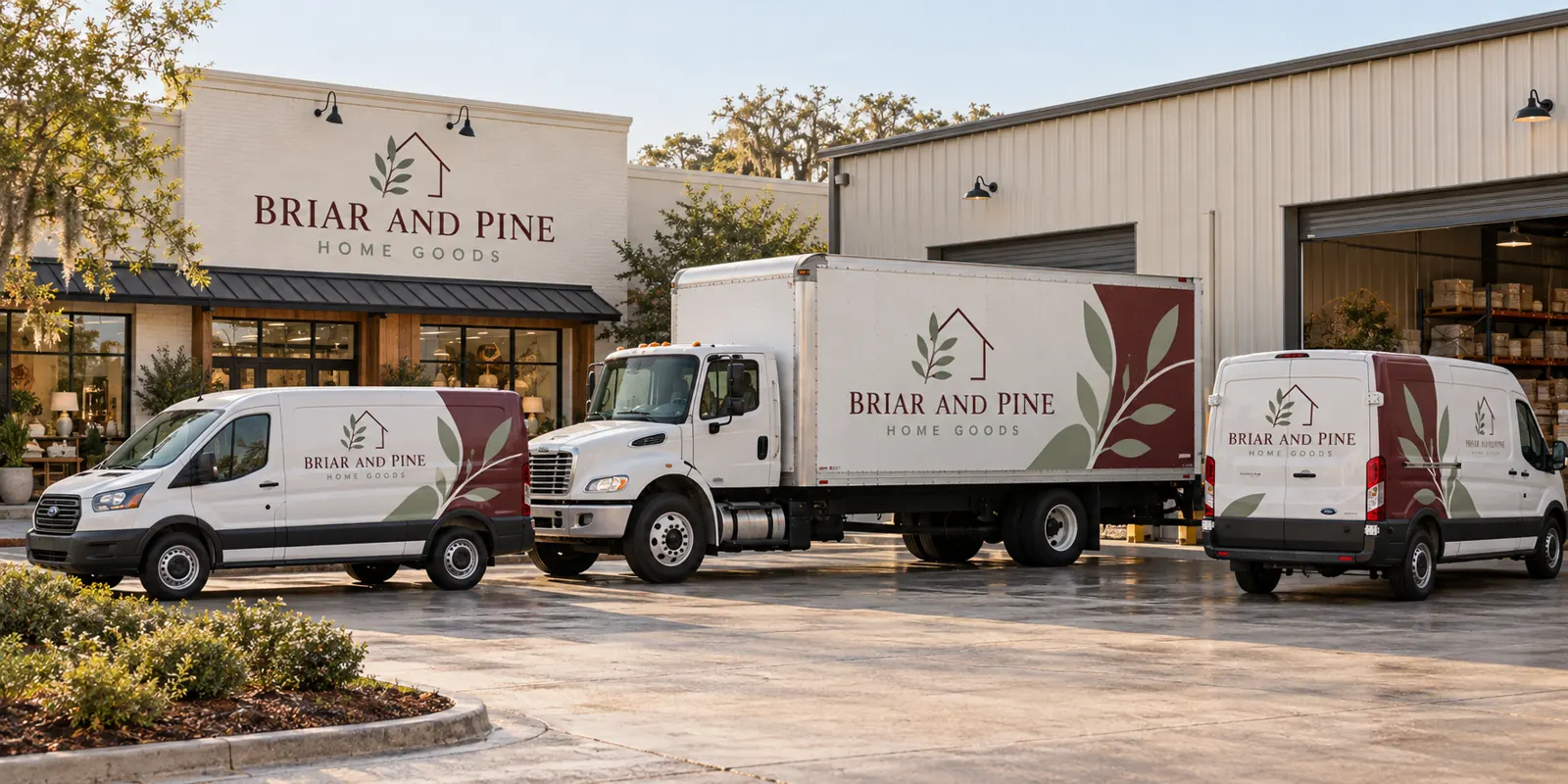
Fictional commercial wrap design concept; not a completed customer installation.
Define the brand the delivery fleet should lead with
Start with the approved retail or franchise identity and the message a customer should recognize. A delivery truck, service van and local support vehicle may share the same brand while serving different roles. Keep the company name and a useful description clear before adding secondary offers or decorative imagery.
Decide which contact route belongs on each vehicle. A central website and a local enquiry number can have different purposes, so establish the hierarchy rather than displaying several unexplained options. Keep the wording accurate to the actual operator and the business relationship represented by the vehicle.
Organize central standards and local information
Supply the current authorized brand package, including logos, colors, naming conventions and any fleet standards. Identify which elements are fixed and which local fields may vary. A franchise or partner relationship should use the approvals relevant to the actual project rather than a layout copied from another operator.
Name the central brand reviewer and the person who verifies local details. Record store, division or service wording in a maintained source list. This keeps later additions from introducing an outdated phone number, an unapproved offer or a different version of the identity simply because an older file was convenient to reuse.
Inventory delivery trucks, vans and support vehicles
List the exact configurations and quantities with current side and rear photographs. Box lengths, van roof heights, wheelbases, doors and accessories affect the layout. A common manufacturer or model name does not establish that the same production file fits every unit in the program.
Use the box truck page, delivery-van route and commercial SUV page for body-specific planning. Keep unusual vehicles separate in the equipment list so the proposal and proof review reflect the actual fleet rather than an assumed standard body.
Separate the stable identity from campaign content
A retail fleet can carry a stable company identity while approved campaign content changes. Define those roles before layout work. A short-lived offer should not accidentally become the only explanation of the business, and its wording needs the same accuracy and approval discipline as the main brand.
Identify any campaign duration, image permissions or other review conditions relevant to the request. Keep the approved version linked to the vehicles on which it appears. Later replacement options depend on layout and material condition, so discuss the actual affected area rather than assuming every campaign update is a simple exact-match panel change.
Adapt coverage while preserving a recognizable system
Lettering, partial graphics and fuller coverage offer different visual directions. Compare defined options on the same vehicles with the same core message. A broad box side can carry more detail than a compact van, but both should preserve the hierarchy that makes the business recognizable.
Review rear views around hinges, gaps, latches and loading hardware. State the included panels and exclusions in the scope. The partial-wrap guide helps define the boundary, while graphics management connects approved versions, local fields and future additions with a maintained record.
Coordinate condition and rollout across vehicle owners
Identify who owns and authorizes each vehicle, who releases it and who manages delivery and collection. Keep central design approval distinct from the practical arrangements for an individual unit. A multi-operator program needs clear responsibilities so a confirmed design is not mistaken for a confirmed installation date.
Disclose existing vinyl, residue, repairs and damaged finishes with close photographs. Removal, preparation and suitability need review, and graphics should not be treated as a repair for an underlying surface problem. Use the inventory worksheet to connect body versions, photos, condition questions and release windows.
Prepare the retail or franchise fleet brief
Send the equipment list, quantities, current photos, authorized brand sources and essential wording. Identify local fields, review owners, coverage preferences and timing. State whether the request is a new identity, a campaign change or additions to an established system. Make unknown details visible before the scope is approved.
Read the artwork guidelines and request a retail or franchise fleet quote. The delivery vehicles shown here use a fictional retailer identity created for this page. They demonstrate a possible coordinated direction without presenting customer work, franchise authorization, sales results or an actual multi-location relationship as evidence.
Frequently Asked Questions
Turn Your Vehicle Details Into a Clear Project Brief
Send current photographs, vehicle quantities, logo files, coverage preferences and timing. Identify old graphics and paint concerns so the project review can address the actual equipment.
Explore planning resources or request your commercial wrap quote.
