
About Pelican Wraps
Pelican Wraps brings commercial graphics planning, design, print production and installation into one project conversation. The focus is working businesses: a contractor's service vehicles, a delivery fleet, a freight operator's trailers, a food business's mobile equipment or a charter operator's vessel. The useful result begins with a clear identity and a practical plan for the equipment that carries it. Our Harvey location supports that conversation without asking you to understand production terminology before you begin.
A Clear Commercial Direction
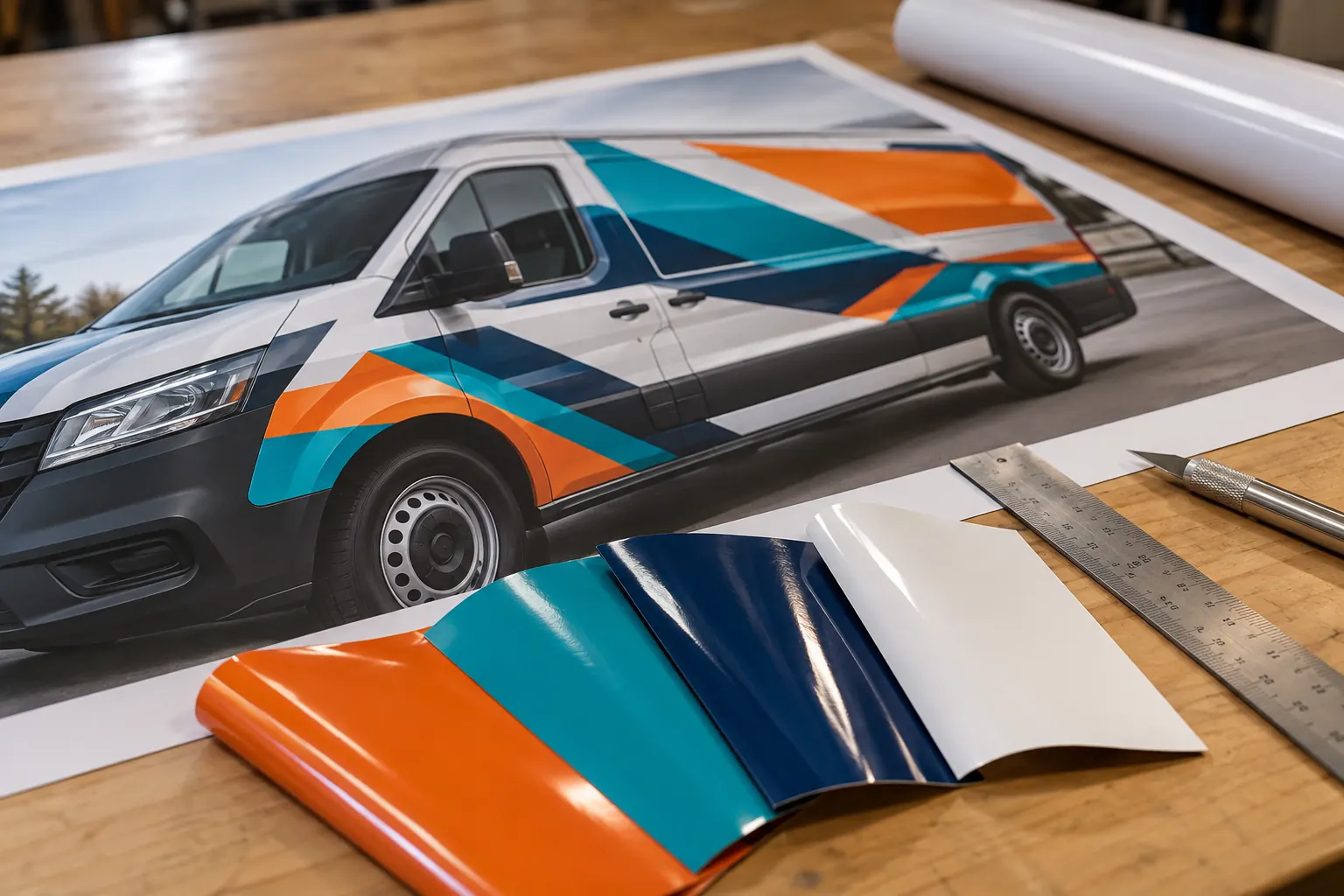
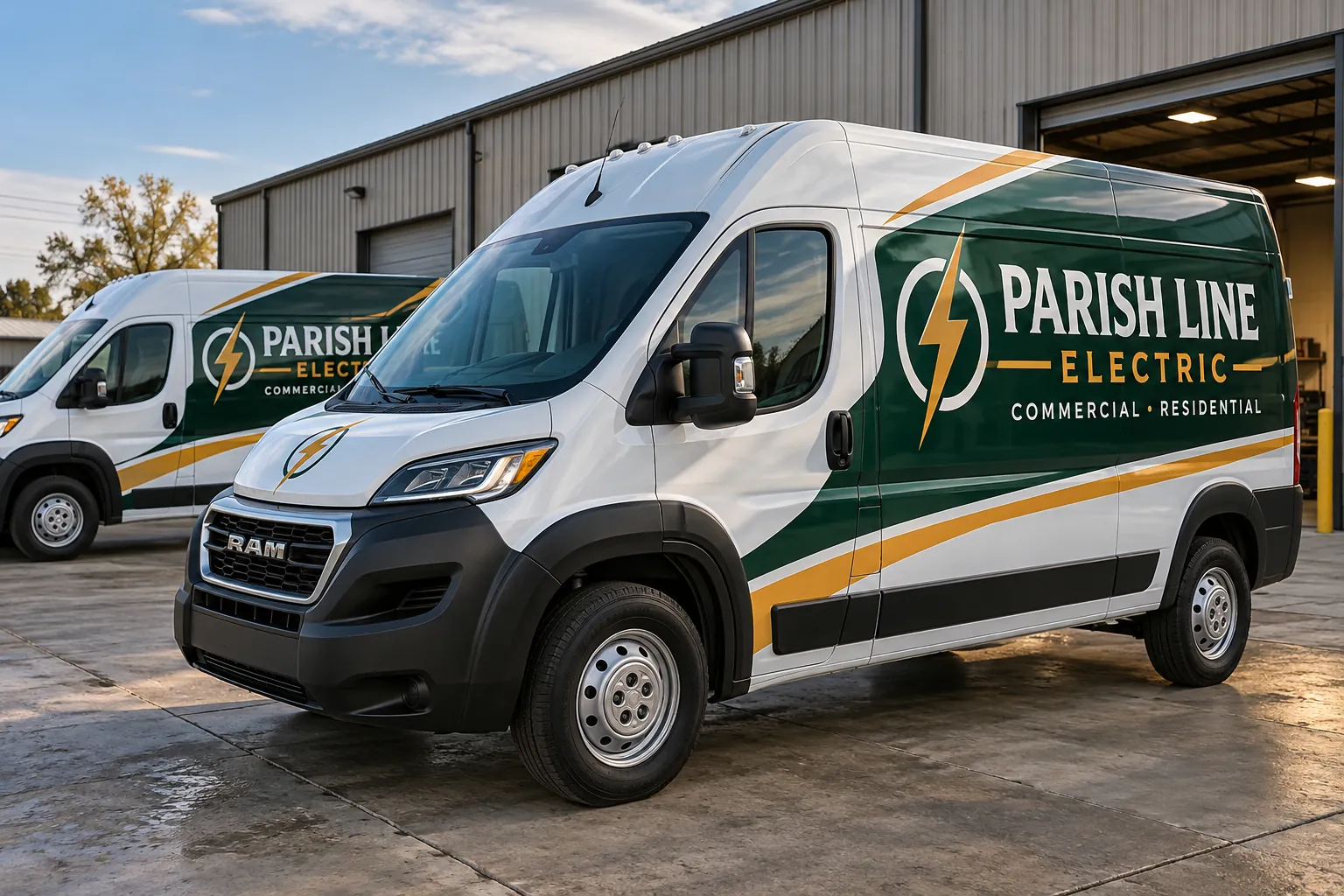
These fictional design concepts illustrate practical business branding. They are not completed customer installations. Explore fleet programs, box truck wraps and commercial van graphics to compare the planning requirements for your equipment.
Your Business Message Comes First
The first design decision is what a prospective customer needs to recognize. A company name, a plain-language service description and a clear contact route provide a useful starting hierarchy. A truck's available space is not a reason to include every service, slogan and social handle at the same size. Tell us the action you want someone to take after seeing the vehicle, then arrange the information around that purpose.
A business owner choosing graphics for the first time may still be comparing lettering, partial coverage and a full wrap. A fleet manager may already have strict brand rules and approved files. Both need a scope that connects the communication goal with the actual equipment. Explain what is fixed, what is open to design and who can approve the final message. This keeps the project discussion focused on decisions that matter to your business.
Design Around Working Equipment
A vehicle is not a flat poster. Doors, handles, racks, toolboxes, mirrors, seams and equipment shape the useful graphic areas. The layout should reflect the year, make, model and body you actually operate. Photographs are especially helpful when aftermarket equipment or repairs have changed the original body. Review the normal working configuration so essential wording remains visible when doors or hatches are open.
Different commercial applications need different questions. A food trailer's serving side must communicate during service. A shuttle needs its operator identity coordinated with passenger access and functional equipment. A boat needs a defined hull area, finish review and practical access plan. Use the relevant service guide to gather the right information, then bring the unanswered questions into the project inquiry. A generic rendering cannot replace those application decisions.
One Scope from Artwork to Installation
Our in-house workflow connects the visual design with production and installation planning. The approved artwork should be paired with a clear description of covered surfaces, material specifications, preparation and any exclusions. Ask how existing graphics, damaged finish or unusual hardware affect the proposal. Those items should be understood before equipment is released from service, rather than discovered only after the design is approved.
Keep the proof approval and installation appointment as separate milestones. The proof confirms the message and layout; the operational plan confirms when and how the equipment can be worked on. Let the project team know about dispatch requirements, event dates and vehicle-access constraints. A realistic agreement about those details is more useful than a general promise that every application can follow the same timetable.
A Fleet Standard That Can Grow
Fleet consistency comes from controlled decisions as well as matching colors. Record each unit, its body configuration, approved artwork version and variable information. Decide which elements stay consistent and which can change, such as unit numbers or different service lines. One responsible proof approver helps prevent conflicting directions when purchasing, marketing and operations all contribute to the project.
A new vehicle or damaged panel should be reviewed against that record. A different model may need a different placement even when the identity stays the same. Retain final proofs and the production information provided for your project. This gives future additions and repair discussions a useful starting point and avoids relying on an old photograph or an unapproved file as the only brand reference.
Clear Examples and Project Evidence
The selected illustrations on this site show plausible commercial wrap concepts for local businesses and fleet operators. Their purpose is to make coverage, hierarchy and business messaging easier to discuss. They are identified as fictional design examples. A concept can demonstrate a visual direction, but it cannot establish that a particular customer installation occurred or that the pictured vehicle produced a measured business result.
When evaluating an actual project, look for evidence relevant to the application you need. Ask what surfaces and material system were involved and how the design dealt with the equipment. Use documented completed work separately from illustrative concepts. Written material and application terms should be reviewed for the proposed project itself; a photograph is not a substitute for the scope, care instructions or warranty details.
Start in Harvey with the Details You Know
Pelican Wraps' shop location is 1201 MacArthur Avenue, Suite B, Harvey, Louisiana 70058. Use the directions link and confirm the appointment and equipment-access arrangements before traveling. Service-area information explains project planning for businesses based elsewhere; it does not indicate additional physical branch offices. If the equipment cannot readily travel, explain where it is kept so the access discussion starts with the right information.
You can begin without every measurement or production file finalized. Send the vehicle or vessel type, quantity, photographs, approved business wording and artwork status. Describe your preferred coverage and the timing constraints that affect operations. Identify unknowns so the next discussion can define the necessary review. The quote form provides a straightforward starting point for one commercial vehicle, a coordinated fleet or another business graphics application.
Questions About Working with Pelican Wraps
Plan the Next Step
Read our process, compare commercial services and review project-planning resources. Bring your vehicle information, business message and timing questions into a focused project inquiry.
Choose Materials With a Clear Specification
Review film, laminate, vehicle finish and installation planning before approving a commercial wrap. Our materials and installation guide explains the information to collect and the questions to ask.
