
Locksmith Service Vehicle Graphics
Locksmith service vehicle graphics require a deliberate choice about visibility. Some operators want prominent local recognition; others need a restrained business identity suited to the work they perform. Decide that policy before selecting coverage. Then build a readable message around the actual services, vehicle configuration and contact process, without exposing sensitive operational details or implying an affiliation the business does not hold.
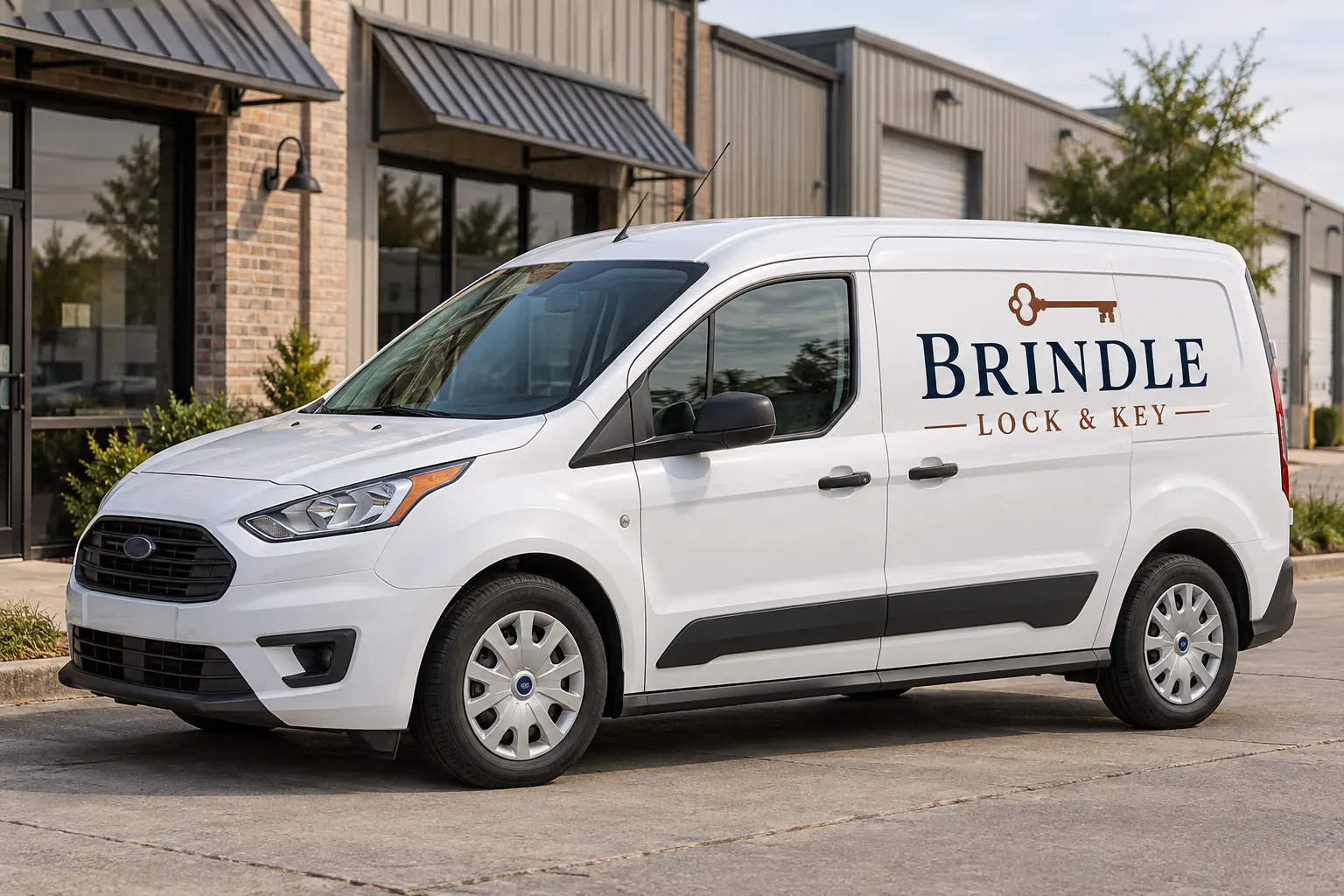
Original fictional commercial planning concept; not a completed customer installation.
Decide how visible the service identity should be
Ask the business owner to define the purpose of the vehicle branding. A van used for retail lock service may have a different visibility goal from a vehicle supporting commercial access work. Record whether the goal is broad recognition, modest identification or another approved approach. The graphics brief should follow that business decision rather than assuming the largest possible treatment is always preferred.
Compare examples at the intended coverage level. Door lettering, a small side identity and a larger partial design create different visual effects. Discuss the tradeoffs internally, including where the vehicle is parked and how it is used. The design review can organize the selected message; it should not substitute for the company’s own operational security policy.
Describe the work without publishing sensitive details
Choose an accurate short service description, such as the approved category used in your customer communications. Avoid displaying inventories, key system details, access procedures or other information that does not help a customer identify and contact the business. Keep project photos supplied for graphics review focused on the exterior surfaces and relevant body hardware.
If a photograph unintentionally includes customer information or sensitive equipment detail, prepare a suitable project copy before sharing it. The recipient needs enough information to assess the vehicle graphics, not a tour of the working contents. Assign someone to check the photo package and the proposed wording before it leaves the company.
Separate independent service from claimed affiliation
Confirm which trade names, manufacturer marks and service claims may be used. An independent locksmith should not acquire an implied manufacturer relationship because a familiar logo was added to fill an empty panel. If authorized marks are part of the brief, provide the approved assets and current usage instructions through the responsible business contact.
Keep qualification wording equally controlled. Record who supplied it, who verified it and which version was approved for production. If the wording is uncertain, resolve it before the design is released. A clean visual identity can stand on the business name and actual service category without adding unsupported badges or promises.
Build a short side message and a separate rear message
Start with the business name, one useful service descriptor and a deliberate contact action. Ask whether a customer should call a dispatch number, visit a booking address or use another approved route. Use the same current contact source across the proof package. Several competing phone numbers or long service lists can weaken the intended action.
Review the rear independently from the sides. Door splits, windows, wipers and handles can divide a name or interrupt small text. The fictional Brindle Lock & Key concept uses a restrained name and key symbol to demonstrate a modest identity. Your actual layout should be assessed against the real van, not copied from the illustration’s proportions.
Survey compact vans and personal-use vehicles separately
Provide the year, model, body and current photographs for each vehicle type. A compact van, a larger cargo van and a passenger vehicle can share a brand while offering very different usable surfaces. Note leased or personally owned vehicles where permission or future removal is part of the project decision. Obtain the relevant owner’s agreement before committing to a treatment.
Photograph existing graphics, paint repairs and known surface concerns. Describe planned racks or exterior accessories, even if they are not installed yet. Ask the provider which details require further assessment. A vehicle model name and an attractive online photograph do not establish the current condition or final equipment arrangement of your specific unit.
Compare quotes using defined coverage choices
If you are deciding between discreet identification and a larger treatment, request each as a clearly described option. State the included sides and rear, the quantity of vehicles and the approved wording. Ask how design work, existing graphics, surface review and installation arrangements are addressed. This makes the options comparable without guessing what each total contains.
Avoid choosing solely by how much vinyl appears in a rendering. A useful design should fit the selected visibility policy and lead the intended customer to the right next action. Record the chosen scope before final proof review so late requests for extra service lines or additional panels can be handled as deliberate changes.
Keep dispatch information separate from unit identification
Use a stable customer contact source for the public message and a separate internal unit reference when the fleet needs one. Do not turn a driver’s temporary personal phone into a permanent fleet standard. If the business uses branch-specific contact lines, identify the affected vehicles and establish who controls updates when assignments change.
Retain the approved proof and the version reference for each body. A replacement rear panel should start with that record, current photographs and confirmation that the wording is still active. Keep retired numbers out of the reorder folder. The person placing the next order should be able to distinguish a useful historic reference from an approved current file.
Prepare the first inquiry around the visibility decision
Send your approved logo, a short description of the actual service, the preferred contact route and current exterior photographs. Explain the desired visibility level and any ownership permissions or scheduling constraints. Identify the person who approves the public identity. Leave sensitive customer records, keys and operational instructions outside the graphics package.
For Pelican Wraps, distinguish a single-vehicle request from a multi-body fleet program and state whether you need coverage options. Use the general van and fleet resources for broader scope decisions. This page helps clarify locksmith-specific identity choices so the initial project discussion can focus on the actual vehicle, message and business goal.
Frequently Asked Questions
Take the Next Step with a Clear Project Brief
Continue with the resource that matches your next decision:
Send the actual vehicle or surface photographs, quantities, approved brand files, requested coverage and timing constraints. Identify open questions so the project review can address your equipment and business needs.
