
Multi-Temperature Delivery Vehicle Graphics
Multi-temperature delivery vehicle graphics need a disciplined separation between public branding and the operating information used by your team. Several doors and equipment zones can divide a seemingly broad side panel. Begin with the actual body configuration and approved business message. Record compartment-related requirements through the responsible operations contact, then ask for the proposed graphics areas and layout to be assessed against the real vehicle.
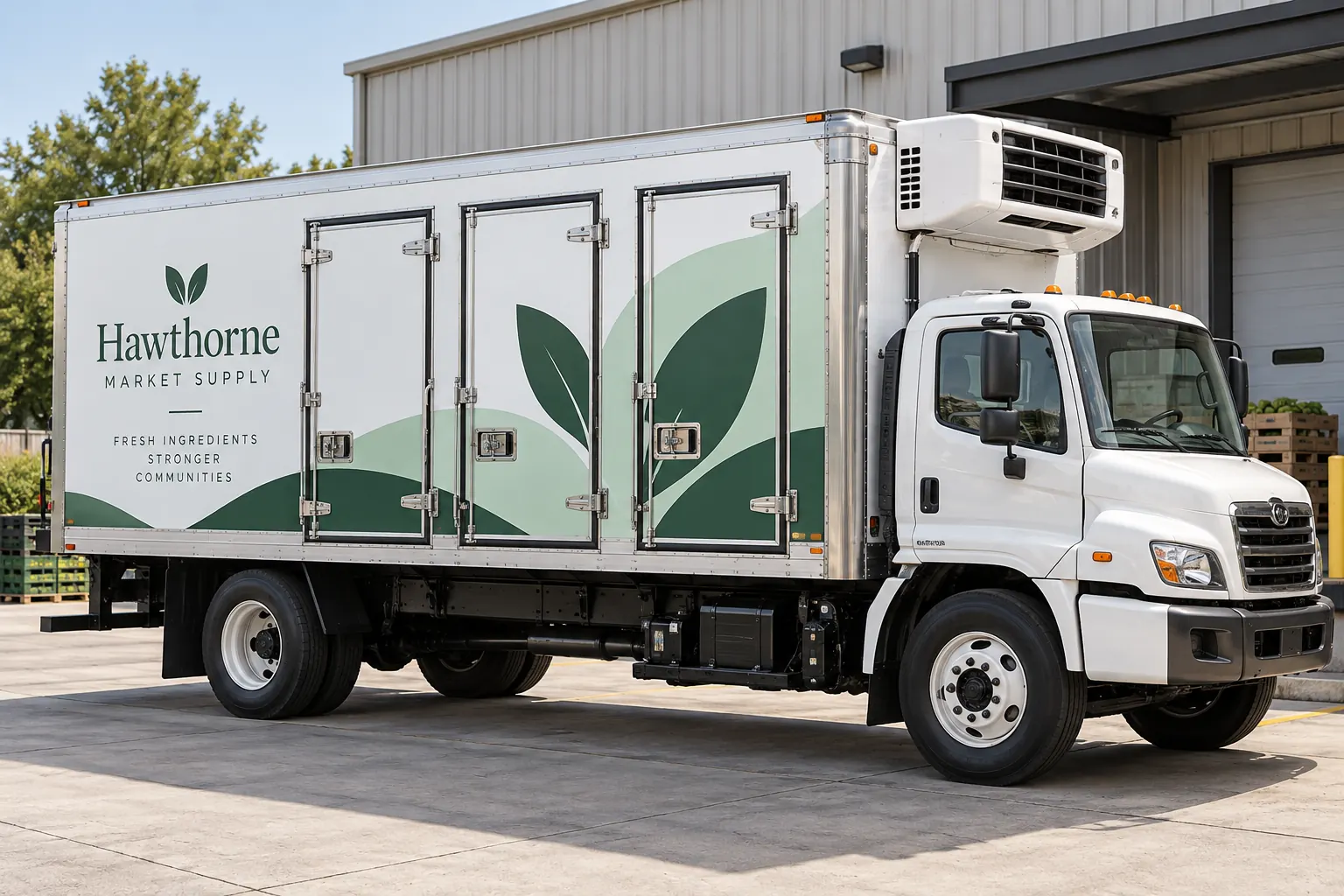
Original fictional commercial planning concept; not a completed customer installation.
Define the public message independently of temperature operations
Write the approved company name, service category and customer contact route. Do not add temperature ranges, food-safety promises or performance claims merely because the truck has several compartments. If the business wants a specific technical statement, assign its verification to the person responsible for that claim and provide the actual approved wording.
Keep the customer message focused on the service the business actually offers. A wholesale delivery truck may need a different descriptor from a retail route van even when both use refrigerated equipment. Identify those roles in the brief. A clear public identity should not require a viewer to interpret internal compartment labels to understand who the company is.
Record the actual door and body configuration
Provide the body reference where available and current photographs of both sides, the cab and rear. Show each side access door, handle, hinge, track and relevant equipment feature. Identify which doors or exterior sections differ across the fleet. A chassis model and nominal box length do not establish the actual panel arrangement.
If a new body has not been delivered or the compartment arrangement is changing, label the information as provisional. Explain what will be confirmed and who will provide it. Do not approve dependent placement against a simplified drawing while treating the actual configuration as settled. The project needs a reliable connection between the proposed layout and the vehicle that will receive it.
Map information owners before adding compartment labels
Ask operations which existing exterior information must remain visible and who controls it. Internal compartment references, equipment labels and public contact details may have different update owners. Keep those distinctions clear in the brief. A designer should not be asked to invent operating labels or decide whether existing information can be removed.
If the request includes new compartment-related identifiers, state their exact purpose and approved content through the responsible business contact. Distinguish that work from decorative branding. The layout can coordinate the information visually, but a graphics proof does not establish an operating procedure, equipment setting or product-handling requirement for the vehicle.
Review the identity across door interruptions
Choose where the company name and essential contact action should remain coherent. Side access doors may break a word or divide a symbol when the proposed composition is treated as one uninterrupted rectangle. Ask the provider to review actual panel boundaries and the normal parked appearance. Keep the relevant operating states documented through safe photographs supplied by authorized personnel.
The fictional Hawthorne Market Supply concept illustrates a restrained identity across a multi-door delivery body. It is not an equipment specification, temperature validation or measured installation. Use it to discuss visual hierarchy, then base the real project on your body information, approved message and the relevant surface and layout assessment.
Describe normal handling and cleaning information accurately
Provide the company’s relevant operating instructions and actual exposure or cleaning information needed for the proposed exterior areas. Identify known surface repairs, coatings, existing graphics and condition concerns. Avoid a vague statement that the truck is washed frequently when the supplier needs a more specific description of the process relevant to assessment.
Ask what further information is needed rather than selecting a graphics system from a generic promise. The actual body, finish and use conditions require review. Keep technical assessment separate from message approval so a correctly spelled logo is not mistaken for confirmation that every proposed panel and treatment has been evaluated.
Compare coverage by body version and included work
List quantities for each actual configuration and define the requested cab, side and rear areas. Ask how body-specific artwork, existing graphic removal, relevant preparation and installation arrangements are handled. Identify any compartment information work separately. A common business identity can guide the fleet while the actual scope differs across bodies and door layouts.
If proposals offer different coverage levels, compare them against the same asset list. Check whether all access-door adaptations and rear versions are included. A large side rendering alone does not describe the full project. Keep optional areas and unresolved equipment questions visible so purchasing does not interpret a visual possibility as committed work.
Coordinate release without assuming operating readiness
Identify the person who can release the vehicle from delivery service and the actual route constraints. Explain other work or equipment changes that must occur first. Ask the provider to assess the graphics arrangement after reviewing the actual scope. Keep a tentative vehicle window distinct from confirmed artwork, surface readiness and the agreed project date.
If the unit arriving differs from the surveyed body, stop the assumptions and review the relevant configuration. A similar refrigerated truck can have another access-door arrangement or contact version. Confirm the actual unit and approved proof at handoff so the provider is not asked to discover an unrecorded substitution after work has been planned.
Prepare a configuration-specific quote package
Send the asset list, current exterior photographs, body details, approved logo and wording, requested areas and quantities. Identify information that must remain, its responsible owner and any proposed compartment identifiers. Include relevant operating instructions, known condition concerns and release constraints. Mark provisional configurations clearly and assign the next action needed to confirm them.
For Pelican Wraps, use the broader logistics and box-truck resources for the overall fleet program while keeping this inquiry focused on the multi-door layout and its information boundaries. Ask for the actual work to be assessed. A complete brief helps the supplier address the vehicle and commercial scope without inferring temperature performance, operating rules or technical claims from an illustration.
Frequently Asked Questions
Take the Next Step with a Clear Project Brief
Continue with the resource that matches your next decision:
- Logistics & Delivery
- Box Truck Wraps
- Fleet Wrap Design Standards
- Commercial Vehicle Photo & Measurement Guide
- Request a Quote
Send the actual vehicle or surface photographs, quantities, approved brand files, requested coverage and timing constraints. Identify open questions so the project review can address your equipment and business needs.
