
Commercial Wrap Design Cost: Specify the Creative Deliverables
A design quote should explain what is being created, adapted and handed over. Define the brand files, vehicle configurations, message, proofs and approvals so the creative scope can be compared separately from manufacture and installation.
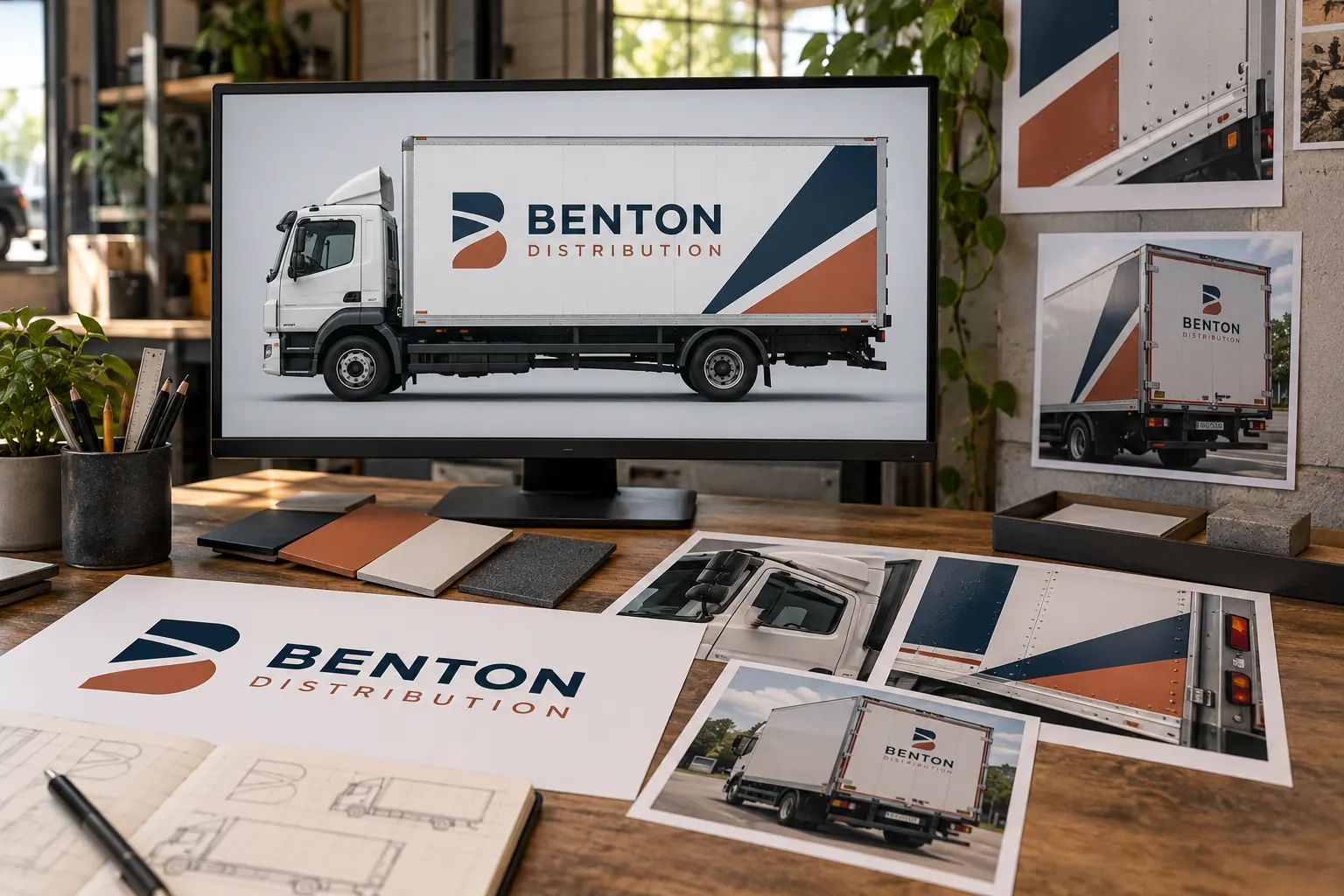
Illustrative graphics planning scene; not documentary shop or customer photography.
Identify the starting artwork and the required result
State whether the business has an approved identity, a vehicle design that needs adaptation or only rough references. Supply the original files and explain which elements are current. A screenshot, an old printed brochure and a maintained vector logo package represent different starting conditions for a designer.
Define the required result in practical terms: a first vehicle composition, a family of configuration-specific layouts, an update to existing contact details or a broader identity cleanup. Keep a logo redesign distinct if it is needed. Without this starting and ending definition, a design price can describe anything from a small file change to a new commercial graphics system.
Build the message before choosing the visual references
Identify the primary company name, the service context and the next contact action. Rank the information rather than giving every line equal importance. Describe the audience and how the vehicle is ordinarily seen. A box truck side, a van rear and a service-body door have different opportunities and interruptions.
Provide accurate wording and identify the person who can verify it. Design work should not require the designer to invent qualifications, results, prices or affiliations to make the layout persuasive. Use fleet design standards planning to organize a repeatable hierarchy, then supply visual references that explain the preferred direction without implying that another business artwork can simply be copied.
Separate the master design from vehicle adaptations
A master creative direction can establish identity, color relationships and message hierarchy. Each meaningful vehicle configuration may then need a fitted layout with different dimensions, doors, windows and equipment. Record how many configurations are included and which units repeat an accepted design exactly.
Ask the proposal to distinguish new creative development, adaptation, variable unit data and production file preparation. A single van proof is not automatically a complete fleet standard. Use the fleet inventory worksheet to define the equipment classes before deciding the design scope. This helps a business compare proposals that otherwise use the same phrase fleet design while covering different numbers of layouts.
Provide accurate references for the real equipment
Send current all-side vehicle photographs and known dimensions or templates for review. Identify accessories, aftermarket bodies, old graphics and any areas that must remain clear. A factory outline may not represent the working equipment, so the source of the fit information should be understood before final production approval.
Distinguish a concept rendering from a production layout. A persuasive image helps discuss direction; the manufacture and installation files require the agreed vehicle and graphic details. The artwork handoff guide explains how to organize logos, supporting imagery and source information. File preparation should be included explicitly when the proposal assumes a different level of readiness from the material the business can actually supply.
Define proofs, revisions and approval responsibilities
Ask what proof views and deliverables are included and how revision requests will be handled. Consolidate feedback through one final approver instead of sending several conflicting directions from different people. Check identity, spelling, contact information and placement as distinct aspects of the approval.
Record the accepted version and resolve changes before manufacture. A revision that changes the business message or adds another vehicle class may be different from correcting a spelling error in the original scope. The proposal should explain those boundaries in its own terms. Avoid assuming unlimited creative exploration or a particular number of included rounds when that has not been agreed in the actual design engagement.
Clarify the retained files and future-use arrangements
Ask which files and records are delivered or retained, how future adaptations are requested and what rights apply to supplied or newly created material. Business-owned logos, licensed photographs, typefaces and production files can have different usage arrangements. Have those expectations clarified through the agreed project terms rather than treating every digital item as interchangeable.
Keep the accepted source references, proof versions and configuration schedule with the project record. A future order should identify whether it repeats the current design or changes the scope. If the business expects another supplier or branch to use the work, state that requirement at the beginning so the file and usage discussion happens before the first project is approved.
Compare design proposals independently and in the full project
Use one brief covering starting artwork, message, configurations, proof deliverables, revisions and retained records. Ask each proposal to state what is included and what depends on further information. Then connect the selected design scope to manufacture and installation without assuming those later tasks are included in the creative price.
For the full investment, use the commercial wrap cost guide and organize only actual proposal amounts in the planning worksheet. To begin, send a commercial design brief with the source package, vehicle list and target schedule. A clear creative scope gives the business a more useful decision than comparing a low file-preparation charge with an unrelated full-design proposal.
Frequently Asked Questions
Turn Your Vehicle Details Into a Clear Project Brief
Send current photographs, vehicle quantities, logo files, coverage preferences and timing. Identify old graphics and paint concerns so the project review can address the actual equipment.
Explore planning resources or request your commercial wrap quote.
