
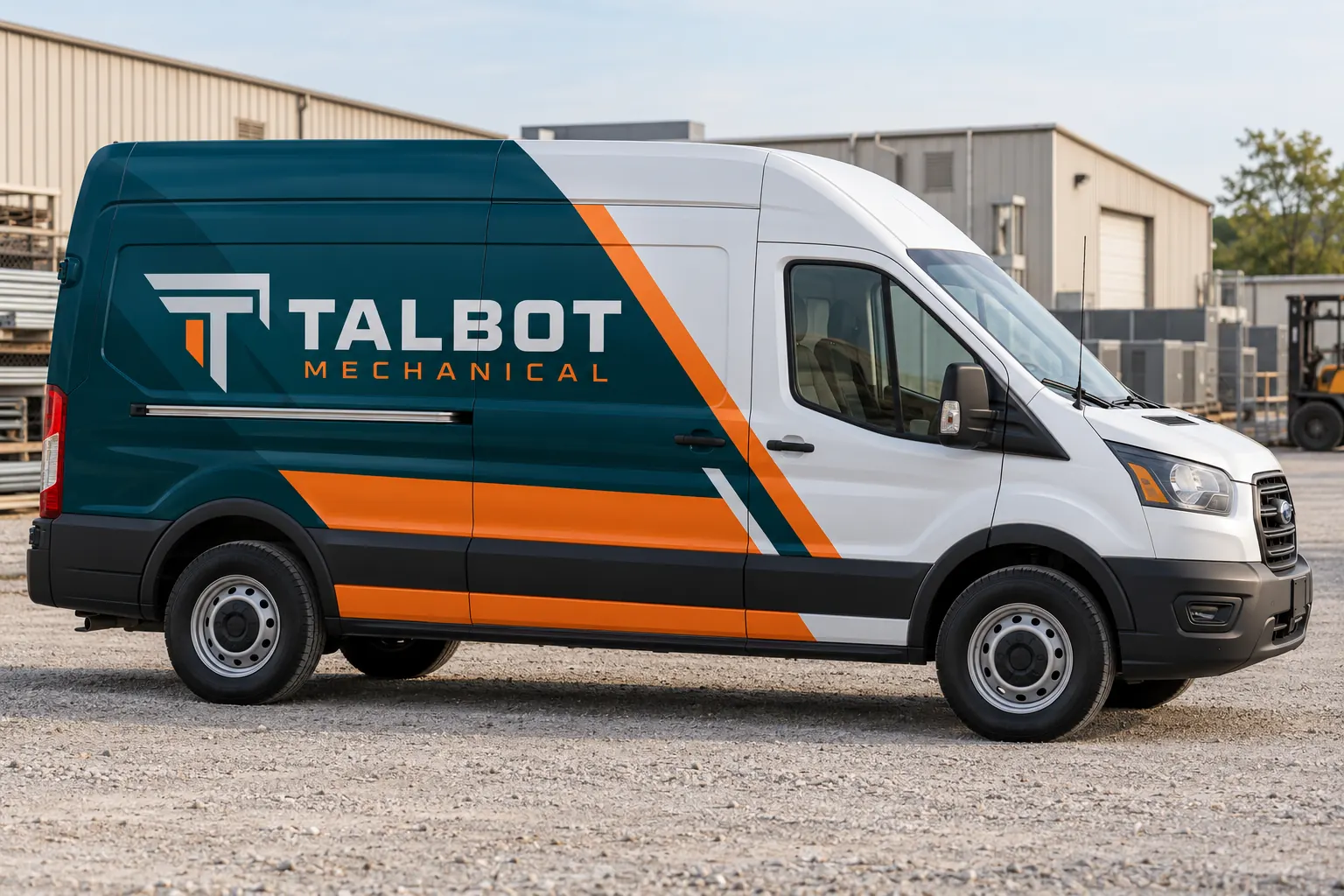
Fictional commercial wrap design concept; not a completed customer installation.
Define partial coverage as a layout rather than a label
The term partial wrap can describe several different arrangements: a rear section, lower side area, selected large panels or a coordinated shape that leaves much of the original body visible. Ask the design and proposal to show the actual coverage boundaries for the specific vehicle. The label alone does not define how much work or which surfaces are included.
Begin with the company identity, service context and contact action, then decide how the printed area supports them. A coherent composition may use less coverage than another option while remaining recognizable. The commercial goal is a useful design within a clear scope, not an arbitrary amount of vinyl applied wherever space happens to be available.
Treat the original body color as an active design element
Record the actual vehicle color and photograph it in ordinary light. The uncovered areas remain part of the finished appearance, so the composition should account for them from the beginning. A design developed for a white van may need review on a dark or differently colored replacement vehicle.
For a mixed fleet, identify which units share both configuration and body color. Keep approved exceptions with the design standard rather than allowing a later order to improvise. The partial-wrap service page explains the coverage approach; use the project brief to define the actual vehicles and intended finish. A shared logo does not make every combination of body color and printed graphic equivalent.
Compare the message across coverage alternatives
Use the same approved business name, service wording and contact route when comparing lettering, partial coverage and fuller wraps. Review the layout on the real panel proportions and note hardware, doors and windows. This makes the comparison about how each option carries the intended message instead of comparing unrelated visual concepts.
Do not reduce the primary identity until the design becomes a small label simply to reach an assumed percentage. Review which information matters most and which details can remain on the website. The full versus partial coverage guide helps frame that decision. The quote should then identify the chosen surfaces and boundaries rather than rely on a broad description such as half wrap.
Account for design fit and installation details
A partial layout still needs to fit the actual body and handle contours, seams and interruptions appropriately. Supply the year, make, model, wheelbase, roof height or body dimensions as relevant, plus current all-side photographs. Identify accessories and repaired areas that may not appear on a standard outline.
Ask whether the artwork scope includes a new composition or adaptation of an accepted design. A smaller printed area does not eliminate creative and preparation work. Similarly, do not assume that a partial package is priced as a fixed fraction of another scope. Compare the actual materials, design, preparation and installation tasks identified in the proposals rather than calculating a presumed percentage from a coverage name.
Include old graphics and the condition of exposed areas
Photograph existing graphics, paint concerns and visible damage on both covered and uncovered panels. Because body color remains visible, the appearance and condition of those areas can be relevant to the final design discussion. Keep surface repair and graphic preparation responsibilities distinct in the written scope.
If an older identity must be removed, identify the affected locations and unknown condition beneath the film. The removal cost guide can help organize that stage. A partial replacement should not be treated as permission to hide unresolved coating concerns or leave conflicting old identity elements outside the new coverage. Resolve those decisions before approving the final composition.
Compare the complete package using one scope sheet
List the vehicle configurations, body colors, quantities, included faces, coverage boundaries, artwork status, materials and preparation requirements. Record installation, delivery and release-window assumptions. Ask competing proposals to address the same schedule and identify exclusions. This makes a lower total easier to interpret as a real scope difference or a like-for-like price difference.
If the budget changes, review specific layout alternatives rather than requesting an undefined cheaper partial wrap. A simpler message, different face coverage or phased fleet rollout may change the proposal, but each option still needs a coherent approved design. Use the budget worksheet reached from the resource hub to organize actual proposed amounts and internal planning items without treating a calculated subtotal as a supplier quote.
Retain a standard that future vehicles can actually use
Keep the accepted layout, coverage boundaries, body-color references, material information and configuration records. For a later addition, confirm whether the new vehicle genuinely matches those assumptions. A different roof height or body color may need adaptation even when the same commercial identity remains in use.
For a damaged area, provide current photographs and the original record so the repair option can be scoped. Review matching and surface condition against the actual job. To begin, request a partial-wrap quote with the vehicle list, source logos, desired message and coverage preferences. The commercial wrap cost overview supports the larger comparison when the business is considering several coverage approaches.
Frequently Asked Questions
Turn Your Vehicle Details Into a Clear Project Brief
Send current photographs, vehicle quantities, logo files, coverage preferences and timing. Identify old graphics and paint concerns so the project review can address the actual equipment.
Explore planning resources or request your commercial wrap quote.
