
Signs and Vehicle Graphics: A Planning Example for One Recognizable Business
This fictional package scenario connects a service van, building identity and entrance graphics. It follows how one business message can adapt to separate surfaces and customer decisions while keeping property, vehicle and production approvals clear.
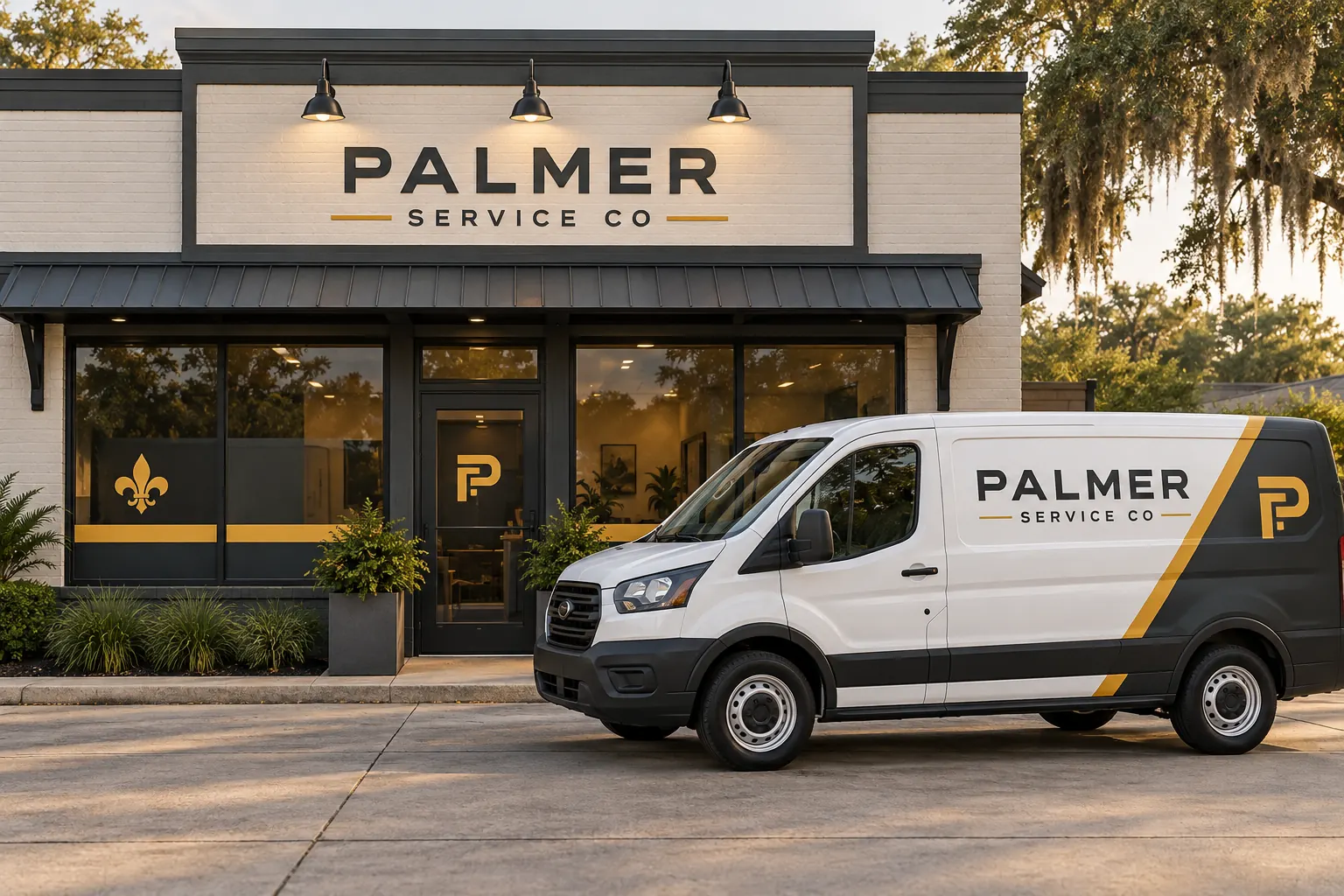
Fictional project-planning illustration; not a completed customer installation or measured project result.
Scenario: customers meet the business before and after arrival
Consider a service business that wants its vehicle identity and property graphics to feel connected. The fictional Palmer Service Co image illustrates a van and modest storefront within one visual family. It is not a photograph of a Pelican Wraps customer property, a real branch or a completed installation.
Map the decisions a first-time visitor needs to make: recognize the business, find the correct entrance and understand the useful next action. The vehicle introduces the identity in one setting, while the frontage confirms the destination in another. Start with those jobs before ordering sizes or decorative details. A coordinated package should make each touchpoint useful instead of repeating the entire vehicle message on every window and wall.
| Decision | Record to retain | Purpose |
|---|---|---|
| Visitor route | Recognition, correct entrance and useful next action | Give each property item a specific customer purpose. |
| Separate surveys | Actual vehicle and property faces with labeled dimensions | One combined illustration does not establish production fit. |
| Item priorities | Essential identity versus optional campaign graphics | Phase the package while preserving the arrival route. |
| Approval record | Text, placement, property authority and release | Keep different decisions connected to actual items. |
| Replacement handoff | Identity master plus installed item records | Update one touchpoint without guessing the whole package. |
Survey the property and vehicle as separate applications
Collect overall and close photographs of the proposed building sign, entrance and relevant glazing. Identify actual dimensions where available, surface materials, existing graphics and access concerns. Separately record the van configuration, doors, equipment, finish and intended coverage. Label estimates and assign final verification for each application.
Use the signs and graphics hub to choose the relevant property services and vehicle services for the commercial asset. One attractive combined image cannot establish both sets of production dimensions or surface suitability. The buyer needs an item schedule showing which design, manufacture and installation tasks belong to each real surface.
Share the identity while adapting the message hierarchy
Retain the approved name, logo proportions, palette and contact language. On the van, prioritize recognition and the chosen service or contact action. At the property, confirm the business and correct entrance before adding supporting promotional information. A door may need an entrance label or current opening information rather than every line carried by the vehicle.
Use window planning where visibility, light and privacy affect the actual brief. Fit the composition to each surface instead of stretching one artwork file between unrelated proportions. Shared identity makes the package coherent; separate layouts make the individual items useful for their viewing conditions and customer decisions.
Record property consent and applicable review responsibilities
Identify who controls the property and who can authorize the proposed changes. Ask the buyer to confirm the actual landlord, property-manager or authority review relevant to the intended sign and location. Keep that responsibility explicit before manufacture rather than infer permission from an old sign or a tenant artwork approval.
The fictional scenario does not establish a permit requirement, permission or an approved sign structure for a particular property. Request the actual relevant information through the responsible parties. Keep business wording approval, site authorization and technical surface or installation review as identifiable decisions. That gives the project a clear path when an accepted visual direction still needs another part of the real approval process.
Build an itemized package with useful priorities
List each vehicle face and property item with its purpose, location, approximate size and required message. Separate design, manufacture, removal, preparation, installation and relevant access arrangements where applicable. Mark optional campaign or decorative items separately from essential identity and entrance information.
Compare commercial signs and the selected vehicle coverage through the actual scope, not a vague request to brand everything. If the package must be phased, preserve a coherent customer route in the essential items. The quotation should explain included work and outstanding assumptions so the buyer can adjust priorities without accidentally remove the information that tells visitors where the business is.
Approve text, placement and release as distinct checks
Check the exact business wording, contact destinations and changing information in a readable proof. Then review scale and placement against the actual vehicle and site references. A correct logo can still be fitted to the wrong entrance or interrupted by equipment; a convincing placement image can still carry outdated wording.
Name the final approvers and connect their acceptance to each item and version. Confirm property access and vehicle release arrangements and supplier availability through the actual project process. A package enquiry does not automatically book every item into one installation window. Keep dependencies visible so a property decision does not leave a ready vehicle scope attached to an unclear overall instruction.
Keep one identity master and separate installed item records
Retain master artwork with separate accepted layouts, dimensions, product references and installed photographs for each item. Record which location and surface each file belongs to and how care information is handed over. A later opening-information change may affect an entrance graphic without requiring a complete vehicle rebrand.
For a similar enquiry, send the connected identity brief with site and vehicle photographs, an item list, artwork and target timing. Browse other planning scenarios for different fleet needs. The intended output is an agreed coordinated package, without claiming an actual Palmer property, verified local permissions, installation duration or measured customer-conversion result.
Frequently Asked Questions
Plan a Similar Project with Your Actual Equipment
Send current photographs, vehicle quantities, logo files, coverage preferences and timing. Identify old graphics and paint concerns so the project review can address the actual equipment.
Explore planning resources or request your commercial wrap quote.
