
Flatbed Headboard Graphics Planning
Flatbed headboard graphics planning begins with a visibility question and a scope question. What should the headboard communicate in the ordinary relevant view, and which actual area is being proposed for assessment? Record the real structure, openings, equipment and condition before selecting a layout. Keep the cab identity and headboard message coordinated without treating an equipment component as an unrestricted sign surface.
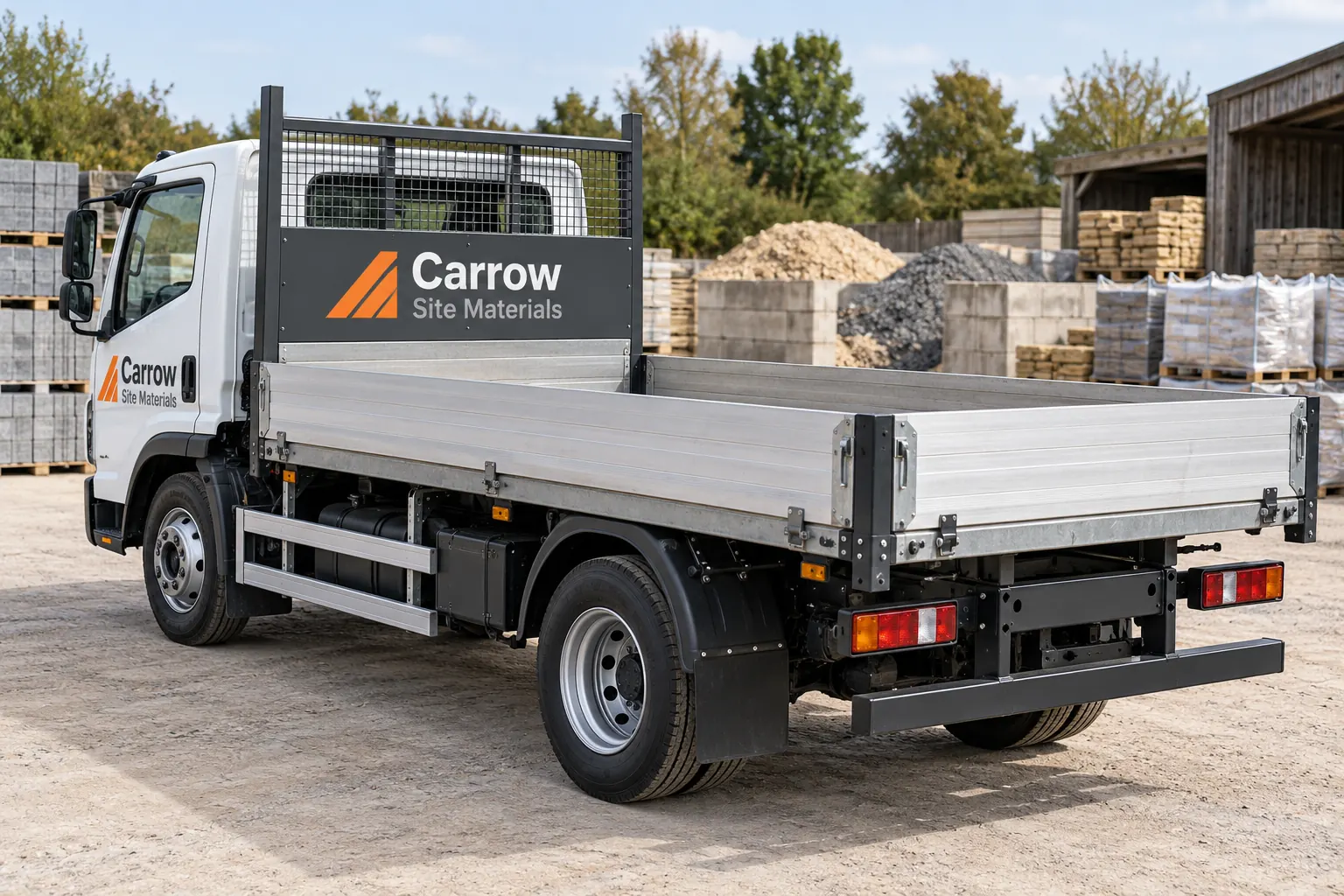
Original fictional commercial planning concept; not a completed customer installation.
Define the viewer and the intended message
Identify who needs to recognize the headboard identity and from which ordinary parked view. A yard contact seeing the rear of a truck has a different perspective from someone beside the cab. Choose the business goal deliberately. Do not fill the available area with a long service list before deciding what the selected viewer should understand.
Write the company name, concise service descriptor and any proposed contact action as separate components. Decide which belong in this area and which are already carried by the cab or another defined surface. The brief should help the designer establish a hierarchy rather than assume every visible part of the truck must repeat the complete company message.
Record the actual headboard structure
Provide current overall and detail photographs showing the cab, headboard, deck and relevant rear-quarter view. Identify solid areas, openings, rails, attachments and existing information. Supply a body or equipment reference where available. A flatbed truck description alone does not establish the structure or the proposed application area.
If the headboard or body is being changed, label the existing images as provisional and identify what will be confirmed. Do not finalize dependent placement against equipment that will no longer be present. Keep actual condition concerns and any known repairs visible so the provider can identify what further review is needed before a specific surface and coverage are selected.
Describe normal obstructions without staging an operation
Ask the responsible fleet contact which ordinary configurations affect the message and obtain suitable evidence through the company’s authorized safe process. Explain relevant equipment or carried items that can obscure the proposed area. Do not ask a reviewer to change loads, climb equipment or create a special setup solely to make a design photograph possible.
The fictional Carrow Site Materials concept shows an empty flatbed and a restrained headboard name panel. It illustrates a possible visual direction, not a loading instruction or a measured available area. Your actual review should state which ordinary views matter and what assumptions remain, rather than treating the clean empty concept as a guarantee of visibility in every use.
Keep body information and branding decisions distinct
Have the responsible fleet contact identify labels, openings, equipment features and other information that must remain visible and unchanged. Supply the actual applicable instructions through the normal project channel. The graphics designer should not decide that a feature can be covered or that an equipment component can be changed merely to create a larger name area.
If a separate sign or panel is proposed, describe it as an explicit request for assessment. Do not infer its construction, attachment or availability from the concept image. Keep the buyer’s desired communication outcome clear while the relevant body, surface and work questions receive their own project-specific review and scope definition.
Compare the headboard with the rest of the truck identity
Review the proposed message alongside the actual cab and any bed-side artwork. Check the approved business name, descriptor and contact source. A headboard version should be a deliberate part of the fleet identity rather than a place where an older logo or retired phone number reappears from a convenient file.
Consider whether the selected message remains useful when the truck is seen from the relevant ordinary view. Record specific concerns, such as an important line being obscured or a symbol competing with the name. Ask the provider to assess layout responses within the actual area. Avoid using a vague preference for larger graphics to imply an unreviewed change to equipment or scope.
Define included work before comparing totals
State whether the request concerns headboard graphics only, cab identity or other defined body areas. List actual units and configurations. Ask how artwork adaptation, existing graphic work, relevant condition review and installation arrangements are handled. A full-vehicle rendering does not establish that every depicted component is included in the commercial proposal.
If options are requested, identify the decision each should answer. Compare the actual descriptions alongside the totals and keep optional work separate. Where the actual structure or surface information remains pending, record that condition. A useful quote discussion should expose uncertainty rather than make a provisional headboard image appear to be a complete production specification.
Retain a headboard-specific layout reference
Keep the selected proof, current photographs, relevant body information and approved message source under the actual unit or controlled configuration group. Identify the equipment and visibility assumptions that influenced the decision. When the headboard, body or carried-equipment arrangement changes, review the affected assumptions before reusing the earlier layout.
For Pelican Wraps, send those actual references with desired coverage, quantities and release constraints. Use the broader flatbed, truck and fleet resources for the overall program. This focused brief should explain what the headboard needs to communicate and which areas require assessment, while keeping equipment handling, technical suitability and business approval tied to their responsible owners.
Frequently Asked Questions
Take the Next Step with a Clear Project Brief
Continue with the resource that matches your next decision:
Send the actual vehicle or surface photographs, quantities, approved brand files, requested coverage and timing constraints. Identify open questions so the project review can address your equipment and business needs.
