
Step Van Wraps for Delivery & Mobile Service Fleets
A step van offers a large commercial body, but its graphics need to work around the way the driver enters, delivers and uses the equipment. Pelican Wraps plans step van branding for delivery and mobile-service operators with readable identity, defined coverage and an installation sequence that respects the route. Start with photographs of the actual body and the message the business wants remembered.
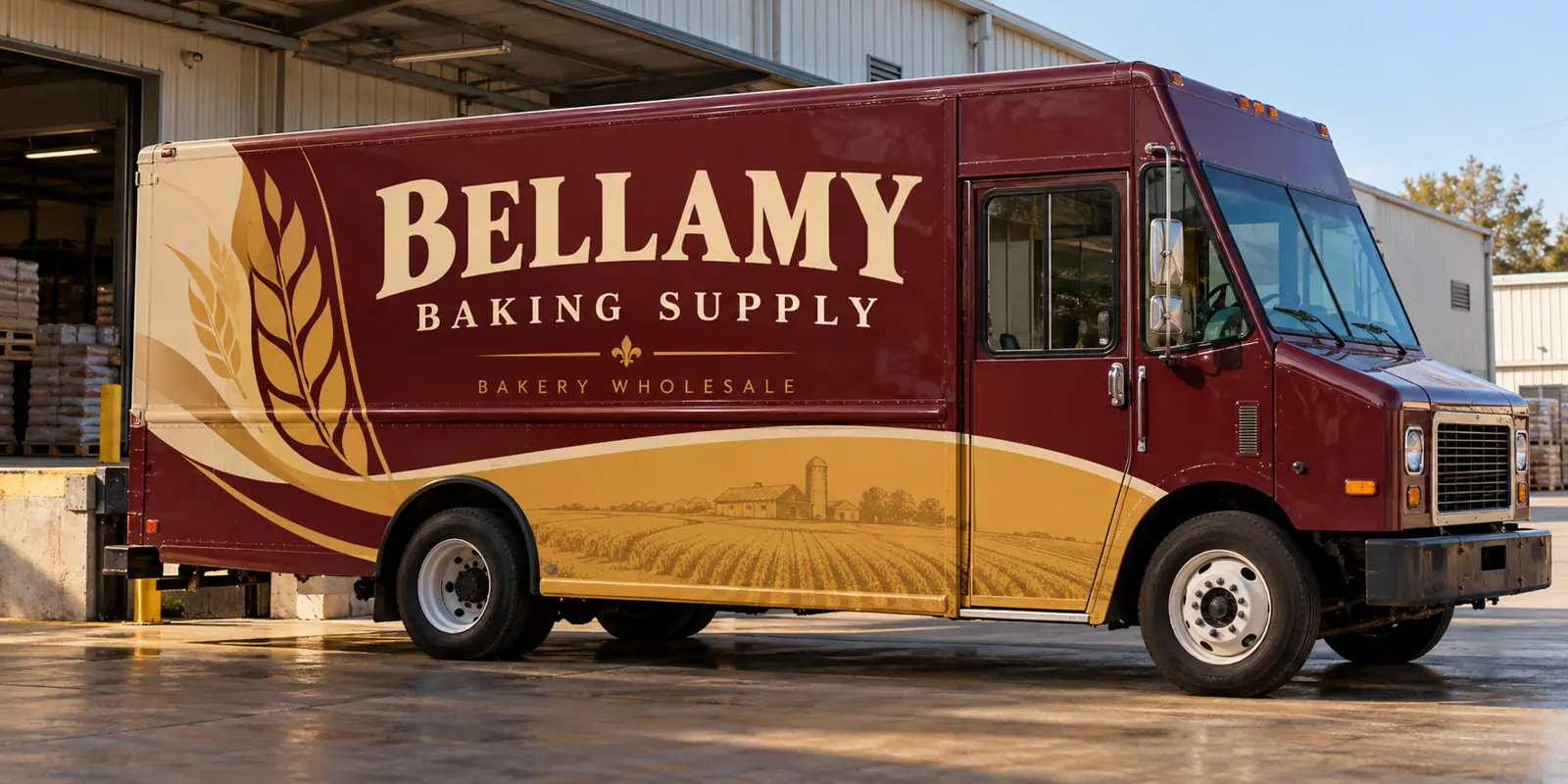
Fictional commercial wrap design concept; not a completed customer installation.
Identify the body and operating role first
Provide the step van’s year, make, body details and current configuration. Include both sides, the front, rear and close views of entry doors, hinges and equipment. A model description is useful, but converted or older units can have different panel arrangements. Identify any body repairs or planned modifications before artwork is fitted.
Explain the vehicle’s role. Wholesale delivery, parcel work and a mobile service operation can need different messages and access considerations. A step van converted into a customer-facing food operation also needs the relevant food-truck review. The graphics brief should describe the actual business use rather than assuming every vehicle with the same general shape has the same scope.
Make a large side panel easy to understand
Use the broad side as a clear identity area. Establish the company name, a useful description of the service or product and the preferred contact route. A large surface does not require a large number of messages. Decide which information matters to someone seeing the vehicle briefly and which supporting details can be read at close range.
Check the scale of the identity across the whole body, including the front entry and rear view. Detailed product illustrations can support a wholesale brand, while a mobile-service business may need a clearer trade description. Provide the available assets and approve the role of every main element. The design should communicate the operation without relying on an unfamiliar slogan to explain it.
Plan around entry doors and working positions
Show how the driver and crew use the entry doors during normal stops. Identify where a sliding or open door changes what is visible. Handles, hinges, steps and access panels need to be part of the fit review. An unobstructed side drawing may not show the practical reading areas of the working vehicle.
Keep frequently used access points clear in the scope and check how the proposed graphics interact with them. If equipment has been added to a panel, photograph it in place. Review both sides instead of assuming the entry arrangement is symmetrical. The approved proof should make the vehicle configuration and the included surfaces understandable before production begins.
Treat the rear as a separate delivery view
A step van’s rear can be an important identity surface when it is stopped or moving ahead of other traffic. Photograph the rear doors or shutter, latches, lights and any lift equipment. Decide which business message and contact detail should be readable there. A long side-panel composition may need a simpler rear adaptation.
Explain whether the rear opens repeatedly throughout the route and whether any component is scheduled for replacement. Match the layout to the actual hardware and agreed coverage. The rear should retain the same identity while accounting for its own dimensions and access conditions. Ask the proposal to identify this work explicitly rather than treating the back of the vehicle as an assumed extra.
Compare coverage against finish and service life
Full coverage can be considered when the business wants a strong change of appearance, while partial graphics or lettering may suit equipment whose original finish already supports the identity. Review the same message across the options. Identify which panels will remain visible and whether units in the fleet have different paint colors.
Disclose existing graphics, previous body work and visible finish concerns. Removal and preparation need their own scope. Consider how long the vehicle is expected to remain in service and whether a new model is planned. Use the coverage comparison to organize the decision and request a proposal for the actual equipment rather than selecting coverage from a generic package label.
Build an installation sequence around the route
A route vehicle may have a narrow release window, so identify the person who controls dispatch and the units that can be unavailable together. Separate artwork approval, surface readiness, production and the appointment. A preferred completion date does not resolve those dependencies by itself. Tell the project contact about any essential delivery commitments.
For several step vans, keep unit identifiers, body differences, approved revisions and completion photographs together. That register helps repeat orders and new additions begin from a known standard. Review fleet installation scheduling for a phased release and graphics management when the operation expects recurring vehicle changes.
Send the details needed for a step van proposal
Include the body photographs, vehicle list, operating role, intended coverage, current graphics and artwork status. Explain the main message and the approved contact details. Identify conversions, equipment access, finish concerns and timing constraints. If a door or body component is being changed, distinguish the current photographs from the configuration intended for installation.
Request a step van graphics review to clarify the scope. Pelican Wraps is based in Harvey; confirm the inspection and vehicle-access plan before moving equipment. If the fleet also includes ordinary cargo vans or box trucks, use the vehicle directory so each body gets a suitable adaptation of the same identity.
Frequently Asked Questions
Turn Your Vehicle Details Into a Clear Project Brief
Send current photographs, vehicle quantities, logo files, coverage preferences and timing. Identify old graphics and paint concerns so the project review can address the actual equipment.
Explore planning resources or request your commercial wrap quote.
