
Pest Control Vehicle Wraps for Service Fleets
A pest-control vehicle needs to identify the business clearly at a customer's property and stay consistent across technicians and routes. Build a practical fleet identity around the company name, the work offered and a readable contact route, using the actual vans and equipment in your operation.
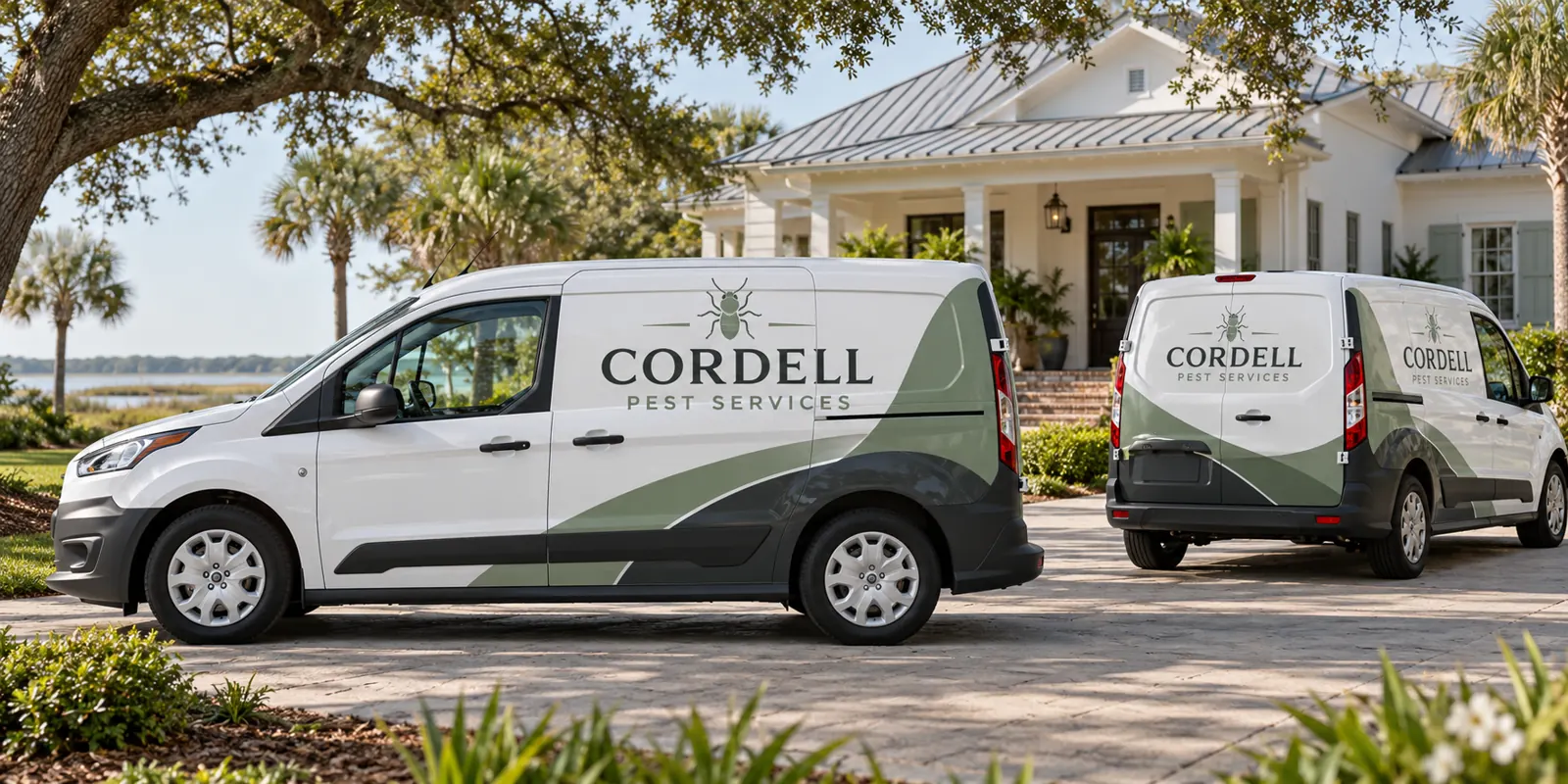
Fictional commercial wrap design concept; not a completed customer installation.
Help customers recognize the company arriving at the property
Start with the business name and a clear pest-service description. A customer may recognize the appointment but not the vehicle, while a neighbor may see only the parked van. The layout should make the operator understandable without relying on a complicated illustration or a long list of treatments. Give the main identity enough room to be read.
Choose one primary contact route and decide which secondary information is necessary. A website can carry the detailed service list once the vehicle has made the company recognizable. The graphics should support an accurate business identity; they should not invent credentials, ratings or treatment claims to make a concept appear more convincing.
Choose the message around the service work you want to book
A pest company may offer general household service, commercial accounts, termite work or another specialty. Identify which work the vehicle should emphasize rather than placing every possible category in equal size. A clear service description helps an unfamiliar name communicate its purpose. Use the company’s approved wording and confirm that the displayed services are current.
Decide whether several divisions need separate versions or a single fleet message. If a specialty appears only on certain vehicles, keep it organized within a shared visual system. Record the approved wording so a later vehicle addition does not introduce an outdated service description or a different contact route.
Design around compact vans, pickups and installed equipment
List the actual vehicle configurations and quantities. Compact vans, high-roof vans and pickups provide different graphic areas. Send current photographs of both sides and the rear, including racks, storage, windows and other equipment that affects the layout. The year and model alone may not describe the body or its normal working configuration.
Use the van graphics page for the vehicle decision and pickup graphics where relevant. Review sliding doors, handles and rear splits before placing important wording. Keep existing equipment information and agreed access areas visible and usable rather than treating every surface as available advertising space.
Compare readable lettering with a stronger partial identity
A restrained lettering layout can identify the business clearly on consistent paint. Partial graphics can introduce a recognizable color area and a simple symbol without covering the entire van. Fuller coverage provides another direction when the surfaces and brand goal support it. Compare those choices using the same essential message.
The lettering guide and partial-wrap guide help define the scope. Ask which panels are included and how the rear, roof and visible paint are treated. A striking insect illustration should support the company identity rather than become the only element a viewer can remember.
Keep the fleet identity accurate across technicians and routes
Use shared colors, logo treatment and hierarchy while adapting placement to each body. Unit numbers or division names can have a defined secondary role. Keep the approved proof linked to the vehicle configuration and identifier so later replacements begin with the right reference. One print file should not be assumed to fit every van in the fleet.
Assign one person to verify phone numbers, domains and any identification the business needs displayed. Supply those details from your own current records and confirm relevant requirements through the appropriate authority where needed. The artwork guidelines explain how to organize source files and consolidated feedback before production approval.
Plan the project around working appointments and vehicle condition
Identify priority vehicles and release windows that fit the appointment schedule. Clarify delivery, access and collection responsibilities, then plan around the confirmed project arrangement. Do not assume a generic installation duration applies to the whole fleet or that all units can be released together without affecting booked work.
Disclose old vinyl, residue, repairs, peeling finishes and other surface concerns with clear photographs. Graphics should not be treated as a repair for an underlying condition problem. Removal and preparation need to be addressed explicitly. The inventory worksheet can help connect vehicle differences, photos and availability in one record.
Prepare a pest-service fleet brief that can be assessed
Send the equipment list, quantities, current photos, logo files and essential wording. Identify coverage preferences, old graphics, condition concerns and timing. Explain whether the identity is new or an adaptation of an existing approved system. Include the person who can authorize brand and vehicle details so the proof review has a clear owner.
Use the cost guide to compare complete scopes, then request a pest-control fleet quote. The vans shown here use fictional branding created for this page. They are not customer installations or evidence of pest-treatment qualifications, results or business performance.
Frequently Asked Questions
Turn Your Vehicle Details Into a Clear Project Brief
Send current photographs, vehicle quantities, logo files, coverage preferences and timing. Identify old graphics and paint concerns so the project review can address the actual equipment.
Explore planning resources or request your commercial wrap quote.
