
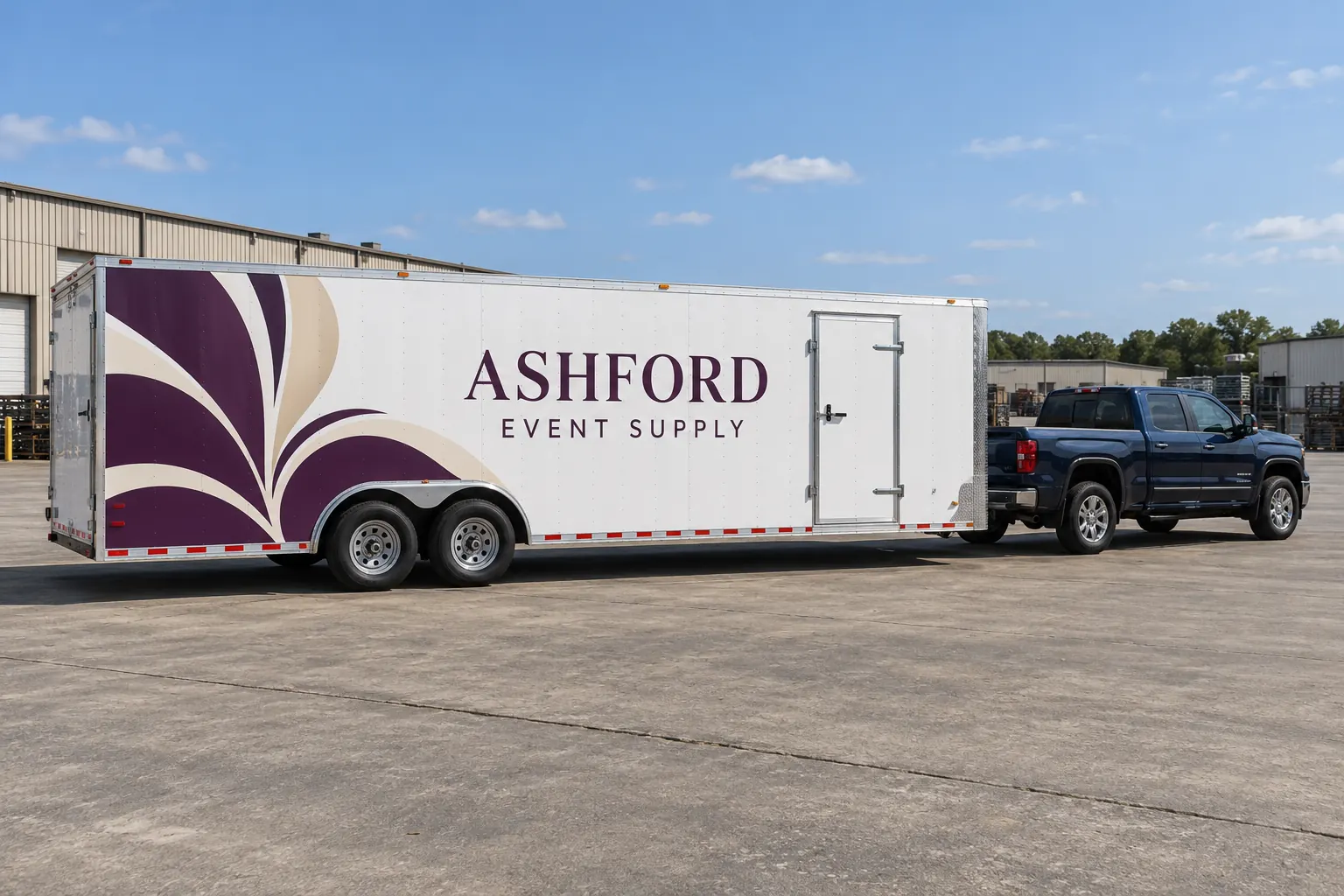
Fictional commercial wrap design concept; not a completed customer installation.
Record the trailer body and the usable graphic areas
List the trailer type, manufacturer, model if known, overall dimensions and the dimensions of the proposed graphic areas. Include photographs of both sides and the rear. Enclosed cargo, refrigerated, utility and other commercial trailers have different bodies and operating requirements; a length alone does not define a finished graphics package.
Record doors, vents, rivets, rails, latches, reflectors, lighting and accessories. Identify required markings and areas that must remain clear. For several trailers, separate meaningful configurations rather than listing one average size. This gives the quote a traceable basis and makes it easier to understand why an apparently similar trailer may need different artwork, preparation or installation work.
Define both side and rear coverage explicitly
Decide what each side should communicate and whether the rear needs the same identity or a more concise message. Rear doors, loading hardware and working equipment can interrupt the available area. A side-only concept should not be assumed to include a complete rear design and installation.
Ask every proposal to identify included faces, coverage boundaries and exclusions. Use the commercial vehicle-wraps hub to choose the relevant trailer class and review its layout needs. Compare lettering, partial coverage and larger printed areas against the same business message. Avoid treating square footage alone as a complete description of design fit, hardware details or site responsibilities.
Account for hardware and surface construction
Provide close photographs of rivets, seams, door construction and existing repairs. Mark any surface information that is unknown. The design and proposed film system need to be reviewed against the actual trailer construction rather than assumed from a broad category such as enclosed trailer.
Include information about cleaning, operating exposure and any unusual surface condition. If a quote assumes a particular ready surface, have that assumption stated. A large flat-looking side in a distant photograph can still contain details that affect preparation and application. Keep required reflectors, labels and other operational markings distinct from decorative coverage and have the responsible fleet contact confirm the protected areas.
Separate a new trailer identity from repeated fleet artwork
A first trailer may require a new composition or a broader brand system, while additional units may adapt an accepted design. Identify whether the same wording, size and configuration repeat. A different rear door or body length can require more than changing a number in the file.
Supply the current source artwork and identify any unit-specific data. Ask the proposal to distinguish creative development, configuration adaptation and per-unit work. Keep the accepted proof with the actual trailer class and measurements. The design cost guide helps define those creative deliverables so a price that assumes finished files is not compared with one that includes the entire design process.
Include removal, preparation and access in the scope
Document old graphics and any known installation or material history. Photograph damaged areas, adhesive, coating concerns and repairs. If the condition beneath an existing graphic is unknown, identify that uncertainty rather than presenting the trailer as ready for new film. Separate repair and preparation responsibilities from the printed graphics order.
Explain how the trailer will be delivered, positioned and collected. Record whether an appropriate tow vehicle or driver is available and what access the proposed work location provides. A trailer that can be released for several agreed windows may need a different operational plan from a unit tied to a fixed delivery schedule. Confirm the actual installation arrangement instead of assuming every quote includes the same logistics.
Compare one item schedule across competing proposals
Use one row per trailer configuration and coverage option. Include quantity, sides, rear, artwork status, old-graphic removal, selected material system, installation arrangement and exclusions. Ask each proposal to answer that same schedule. This makes differences visible before a decision is reduced to the headline total.
Keep supplier charges separate from internal transport or operating costs in the planning record. Enter only real proposal amounts or clearly identified internal assumptions in the budget worksheet available from the resource hub. A calculated subtotal helps organize the figures but does not confirm an unquoted market price. Review any phased fleet proposal against the actual trailer release plan and configuration list.
Keep the selected scope useful after the first installation
Retain accepted artwork, dimensions, material references, trailer identifiers and installed photographs. These records help later additions or repairs begin from the approved standard instead of an old sales image. Update the record when a trailer is repainted, fitted with different hardware or transferred to another business function.
For a damaged section, provide current photographs and describe the affected face rather than requesting a generic replacement wrap. The actual condition and matching requirements still need review. To start a new project, send a trailer graphics quote brief with the configuration list, coverage preference and timing. The commercial wrap cost overview helps combine trailer and powered-vehicle scopes in one fleet budget.
Frequently Asked Questions
Turn Your Vehicle Details Into a Clear Project Brief
Send current photographs, vehicle quantities, logo files, coverage preferences and timing. Identify old graphics and paint concerns so the project review can address the actual equipment.
Explore planning resources or request your commercial wrap quote.
