
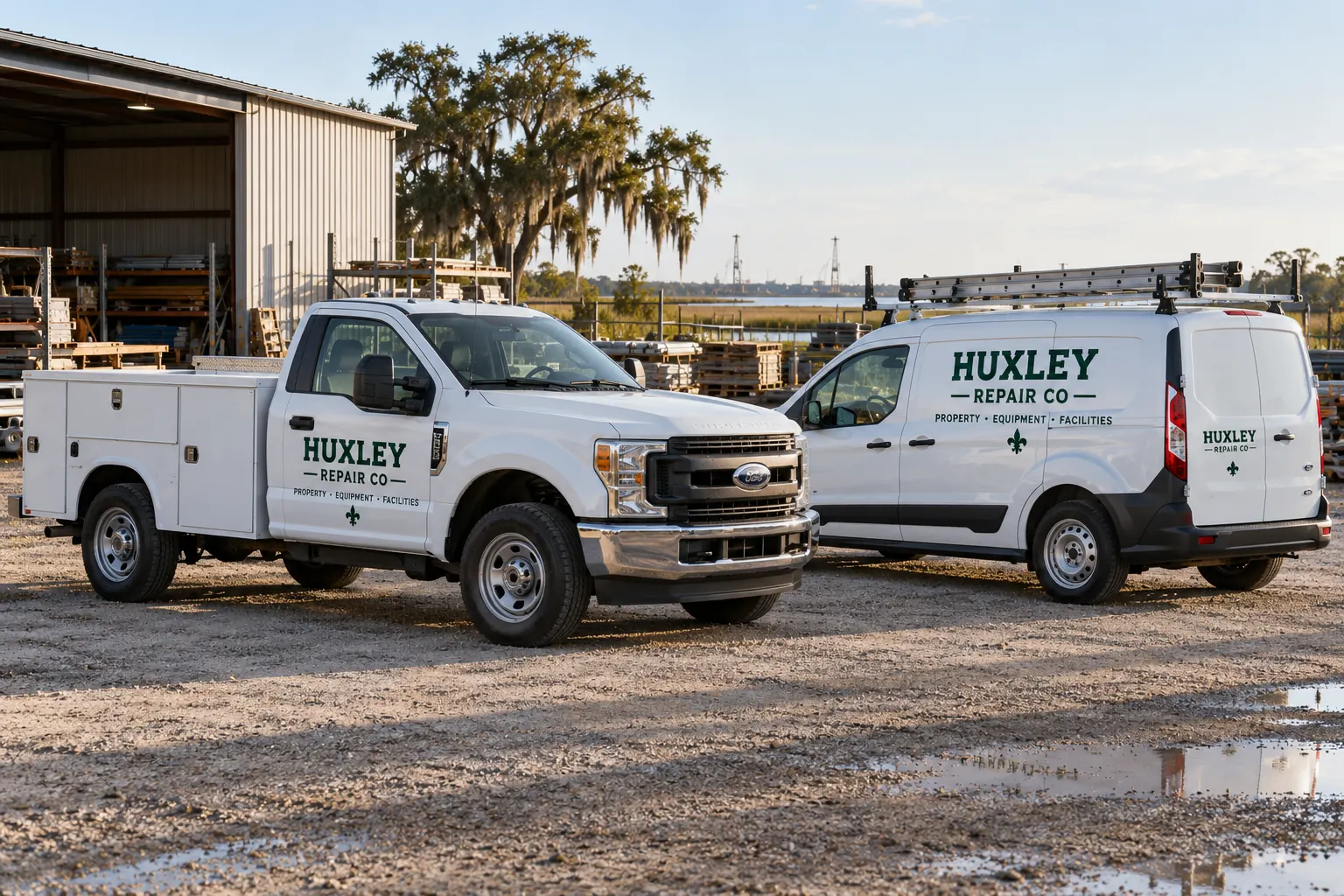
Fictional commercial wrap design concept; not a completed customer installation.
Define the lettering package as a set of locations
List the surfaces that need identification: cab doors, van sides, rear doors or another suitable panel. Record the message for each location and the number of vehicles. The same words can create different production and installation scopes when they appear once on a small door or across several larger panels.
Photograph the actual vehicles and note handles, body lines, trim, windows and existing graphics. For a mixed fleet, separate the configurations even if the business wants one common identity. A clear location schedule lets the proposal describe the installed package rather than leave the buyer to infer what a phrase such as basic lettering includes.
Prioritize the identity before counting the words
Begin with the approved company name, a concise service description if needed and one useful contact route. Unit numbers or other operational details can have their own hierarchy. A focused message helps the designer use the available panel without reducing every element to fit a long service list.
Compare alternative wording before changing the physical scope simply to add more information. The vehicle lettering service can help plan the layout, while the fleet design standards guide supports consistent brand rules. The useful question is what the viewer must recognize, not how many lines can be fitted into an empty rectangular panel.
Provide source artwork and define the production approach
Send the original logo files and identify current colors and typography. A lettering package may involve cut lettering, printed identity elements or a combination selected for the actual design. Ask the proposal to describe the intended construction rather than assuming every business decal uses the same process.
If only a low-resolution image or an old vehicle photograph exists, identify the artwork preparation needed. Rebuilding a logo or organizing the brand files is different from producing an accepted ready file. Use the artwork handoff guide to prepare the source package and ask how creative work, file preparation and revisions are handled in the quote.
Specify colors, scale and repetition clearly
Record whether the design is a simple single-color identity, several separate colors or a printed element. Define the proposed sizes and placement on each vehicle configuration through a proof. Keep business identity and required operational information distinct so a later update to one field does not create confusion about the rest of the package.
For a fleet, identify what repeats exactly and what changes by unit, department or model. Shared artwork does not eliminate the need to check different panel shapes. A consistent standard can be adapted to each class while keeping the same hierarchy. Ask the proposal to distinguish the initial layout and any configuration or variable-data work from per-unit production and installation.
Account for existing graphics and preparation
Photograph the current panel condition, old lettering, adhesive and any paint repairs. Identify whether removal is part of the requested work. A clean vehicle with no existing graphics is a different starting scope from one carrying an older identity whose underlying surface is unknown.
Review material and application suitability against the actual paint and selected system. Lettering does not repair rust, damaged coatings or dents, and a neat digital proof cannot confirm surface readiness. Keep those concerns visible before scheduling. The removal cost guide helps describe the older graphics task so it does not become an unstated assumption inside a replacement lettering price.
Compare installed packages instead of isolated print prices
Use a shared schedule listing vehicles, graphic locations, message, approximate sizes, colors, artwork status, removal and installation. Ask each proposal to identify included work and exclusions. A supplied decal set for customer application is a different deliverable from a package installed on several vehicles.
Keep internal delivery and collection arrangements in the planning record and confirm the release windows for working vehicles. If the budget changes, review a simpler message or different location scope while preserving the main identity. Avoid deleting important information arbitrarily or assuming a smaller layout still serves the intended viewing context. The overall commercial cost guide helps compare lettering with broader coverage options.
Keep an approved standard for future units and updates
Save the artwork, finished dimensions, accepted placement, material information and vehicle references. Record variable unit numbers separately from the shared identity. When the business changes a URL or phone number, update the master record before another batch is produced from an older accepted file.
For replacements, provide current photographs and note changes to the panel or paint. A repeat order should begin with the retained standard and still account for the actual vehicle condition. To start, request a vehicle lettering quote with the vehicle list, approved wording, source logos and desired locations. Clearly identify whether the enquiry is for supplied graphics, installation or a complete commercial identity package.
Frequently Asked Questions
Turn Your Vehicle Details Into a Clear Project Brief
Send current photographs, vehicle quantities, logo files, coverage preferences and timing. Identify old graphics and paint concerns so the project review can address the actual equipment.
Explore planning resources or request your commercial wrap quote.
