
Vehicle Wrap Removal Cost: Define the Starting Condition
Removal pricing depends on the existing graphics and the surface beneath them. Organize the available history, current condition and intended next step so the project review can identify the work and the uncertainties before a replacement is planned.
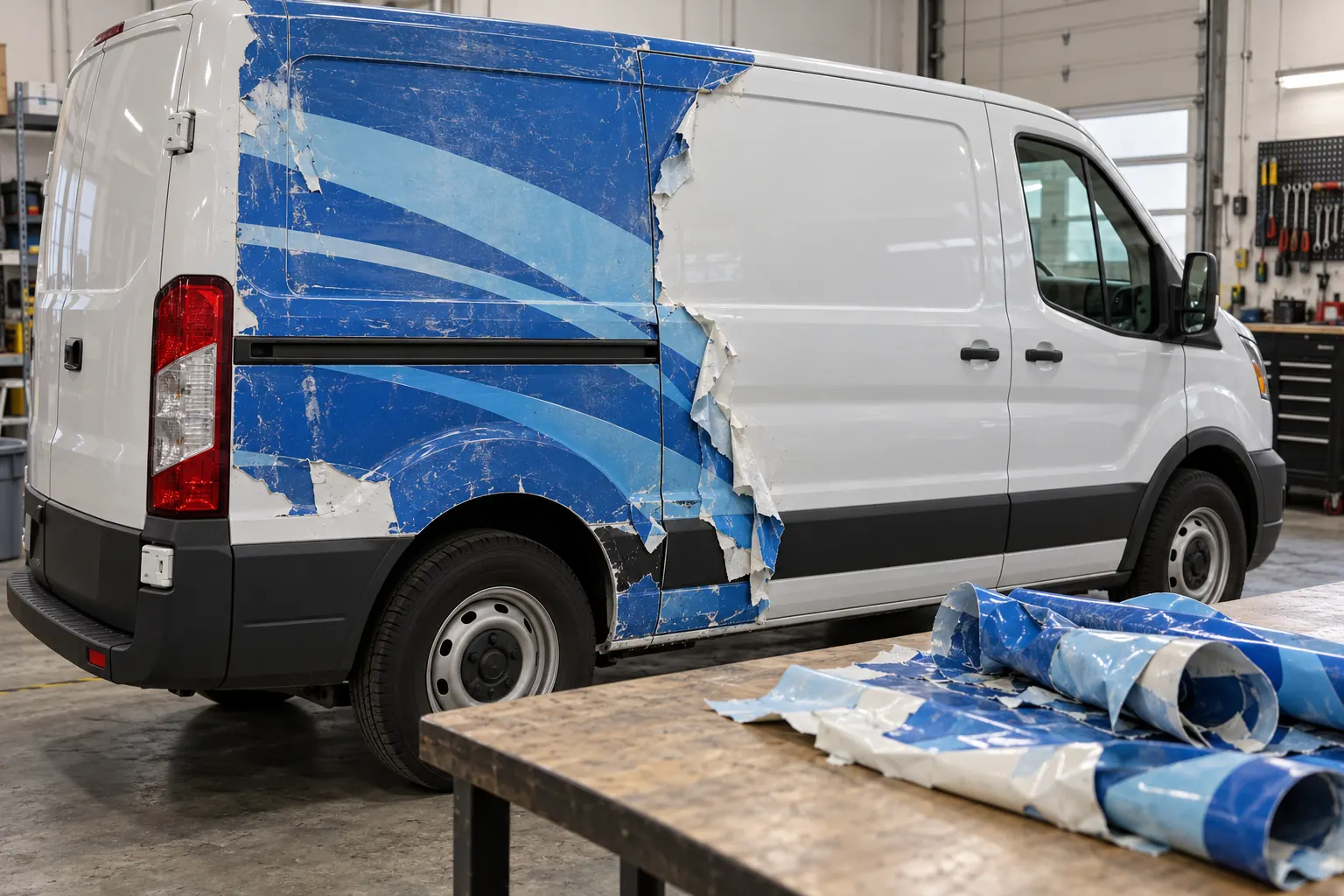
Illustrative graphics planning scene; not documentary shop or customer photography.
Describe the existing graphics before asking for a total
Record the vehicle year, make, model and body configuration, then identify which areas carry graphics. Note whether the job involves a full printed area, partial coverage, cut lettering, several older layers or a mix. Provide all-side photographs and close views showing the current condition.
If installation records exist, include the film system, approximate installation date and any repairs or additions. Label unknown information rather than guessing. A recent intact graphic and a deteriorated older film can present different removal questions. The purpose of the initial brief is to explain the actual starting point so the review does not silently assume a condition that has not been observed.
Record visible condition without diagnosing the hidden surface
Photograph cracking, lifting, missing areas, adhesive exposure and damaged paint visible around the graphics. Identify known repainting or body repairs and any concerns recorded by the fleet. The surface concealed by film may not be fully assessable from an online photograph, so distinguish visible evidence from assumptions about what will be found underneath.
A removal proposal should identify how unresolved conditions will be handled. Do not interpret a clean concept image or a broad removable-material description as a guarantee that every coating will remain unchanged. Keep any paint or body repair decision separate from the graphics scope. The actual film, age, coating and condition need review before expectations are agreed for a particular vehicle.
Separate removal, adhesive cleanup and subsequent work
Ask the proposal to define the end condition expected from the removal task. Removing the graphic, addressing remaining adhesive, assessing the exposed surface and preparing for new graphics are connected stages but should not be left as one undefined phrase. Establish which tasks are included and which require further review.
If a rebrand follows, define the new coverage and artwork separately using the commercial wrap cost guide. If the vehicle is leaving the fleet, describe the intended handover condition and any owner requirements. The requested next use influences what information the project needs, but it should not become an unsupported promise about restoring every surface to an earlier appearance.
Define the scope by actual area and vehicle configuration
List the panels or faces included and record any graphics that must remain. A door-lettering removal is different from clearing several large trailer sides. Compartments, hardware, repaired panels and multiple materials can create additional questions even when the visible graphic area looks similar.
For a fleet, separate meaningful condition groups and configurations. Do not assume every unit has the same film simply because the branding looks consistent. Different installation dates, repair graphics or previous operators may matter to the review. Use a current asset list with photo references so the proposal can identify which vehicles are represented by each assumption and which require a separate inspection or decision.
Plan vehicle release around the unresolved work
Provide the required completion target, release windows and delivery and collection responsibilities. If removal is part of a new installation, keep the stages connected in the operating plan while allowing for the condition review between them. Do not assume that all vehicles can be processed on an identical schedule before their starting conditions are understood.
Identify the contact who can approve a changed scope if an unexpected condition is found. A clear decision path helps avoid leaving an asset unavailable while several people debate a question with no assigned owner. Keep internal transport, driver coordination and any operating impact in the business budget, even when those items do not appear on the supplier removal proposal.
Compare proposals with the same included end point
Send the same photographs, history, affected areas and intended next use to each supplier. Ask the response to identify included removal work, adhesive treatment, preparation assumptions, exclusions and how changed conditions are addressed. A low headline figure can describe a narrower end point than another proposal.
Keep any inspection-based uncertainty visible and ask how the final scope will be confirmed. Avoid comparing a fixed defined task with an open-ended assumption as though both describe the same risk and work. Use the removal planning guide for the broader workflow, then retain the actual accepted quote and condition record with the vehicle rather than relying on an informal estimate repeated in later conversations.
Document the exposed condition before the next decision
After the removal stage, record the exposed surface and any issues relevant to new graphics or handover. Resolve required repair, preparation or coating questions through the responsible party before production or installation continues. A wrap is a graphics application and should not be used to conceal an unresolved surface concern in the project record.
Update the vehicle history with the removal and replacement records so future teams know what happened. For an initial review, send a wrap removal quote brief with photographs, known materials, dates and the intended next step. If only one damaged area is involved, compare repair and replacement scope planning before assuming the entire identity must be removed.
Frequently Asked Questions
Turn Your Vehicle Details Into a Clear Project Brief
Send current photographs, vehicle quantities, logo files, coverage preferences and timing. Identify old graphics and paint concerns so the project review can address the actual equipment.
Explore planning resources or request your commercial wrap quote.
