
Cleaning Company Vehicle Wraps for Commercial Service Teams
A cleaning fleet should communicate the business clearly across office visits, supply runs and service routes. Plan an identity that distinguishes the work offered, remains readable on different vans and supports consistent additions as teams and vehicles change.
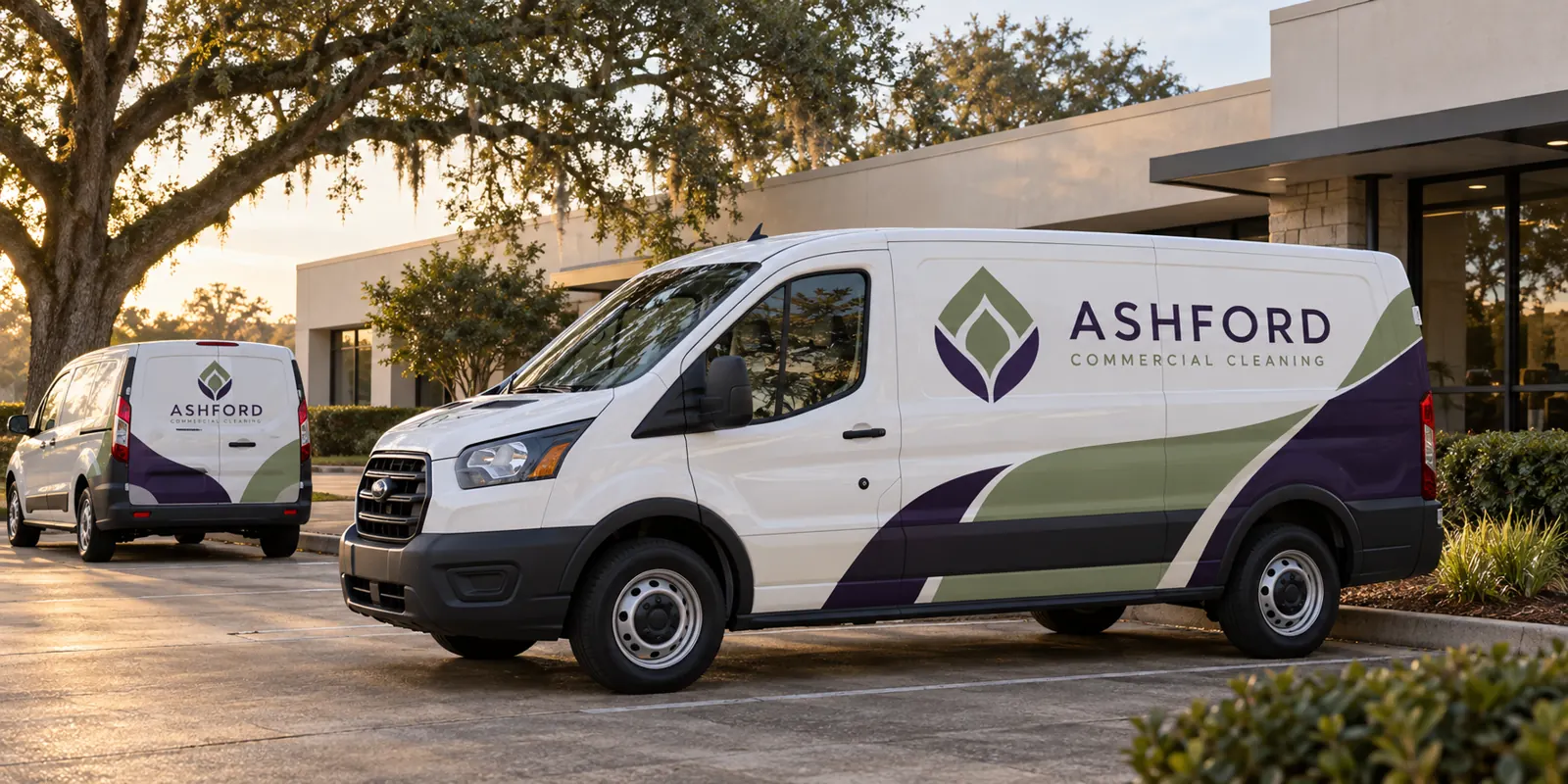
Fictional commercial wrap design concept; not a completed customer installation.
Make the cleaning business and its audience clear
Start with the company name and the kind of cleaning work customers should recognize. Commercial janitorial service, residential cleaning and specialist work can attract different enquiries. Choose the description that fits the business rather than printing every possible category with equal emphasis. A nearby viewer should be able to understand the operator quickly.
Keep a primary contact route readable and give it space beside the identity. A clean visual direction can support the business, but a generic sparkle symbol should not replace the name. The vehicle’s job is to make the company recognizable and direct a potential customer to the next useful information.
Use accurate service language instead of unsupported claims
Supply approved wording for the actual services offered. If the business wants to display a qualification, product claim or health-related statement, have the responsible person verify its accuracy and permitted use. Do not add badges, ratings or broad performance promises simply to make a graphic concept look more authoritative.
Decide how service categories relate to the main identity. An office-cleaning van and a residential team vehicle may share the same colors and logo while using a different concise description. Keep the approved versions organized so later additions do not introduce conflicting messages or outdated contact details.
Identify the actual vans and working equipment
List the year, make, model, wheelbase and roof height for each configuration, with quantities. Photograph both sides and the rear, including windows, racks and accessories. Compact vans and larger cargo vans offer different proportions. A model name alone may not identify the doors and panels the artwork needs to work around.
Use the van graphics page for the body-specific decisions. Review handles, sliding doors and rear splits before placing essential wording. If the fleet includes pickups or another body type, list those separately. A common identity can be adapted without assuming one production file describes the whole fleet.
Compare restrained lettering with a more visible graphic system
Lettering can suit a business that wants a concise identity with much of the original paint visible. Partial graphics can establish a distinctive color area and connect several vehicle bodies. Fuller coverage provides another visual direction when it supports the message and surfaces. Compare defined options using the same vehicle photos and essential wording.
The lettering guide, partial-wrap guide and full-wrap guide explain the coverage choices. Ask which panels are included and what remains exposed. More printed surface should not come at the expense of a readable company name and service description.
Keep the identity consistent across teams and shifts
Define stable brand elements and the secondary information that may vary, such as team or unit identifiers. Keep those identifiers linked to the correct vehicle. A consistent hierarchy can connect the fleet without turning each van into a different division brand. Record the approved versions and the person responsible for updates.
Choose one approval owner to verify wording, phone numbers, domains and vehicle configurations. Consolidate feedback against a dated proof instead of sending contradictory revisions from several team members. The artwork guidelines help prepare the source package and review process before production is authorized.
Plan condition review and availability around booked service
Identify release windows and priority vehicles, including any operating constraints that affect delivery or collection. A van used on a regular service schedule needs a plan for its unavailable time. Coordinate around the confirmed project arrangement rather than assuming that a generic turnaround statement applies to every configuration.
Disclose old vinyl, residue, dents, repairs and peeling finishes with close photos. Graphics should not be treated as a repair for an underlying surface concern. Removal and preparation should be clear in the proposal. The inventory worksheet can help connect unit details, photo references, condition questions and availability.
Prepare a cleaning-fleet brief that supports a defined quote
Send the vehicle list, quantities, current photos, brand sources and essential wording. State whether the request is a new identity, a refresh or an addition to an established fleet. Identify the coverage options to assess and the person who can authorize commercial details. Make missing information visible rather than guessing a specification.
Use the cost guide to compare complete scopes and request a cleaning-fleet graphics quote. The vans on this page use a fictional commercial-cleaning identity. They illustrate a possible direction without presenting completed customer work, health claims, qualifications or marketing results as evidence.
Frequently Asked Questions
Turn Your Vehicle Details Into a Clear Project Brief
Send current photographs, vehicle quantities, logo files, coverage preferences and timing. Identify old graphics and paint concerns so the project review can address the actual equipment.
Explore planning resources or request your commercial wrap quote.
