
Telecom Contractor Vehicle Wraps and Fleet Graphics
A telecom contractor needs a clear identity across utility trucks, work vans and support vehicles. Plan graphics that identify the actual contractor, adapt to equipment and compartments, and keep approved brand relationships and unit information organized as the fleet changes.
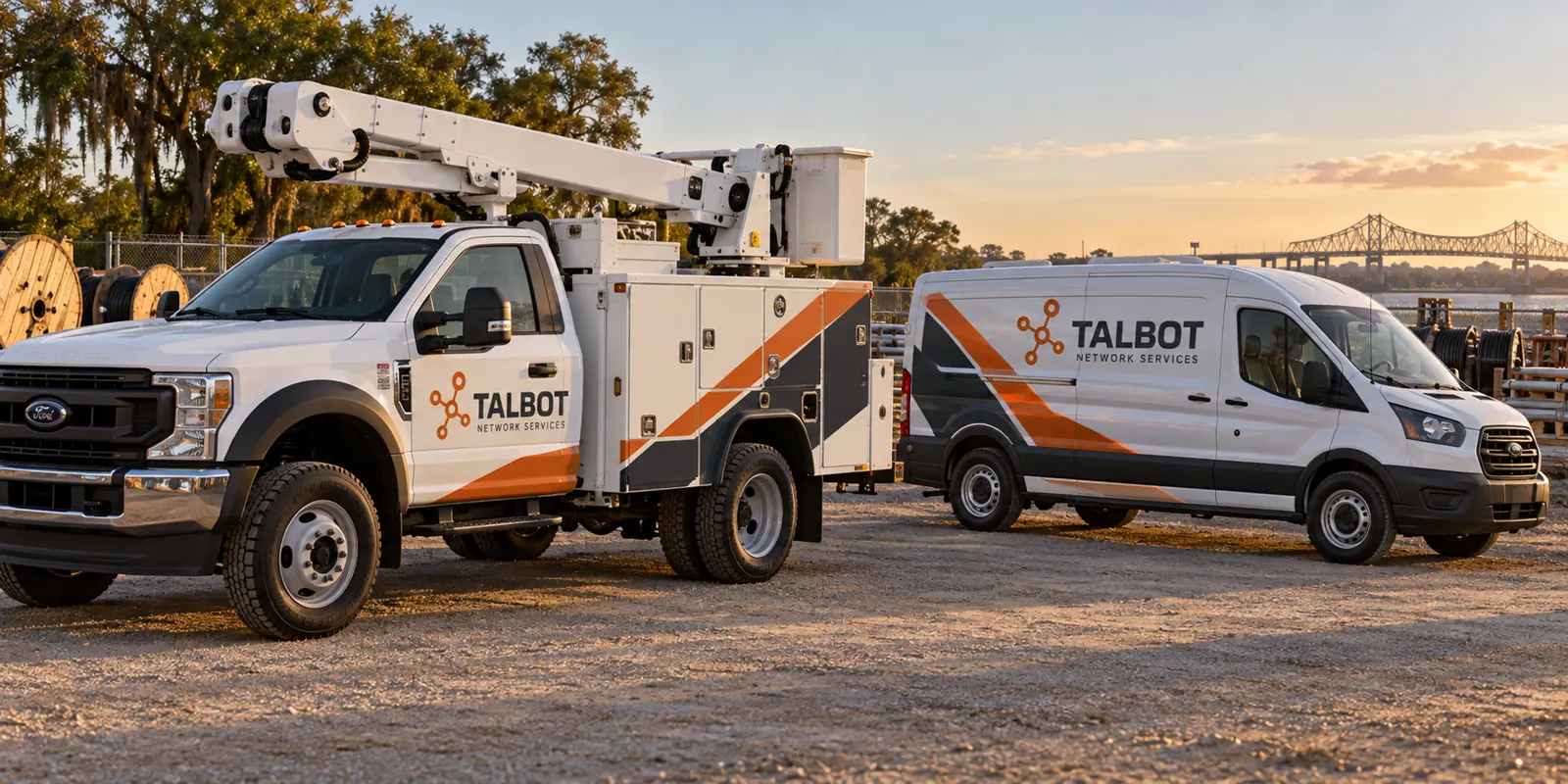
Fictional commercial wrap design concept; not a completed customer installation.
Make the contractor identity clear
Start with the company name and an accurate description of the work offered. Network construction, installation, maintenance and other specialties can create different message priorities. Choose the wording that helps the intended audience understand the actual contractor without turning the vehicle into a dense technical service list.
Give a primary contact route a clear role in the layout. A business enquiry route and an operational contact may serve different purposes. Have the responsible company verify what should appear publicly. The design should support a recognizable commercial identity rather than introduce an unsupported qualification, service promise or relationship.
Organize corporate and partner assets before layout work
If the brief includes a carrier, client or partner identity, supply the approved source assets and the authorization relevant to their use. Identify who reviews those elements and whether the arrangement requires a particular hierarchy. Another contractor’s truck is not a reliable substitute for the current approved brand package.
Separate the contractor’s stable identity from any variable approved project information. Keep a maintained record so later additions do not reuse an outdated partner treatment or message. A clear review chain supports the business without asking the design proof to establish relationships or permissions that belong in the actual project brief.
Inventory utility bodies, vans and work equipment
List vehicle configurations and quantities, including service-body details, van wheelbases and roof heights where available. Send current photographs from both sides and rear. Show racks, storage, booms, access panels and equipment in the normal safely stowed configuration. The cab model alone does not describe an aftermarket utility body.
Use the utility-truck page, service-body route and van page for body-specific planning. Those references help connect the commercial message to the actual stable panels instead of assuming one blank template represents all equipment.
Adapt layouts around compartments and functional areas
Handles, door gaps, reels, racks and body changes can interrupt the company name or contact details. Review essential wording against current vehicle photos before approving a continuous graphic treatment. A simpler arrangement on selected panels may communicate more clearly than stretching the message across every compartment.
Identify existing warnings, equipment labels, identifiers and access areas that must remain visible and usable. Involve the responsible equipment owner in those decisions. The written scope should state included surfaces and exclusions. Decorative branding should not invent operational labels or imply that the project modifies the vehicle’s technical function.
Choose coverage and maintain a repeatable fleet reference
Lettering can create a restrained identity while preserving original paint. Partial graphics can connect the cab and work body through a recognizable color system. Fuller coverage offers another option where the surfaces and project goal support it. Compare defined treatments using the same wording and actual body photographs.
Keep approved proofs linked to each configuration and unit identifier. The graphics management route helps connect later additions and replacements with that record. Review a new vehicle or changed body before reusing artwork; the brand can remain stable while the production layout needs adaptation.
Plan condition review and availability around field work
Identify priority vehicles, release windows and how the business will cover work while units are unavailable. Clarify transport, access and collection against the confirmed project arrangement. A phased rollout should reflect the actual body versions and operational constraints rather than a general installation-duration claim.
Disclose old graphics, residue, corrosion, repairs and damaged finishes with close photos. Graphics should not be treated as a repair for an underlying surface problem. Removal and preparation need to be explicit in the scope. The inventory worksheet can organize units, photo references, condition questions and release windows before approval.
Prepare a telecom-contractor fleet brief
Send the equipment list, quantities, current photos, authorized logo files and essential wording. Identify coverage preferences, partner-asset approvals, existing information to preserve and timing. Choose a coordinator who can consolidate feedback and name the reviewers responsible for any specifications. Make missing details visible rather than assuming a familiar vehicle category resolves them.
Read the artwork guidelines and request a telecom-fleet graphics quote. The utility truck and van shown here use a fictional contractor identity. They demonstrate a possible visual system without presenting customer work, carrier authorization, technical qualifications or operational results as evidence.
Frequently Asked Questions
Turn Your Vehicle Details Into a Clear Project Brief
Send current photographs, vehicle quantities, logo files, coverage preferences and timing. Identify old graphics and paint concerns so the project review can address the actual equipment.
Explore planning resources or request your commercial wrap quote.
