
Service Body Truck Wraps and Compartment Graphics
A service body gives technicians organized tool storage and gives a graphics project a series of interrupted surfaces. Build the company identity around the actual compartment layout, with readable wording, deliberate coverage and a record that supports later fleet additions.
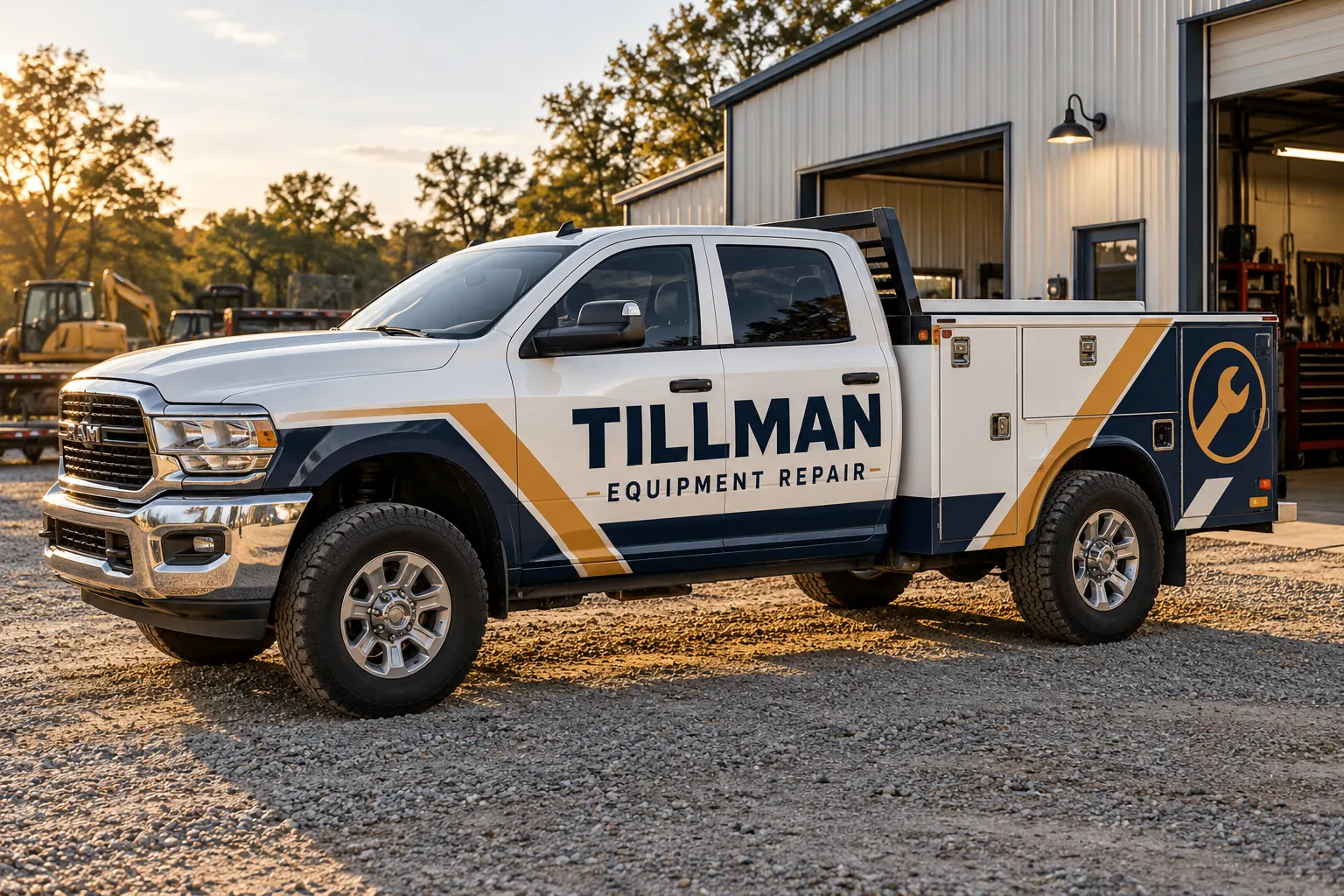
Fictional commercial wrap design concept; not a completed customer installation.
Identify the service body as well as the cab
The chassis model is only part of a service-truck brief. Body length, compartment arrangement, cabinet height and aftermarket equipment determine where graphics can work. Include the service-body maker or model if known, and supply photographs even when the fleet has another truck with a similar badge. A familiar cab does not mean an identical body.
Photograph both sides and the rear in the normal parked configuration. Show racks, reels, toolboxes, steps and equipment that may obscure the body. The commercial truck overview covers broader truck choices. This page focuses on the compartmented body and the decisions that help a technician’s working vehicle carry a clear identity.
Plan readable wording across compartment divisions
Each handle and vertical gap interrupts the composition. A company name stretched across many doors may look strong on a simplified drawing yet become difficult to read on the actual truck. Use current photos to evaluate the identity against those divisions. Consider whether selected larger panels can carry essential wording more clearly.
Start with the business name, service description and a primary contact route. Keep secondary information from competing with those elements. A repair specialist, contractor or maintenance company may need a concise description to explain an unfamiliar name. The goal is to organize the message around the body rather than make every compartment hold a separate advertisement.
Choose coverage that connects the cab and service body
The cab and rear body can share a graphic system without requiring one uninterrupted image. Lettering may create a clean identity on matching paint. Partial graphics can introduce a recognizable color area and connect the front and rear. Fuller coverage needs an explicit discussion of which panels, compartments and other surfaces are included.
Compare lettering and decals with partial coverage using the same required wording. Ask how visible paint, handles and body edges are treated. Do not assume every accessory or equipment component belongs in the proposal simply because it appears in the vehicle photograph.
Consider daily tool access and replacement planning
Explain which compartments are used most frequently and where equipment contacts the surface. Identify existing labels, unit numbers and information that needs to remain visible. A layout should respect the agreed exclusions and the vehicle’s functional use. Have the responsible vehicle owner review those details before production is authorized.
Keep a record of the approved panel treatment so a later damaged area can be discussed specifically. A modular layout may provide useful repair options, but the outcome still depends on condition and design. Do not assume a new section will look exactly like material that has been exposed to daily use. Current photographs and the original reference help guide that conversation.
Adapt a brand system to different service-body versions
A fleet can include high-side and low-side bodies, different cab lengths and varied rack arrangements. List each version and its quantity. Preserve the same logo treatment, hierarchy and color direction while allowing placement to adapt. Forcing one production file onto a different body can undermine both the appearance and the message.
Assign an approval owner and keep dated proofs linked to vehicle identifiers. Record later body changes and new equipment. The fleet solutions route connects this detail with a wider rollout. For a truck built around boom or utility equipment, the utility-truck page provides a more specific starting point.
Address condition, old graphics and scheduling early
Share close views of existing vinyl, residue, rust, peeling paint, repairs and dents. Describe known refinishing or panel replacement. A wrap should not be treated as a fix for an unsuitable surface. Preparation and old-graphic removal should be identified in the scope rather than assumed to be included with the new design.
Explain when the vehicle can be released and how the business will cover its normal work. Discuss access, tool storage, delivery and collection responsibilities with the project team. Do not remove equipment based on guesswork. Build the operating plan around the agreed work and confirmed schedule, especially when a service truck carries the tools a crew needs every day.
Prepare a brief that supports the right layout
Send vehicle and body specifications, quantities, photos, brand files and the wording that matters most. Identify accessories and exclusions, existing graphics and condition concerns. State whether lettering, partial coverage or fuller options should be considered. A complete brief makes it easier to compare proposals without hiding meaningful differences in included work.
Read the artwork guidelines and cost guide, then request a service-body graphics quote. The image on this page uses a fictional equipment-repair brand to demonstrate a possible direction. It is not a completed customer installation or a claim about the services of that invented company.
Frequently Asked Questions
Turn Your Vehicle Details Into a Clear Project Brief
Send current photographs, vehicle quantities, logo files, coverage preferences and timing. Identify old graphics and paint concerns so the project review can address the actual equipment.
Explore planning resources or request your commercial wrap quote.
