
Mobile Pet Grooming and Veterinary Vehicle Graphics
A mobile pet-service vehicle should identify the business and its actual role clearly while working around a specialized body. Plan graphics for the doors, windows, vents and equipment on the unit, using accurate grooming or veterinary wording and an approved business identity.
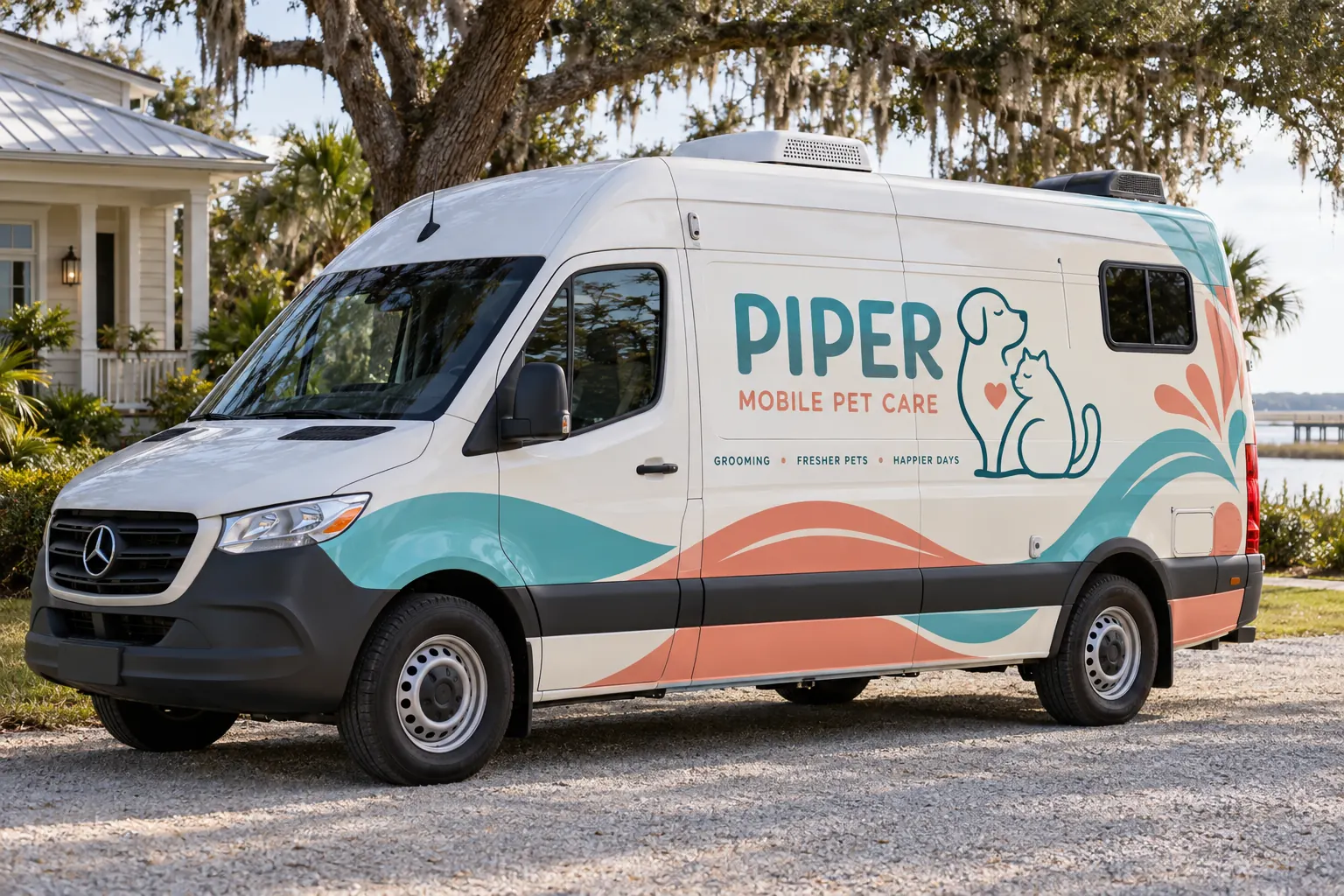
Fictional commercial wrap design concept; not a completed customer installation.
Make the actual pet-service role clear
Start with the business name and an accurate description of the work. Mobile grooming and veterinary services represent different roles, so the wording should reflect the actual business rather than blend them into an unclear message. A nearby customer should understand the operator without relying on animal illustrations alone.
Choose a primary contact route and give it space. A booking website, business enquiry number and other contacts can serve different purposes. Have the responsible owner confirm what should appear publicly. The graphics should support the actual service identity without inventing medical qualifications, treatment outcomes or a general guarantee about animal care.
Use imagery that supports a readable business name
Animal symbols and friendly colors can help establish a visual direction, but the company name and service description should remain the main reference. Review contrast and spacing at a reduced size as well as close up. A detailed illustration may be attractive on a monitor while contributing little to recognition across a property.
Supply approved logo sources, colors and any imagery the business is authorized to use. Keep the identity and essential wording consistent if several mobile units are involved. The concept image on this page illustrates fictional grooming branding; a veterinary unit needs its own accurate approved wording rather than a borrowed service description.
Document the specialized body before choosing coverage
Send the chassis and body details available, quantity and current photographs from both sides and rear. Include service doors, passenger or equipment windows, vents, external fittings and other modifications. A converted mobile-service van may have different graphic areas from a standard cargo model of the same size.
Use the van page for the underlying body choice and the mobile-service trailer route if the business uses a trailer unit. Photograph the actual parked configuration so the project does not rely on a blank template that omits important working features.
Preserve access and functional information
Review essential wording against doors, handles, windows and equipment. A service door can divide a name or contact route, while the rear has its own hinges, gaps and hardware. Assess those views separately rather than assuming the side composition can simply be reduced and copied to the rear.
Identify ventilation, equipment access, existing labels and other areas that must remain clear and usable. Have the responsible vehicle or equipment owner review the exclusions. Any requested glass treatment should be raised explicitly. The graphics scope should state the actual included surfaces rather than treat every part of the specialized body as decorative space.
Compare coverage and organize proof ownership
Lettering can provide a concise identity with original paint visible. Partial graphics can establish a stronger branded area, while fuller coverage offers another direction where the surfaces and goal support it. Compare defined options using the same approved message and current body photographs.
Choose a coordinator to verify spelling, phone numbers, domains and the service description. Supply any qualifications or other business identifiers from accurate current records and confirm relevant requirements where needed. The artwork guidelines help organize the source package and consolidated feedback against a dated proof.
Plan availability and condition around mobile appointments
Identify when the unit can be released and how the business will cover booked work while it is unavailable. Clarify delivery, access and collection against the confirmed project arrangement. A specialized vehicle may carry essential equipment, so disclose access restrictions before assuming a standard installation plan applies.
Photograph old vinyl, residue, repairs, peeling finishes and other concerns closely. Graphics should not be treated as a repair for an underlying surface issue. Removal, preparation and suitability need review. The inventory worksheet can connect body details, photos, condition questions and release windows for more than one unit.
Prepare a mobile pet-service graphics brief
Send the vehicle or trailer specification, quantity, current photos, brand files, essential wording and timing. Identify coverage preferences, equipment exclusions and the approval owner. Make unknown conversion details visible rather than guessing them. Retain the final proof with the actual body reference for later repairs, contact changes or additions.
Review the commercial cost guide, then request a mobile pet-service graphics quote. The van shown here uses fictional grooming-business branding. It illustrates a possible visual direction without presenting customer installations, veterinary credentials, treatment results or business performance as evidence.
Frequently Asked Questions
Turn Your Vehicle Details Into a Clear Project Brief
Send current photographs, vehicle quantities, logo files, coverage preferences and timing. Identify old graphics and paint concerns so the project review can address the actual equipment.
Explore planning resources or request your commercial wrap quote.
