
Cast Versus Calendered Vinyl: Choose by Surface and Product System
Cast and calendered describe different film categories, not a complete project specification. Begin with the actual vehicle geometry, exposure and intended use, then review the named product and compatible construction for that application.
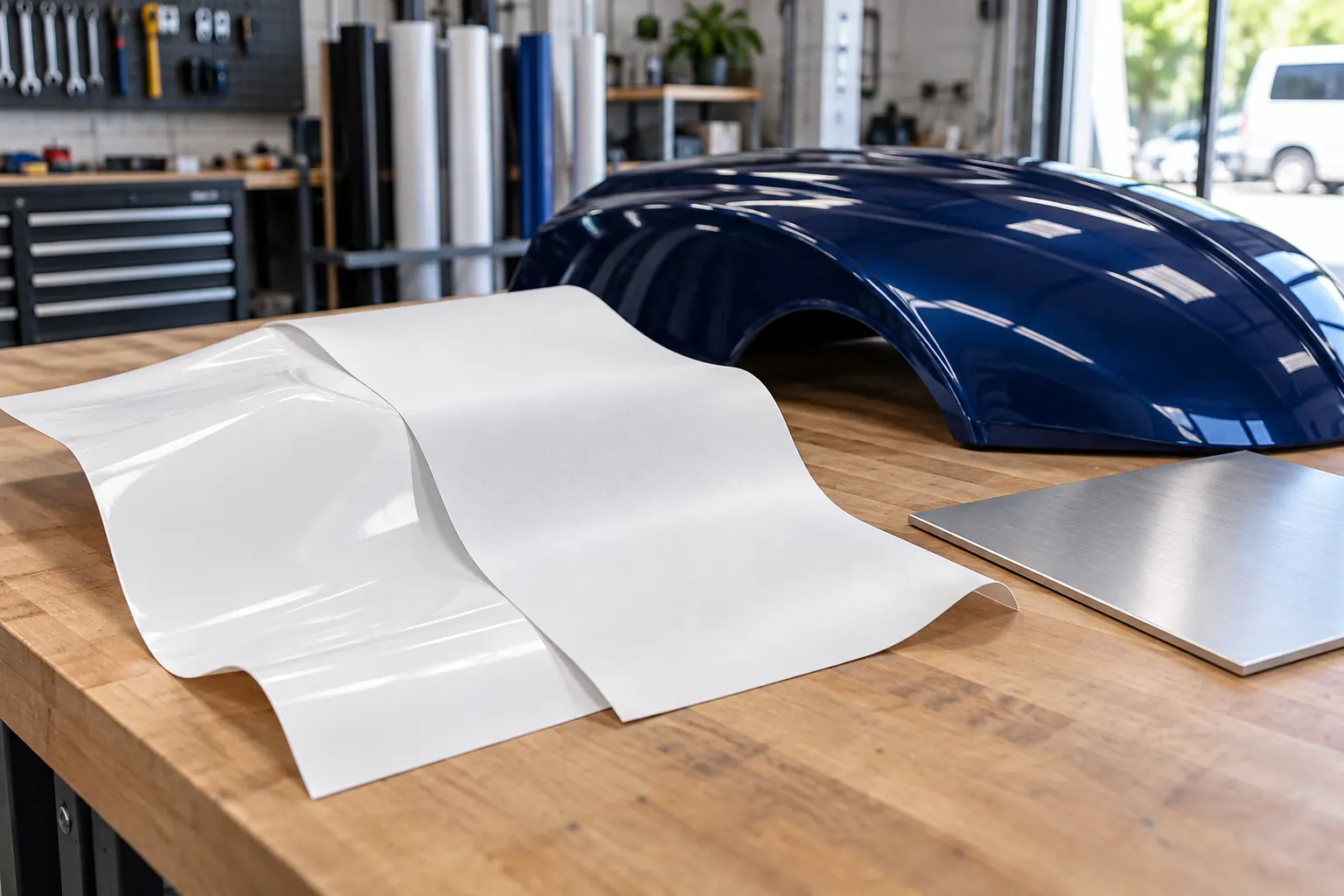
Illustrative planning concept; not documentary customer photography or a product performance test.
Understand the category distinction without stopping there
Avery Dennison distinguishes highly conformable cast films from calendered films intended for flat or simple curved applications in its wrap-selection overview. The practical starting point is the surface shape, not a blanket claim that one category solves every graphic project.
Use that distinction to ask better questions, then check the current technical information for the named product. A broad category does not identify its adhesive, approved surfaces, production construction or conditions of use. Two proposals that both say cast vinyl can still leave important scope differences unresolved. The material discussion should end with a specific accepted system suitable for the actual asset rather than only a category word on the invoice.
Map flat areas, curves and interruptions on the equipment
Provide all-side photographs and close images of recesses, contours, rivets, seams and hardware. Identify the exact areas the proposed graphics cover. A truck side, a curved van recess and a trailer door can present different geometry even within one fleet project. Coverage boundaries matter because an uncovered complex area does not need the same graphic treatment as a covered one.
Do not choose a product from the vehicle name alone. Accessories, aftermarket bodies and repair panels can change the application. Use the actual survey to review the proposed material and layout. A simple annotated photograph showing what is included can resolve more uncertainty than a generic statement that the material is suitable for vehicles.
Review the film, print and protective construction together
For printed graphics, ask the proposal to identify the film and relevant compatible printing and protective system. A named base film alone does not explain every part of the finished construction. Keep the actual product references with the job record so later additions or repairs can begin with the accepted specification.
The selected system should be reviewed against the intended surface and product guidance. Do not assume that a preferred finish permits an arbitrary combination of film and laminate. The matte versus gloss guide addresses finish choice, while this page addresses the category and application question. Treat those as connected decisions with different purposes rather than using an appearance preference to skip suitability review.
Describe exposure and operating conditions in the brief
Record where the asset operates and is stored, how it is cleaned and whether the graphic area encounters unusual contamination or abrasion. Identify relevant horizontal and vertical areas in the coverage plan. Avoid applying one general lifespan statement to every vehicle face and operating environment.
Use the manufacturer information and agreed project terms for the actual system. The category name alone does not establish a service-life promise, removal outcome or warranty. If the fleet has a defined requirement, provide it explicitly so the proposal can address that requirement rather than letting the buyer infer performance from phrases such as premium or professional. Keep the intended duration distinct from a guarantee that has not been offered.
Compare materials against the same actual graphic area
A meaningful comparison holds the vehicle, coverage and business message constant. Ask each proposal to identify the material system, included preparation, installation and relevant limitations. If a different product requires a different layout or scope, make that change visible instead of treating the material names as isolated price options.
For a flat identification panel and a complex fitted wrap, the appropriate review may lead to different constructions. That is a project decision based on the actual surface. Do not stretch a lower quote into an assumption that its unspecified material can serve any geometry. The commercial cost guide helps connect the material discussion to the complete proposed work.
A practical material-review checklist
| Project condition | Question to resolve |
|---|---|
| Complex covered recess | Which named product is suitable for this geometry? |
| Flat identification area | What system fits the surface and intended use? |
| Printed graphic | Which compatible film and protective construction are proposed? |
| Old or repaired paint | Who confirms substrate condition and readiness? |
Keep paint condition and preparation separate from film choice
Document scratches, rust, damaged coatings, prior repainting and older graphics. Material selection does not repair the substrate or establish readiness. Identify what must be inspected or resolved before installation and who supplies the relevant repair or coating information. An attractive film sample cannot answer those condition questions.
If old graphics need removal, include that task explicitly and note unknown areas beneath them. Use vehicle preparation planning to organize the handoff, with technical readiness determined for the actual coating and selected product. The buyer should understand both the proposed material and the condition assumptions behind the installation scope, especially when comparing a clean new vehicle with older working equipment.
Approve a named system and retain a usable record
Before acceptance, confirm the actual product references, coverage, vehicle configuration and relevant care information. Record any unresolved conditions and the person responsible for approving them. Keep the material specification with the artwork and installed photographs rather than storing only a generic note that the vehicle received cast vinyl.
For future additions, check whether the new configuration and conditions match the accepted scope. For repairs, provide current photographs as well as the original specification. To begin, send a material-selection project brief with the asset list, proposed coverage and operating information. The materials information page provides the broader context without substituting a category label for the job-specific review.
Frequently Asked Questions
Turn Your Vehicle Details Into a Clear Project Brief
Send current photographs, vehicle quantities, logo files, coverage preferences and timing. Identify old graphics and paint concerns so the project review can address the actual equipment.
Explore planning resources or request your commercial wrap quote.
