
Prepare a Commercial Vehicle for Wrap Installation
A useful preparation plan gives the installer accurate vehicle information, current condition records and clear access. Confirm the actual handoff requirements for the selected graphic system before the appointment instead of assuming a quick wash answers every readiness question.
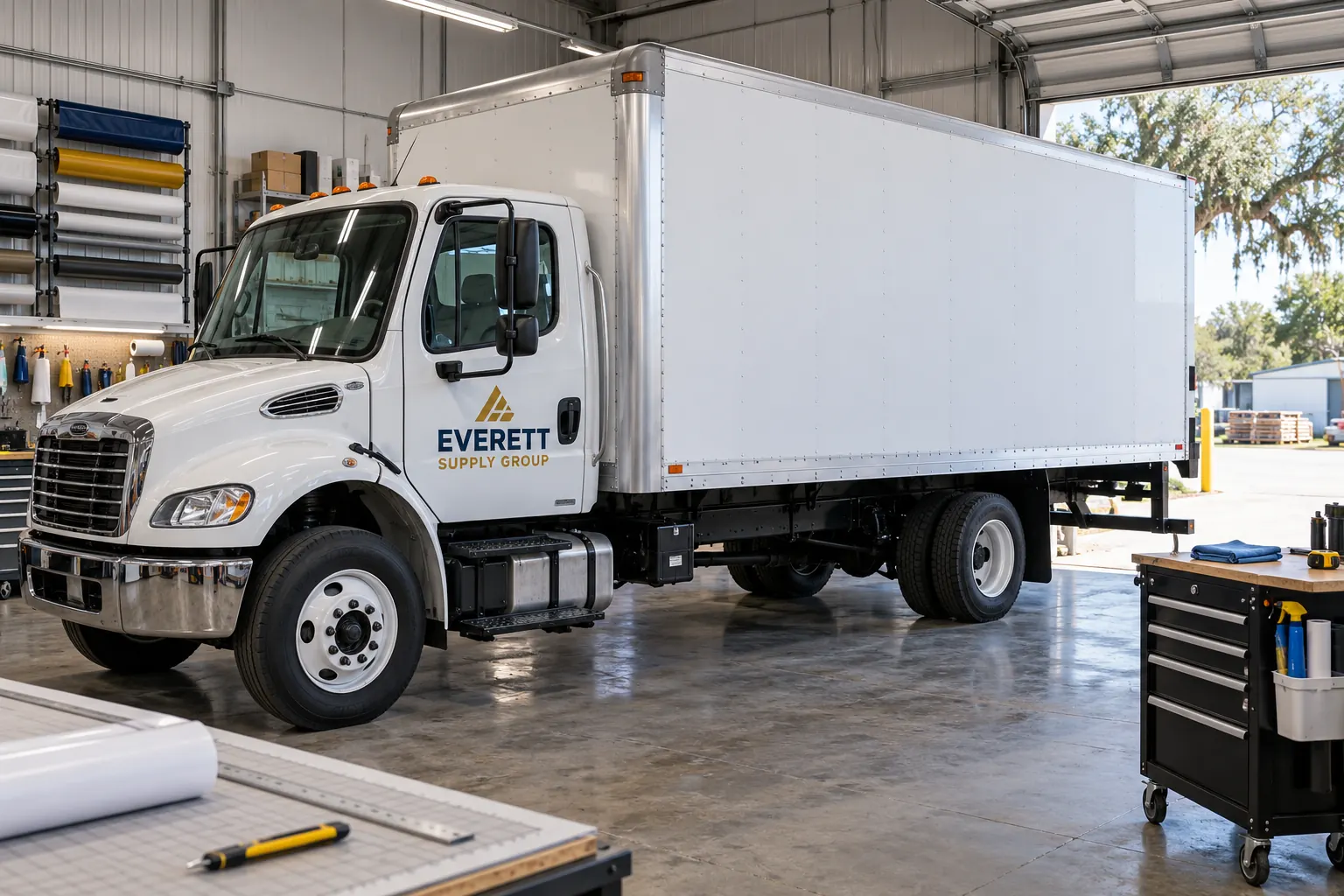
Illustrative planning concept; not documentary customer photography, a diagnosis or verified readiness record.
Confirm the asset and accepted graphic scope
Match the unit to the accepted vehicle configuration, coverage and artwork before arranging the release. Record the year, model and body details and check whether equipment has changed since the survey. An added rack, repaired panel or different door can affect a layout that was approved against older photographs.
Keep the latest proof and unit reference available to the coordination contact. If several vehicles are delivered, identify each one clearly against the accepted list. The preparation handoff should begin with certainty about what is receiving which graphics. It should not ask the installer to decide between similar vehicles or infer an updated layout from a verbal explanation at arrival.
Document condition before the appointment
Provide current photographs of the whole vehicle and close images of coating concerns, repairs, existing graphics and relevant hardware. Identify known repainting and any information about old film or adhesive. Mark concealed condition as unknown rather than assuming a surface beneath older graphics will be ready for the replacement.
The 3M vehicle application bulletin recommends a pre-installation inspection record for each vehicle. Use the appropriate actual project inspection process to record concerns and responsibilities. A customer photo set helps the initial review but does not replace the installer assessment or confirm that every proposed area is suitable for the selected system.
Separate repairs and paint readiness from graphic preparation
Identify dents, rust, loose coatings and known bodywork before treating the vehicle as ready. Assign any repair responsibilities separately and provide the relevant coating information when repainting is involved. A wrap is a graphics application, and an accepted design does not itself resolve an unsound surface.
Use paint-readiness planning and the surface-condition guide to organize the questions. Confirm readiness against the actual coating and film requirements rather than relying on a general waiting period. If the vehicle changes after the survey, update the project record and resolve the effect before the agreed graphics work proceeds.
Agree cleaning responsibilities for the actual system
Ask what condition the vehicle should arrive in and which final preparation tasks are part of the installation scope. Describe the current cleaning routine and any known waxes, coatings or other treatments. Do not apply an unfamiliar preparation chemical simply because an online article calls it a wrap cleaner.
The selected material guidance and installer process should determine the technical preparation. Keep customer washing and final application preparation distinct so neither party assumes the other has handled an unstated task. Provide the available treatment history and identify unknowns. The objective is a clear handoff to the responsible installation process, not a universal do-it-yourself recipe for every coating, film and vehicle surface.
Include old-graphic removal and protected areas explicitly
Record which old graphics must be removed, what remains and which lights, reflectors, original labels or operational identifiers must stay visible. If removal is outside the agreed scope, do not assume the replacement appointment includes it. Provide the current condition and any known material records for review.
The removal guide explains the earlier stage and unit-marking planning helps organize operational identity. Have the responsible fleet contact confirm required information and clear areas. The artwork should fit the working equipment rather than cover a label or accessory that became visible only when the vehicle arrived.
Prepare the release, access and decision contact
Confirm delivery and collection responsibilities, the relevant keys or access arrangements and the contact who can answer vehicle questions. Record business release constraints and any site-specific requirements relevant to the agreed work. A correctly prepared asset still needs an operational handoff that allows the accepted job to be carried out.
Use the rollout planner to organize proposed windows when several units are involved. Confirm actual dates separately with the project team. Identify who can approve a changed condition or scope so an unexpected issue does not leave the vehicle waiting while several people provide conflicting instructions. Keep that authority clear before the asset is released.
Keep the handoff and care records together
At the project handoff, connect the unit, current condition record, accepted artwork and agreed preparation scope. Record any unresolved question through the actual review process before it is treated as completed. Retain the installed-system information and care instructions supplied afterward so the fleet team knows which guidance applies to this vehicle.
For the initial enquiry, send the commercial vehicle brief with photographs, configuration, coverage and known concerns. Use the photo checklist to organize those images. Preparation works best as a defined set of responsibilities tied to the real equipment and selected system, rather than a promise that one generic checklist can approve every vehicle for installation.
Frequently Asked Questions
Turn Your Vehicle Details Into a Clear Project Brief
Send current photographs, vehicle quantities, logo files, coverage preferences and timing. Identify old graphics and paint concerns so the project review can address the actual equipment.
Explore planning resources or request your commercial wrap quote.
