
Multi-Branch Fleet Graphics Management: One Standard, Traceable Local Work
Keep the business identity consistent across operating locations while recording real differences in vehicles, contacts and release arrangements. Branches on this page mean the customer fleet locations, not additional Pelican Wraps offices.
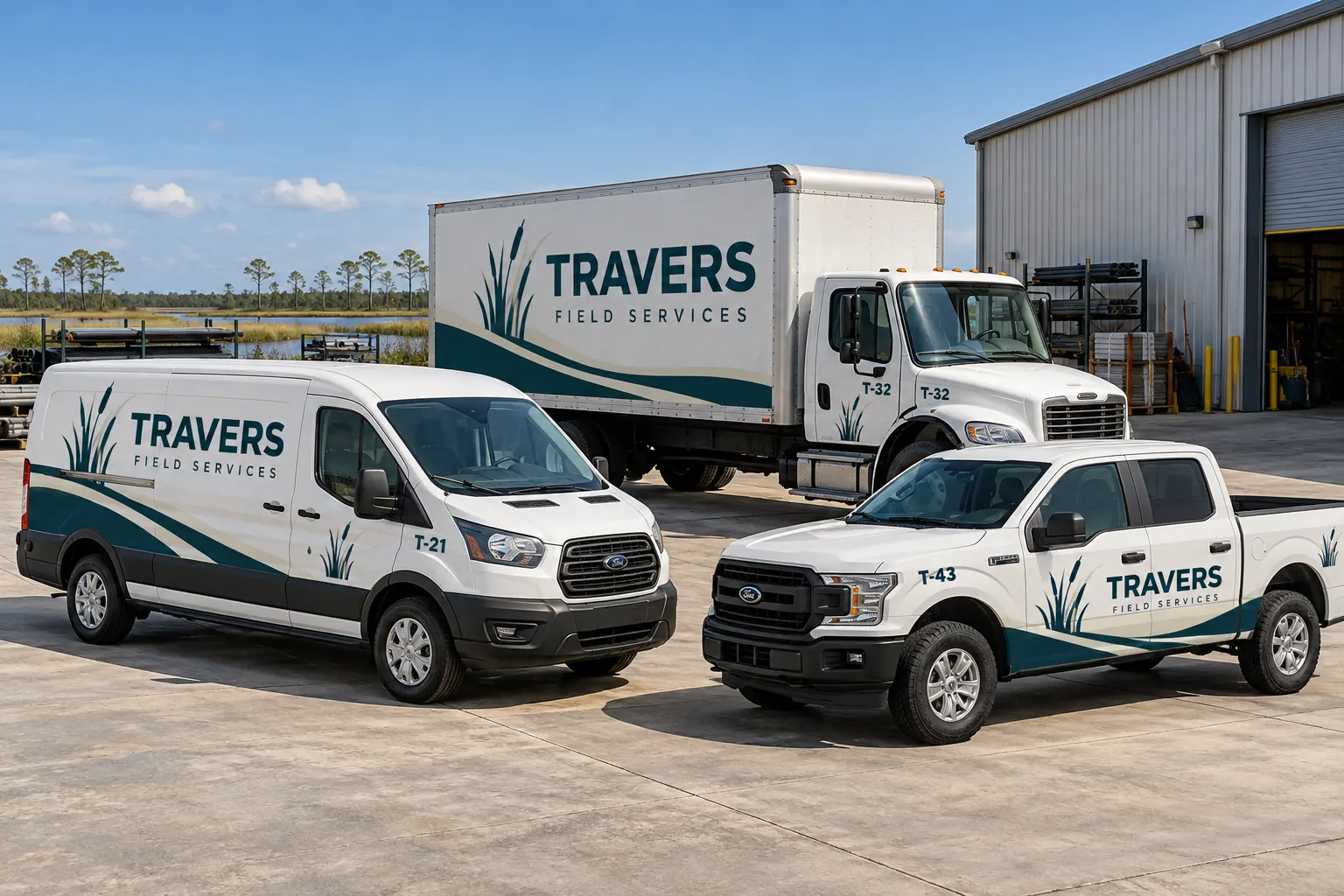
Fictional commercial wrap design concept; not a completed customer installation.
Choose one owner for the master identity
Designate the source owner for current logos, colors, wording and hierarchy. Record who can approve a change that applies across the organization and which local variations are permitted. A shared brand becomes difficult to maintain when each location holds a different file labeled final and no one can identify the controlling version.
Use the fleet standards guide to build that master record. The central standard should not erase genuine operational differences, but it should define how those differences are accepted. Keep approved exceptions traceable to a decision rather than allow local improvisation to become an unrecorded second brand system.
Maintain a local register under the shared standard
Each operating location should provide current units, configurations, photographs and condition information using the same field definitions. Link the local asset list to the central identity version. This makes it possible to tell whether a vehicle is an exact repeat, a different configuration or an unresolved condition case before another order is produced.
Use the inventory worksheet to organize those details. Keep the actual vehicle location separate from a printed branch contact or service-area statement. Vehicles can move between locations, while the brand or customer contact route may remain centralized. Do not let one field silently serve several meanings that change independently during fleet operations.
Define local wording and identifier rules explicitly
Decide whether each branch uses the main business contact, a local contact or another approved message. Verify the actual details before artwork production. Unit numbers and department references should follow a current data owner and format, with a clear process for transfers and renumbering.
For an illustrative case, a vehicle transferred from one operating location to another may need an updated record without needing a new operator identity. Review the actual wording and asset policy rather than automatically printing the new branch name. Unit-marking planning helps distinguish those data decisions from optional decorative coverage and required operational information.
Use configuration records across branches without guessing fit
Two locations may operate the same model family with different roofs, bodies, doors or equipment. Share accepted layout classes only when the actual configurations match, and identify exceptions in the local register. A common vehicle name does not establish identical usable panels or preparation condition.
Use new-model planning when a location adds another class. Connect the actual survey, accepted layout and current standard before production. The benefit of a central system is a defined starting point, not permission to skip review. Keep the person responsible for resolving a new configuration question clear so a local order does not stall between unrelated approval routes.
Central and local responsibilities
| Record | Responsible decision |
|---|---|
| Master identity | Current source and organization-wide changes |
| Local asset list | Actual configuration, condition and release contact |
| Variable data | Approved unit and local wording policy |
| Repeat order | Current version plus unit-specific evidence |
Coordinate release and installation as local arrangements
Record the operating location, transport contact, proposed release windows and any units that cannot be unavailable together. Confirm the actual installation arrangement for the project rather than imply that a multi-branch customer program automatically includes a Pelican office or installer at every location. The business base remains Harvey.
Use the rollout planner to organize proposed windows and dependencies. It does not book capacity or synchronize local calendars. Identify who communicates accepted changes and who can approve a changed condition. Central brand control and local asset availability need to work together without treating one as a substitute for the other.
Make repeat orders and damage enquiries traceable
Require a current unit reference, configuration, artwork version and photographs for a replacement or addition. Retain the material and installed-job records alongside the central design. A short request to send another set to a branch leaves too much room for an outdated contact detail, wrong body layout or unknown repaired panel.
Use the panel replacement route for damage with current evidence. Record what changed after the work, including which older graphics remain. A repeatable process should identify whether the task is an exact accepted repeat or a new scope decision, rather than assume the same logo means the whole job is unchanged.
Review the system when the organization changes
Update the shared standard when the business identity, services, contact routes or operating structure changes. Keep the effective version and affected units visible during any phased transition. Do not erase the history of older vehicles that remain in service, and do not allow them to become the accidental reference for new orders.
For an initial program, send a multi-location fleet brief with the master files, local registers, configuration groups and approval map. Fleet graphics management provides the continuing service route. The practical goal is one maintained identity with local facts attached, so the next decision can be made from records rather than a chain of remembered branch requests.
Frequently Asked Questions
Turn Your Vehicle Details Into a Clear Project Brief
Send current photographs, vehicle quantities, logo files, coverage preferences and timing. Identify old graphics and paint concerns so the project review can address the actual equipment.
Explore planning resources or request your commercial wrap quote.
