
Fleet Damage Graphics & Replacement Panels
A damaged graphic does not always require replacing the entire vehicle wrap. It also should not be treated as a simple reprint without checking the body, installed artwork and surrounding film. Pelican Wraps reviews commercial fleet graphics repairs around the affected surfaces, available production records and the condition of the vehicle. Send clear photographs and the unit details to begin a defined replacement scope.
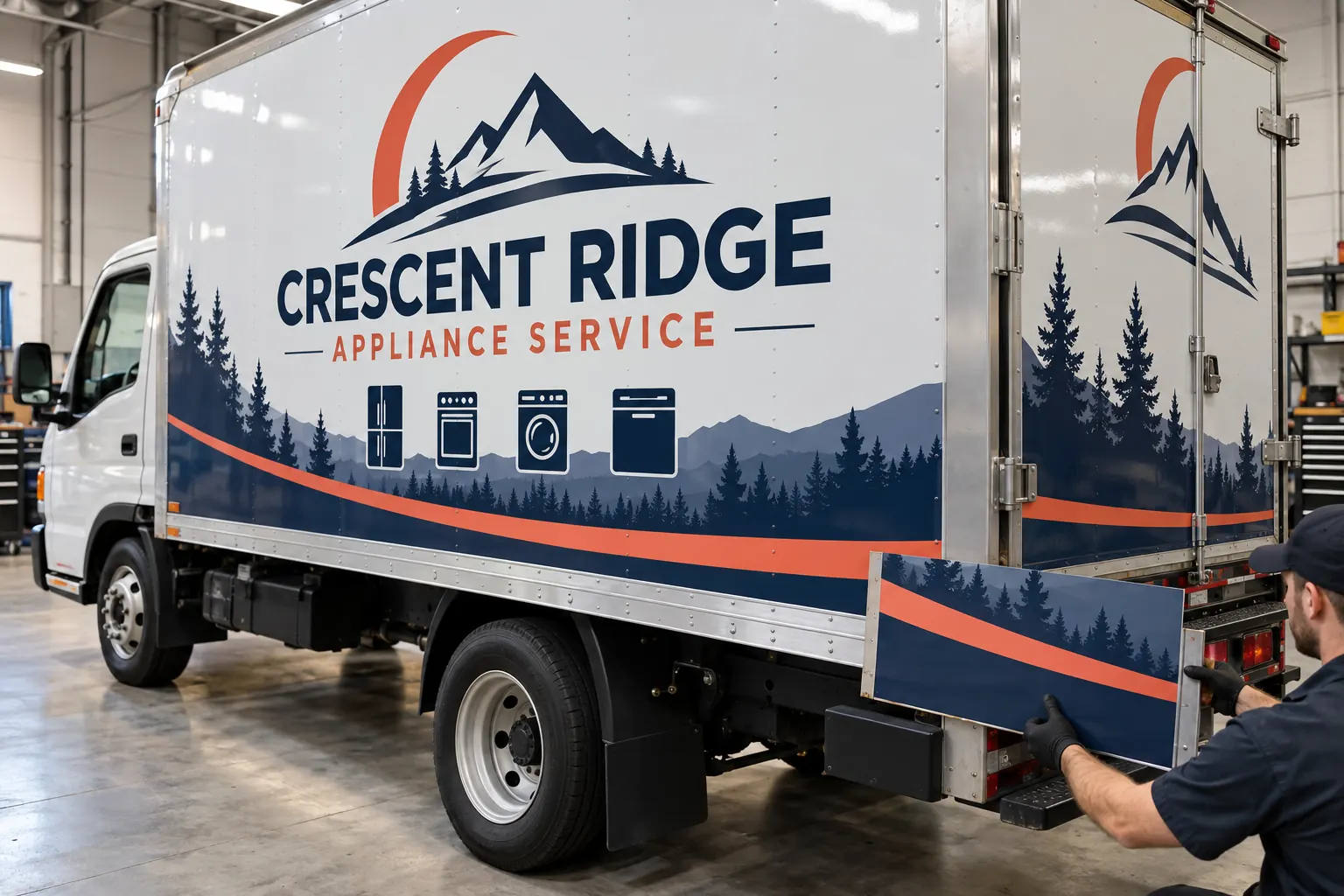
Fictional commercial wrap design concept; not a completed customer installation.
Identify whether the problem is the film, the body or both
Photograph the affected area from close up and from far enough away to show its position on the vehicle. Include a full side or rear view, the unit identifier and any visible edge lifting, tears or surface damage. Describe when the problem was noticed and whether a collision, cleaning event or body repair preceded it. These details help frame the review without diagnosing the cause from one image.
If the body is dented, corroded or has failing paint, graphics replacement is only one part of the work. Confirm who is responsible for body repairs and surface readiness. Do not use replacement film to conceal a condition that needs a separate assessment.
Find the installed design before ordering a reprint
Provide the original job reference, approved proof, artwork revision and material information if you have them. A logo file alone may not reproduce the panel that is on the vehicle. The installed layout can include a particular crop, color adjustment, seam position and unit-specific contact detail. A photograph of a similar truck is useful context, but it is not a production specification.
If the original records are unavailable, explain that at the start. Reconstructing artwork may require additional design and fit work. The replacement proposal should identify whether the work uses an existing file or includes recreation. Confirm the spelling, phone number and unit markings against current business instructions.
Choose a replacement boundary that makes visual sense
A small damaged area does not necessarily define the best replacement size. Film overlaps, printed gradients, door edges and adjoining panels may make a larger section more practical. Review where the new graphic will meet the existing material and whether that boundary interrupts a major logo or readable message. Ask to see which surfaces are included before production.
For a busy fleet, a clean and readable repair may matter more than restoring an aged wrap to an imagined new condition. Compare the limited repair with a larger replacement when the surrounding film is already deteriorating. The repair versus replacement guide provides a separate place to organize the scope comparison.
Set realistic expectations for color and aging
The digital file is only part of the appearance. Sun exposure, washing, film age, laminate condition, printer setup and the current material system can influence how a new panel looks next to an older one. A newly printed section may be visibly different even when the underlying artwork is correct. Ask how the project will review that difference.
Avoid requesting an unqualified exact-match promise from an uninspected photograph. Where appearance is critical, discuss the available comparison process and the possibility of replacing adjacent areas. Record the accepted scope and any visible-match limitations so the fleet manager and vehicle operator understand what the proposal is intended to accomplish.
Coordinate replacement with body-shop work
Tell Pelican Wraps whether the vehicle is awaiting repair, currently in a body shop or already back in service. Identify the repaired panels and obtain the paint-system information and readiness guidance from the responsible repairer. A surface that feels dry is not, by itself, confirmation that it is ready for adhesive film.
Keep paint readiness, graphic production and vehicle-release appointments as separate milestones. Do not book an operational deadline around a guessed cure period. Confirm the project-specific requirements before installation. If body repairs change hardware or panel dimensions, send updated photographs so the replacement layout can be checked against the vehicle that will actually arrive.
Use the repair to improve the fleet record
Once the scope is approved, attach the new artwork revision and replacement details to the unit record. Note the affected side, production reference, installation date and photographs. If a contact number or service message has changed, identify whether that change belongs only on the repaired panel or needs a separate fleet-wide update.
This record also helps distinguish a later accidental tear from another issue requiring investigation. Avoid treating every film problem as the same cause or warranty category. Written material and workmanship terms, inspection findings and the circumstances of the damage determine the relevant next step. Ask for the actual terms rather than assuming that all repairs are covered.
Send a replacement inquiry with useful evidence
Include the unit number, vehicle year and body type, overall and close photographs, original job details, existing material records and the current body-repair status. Describe how soon the vehicle can be released and whether the business can operate it with the damage temporarily. Share any insurer or repair-shop scope that affects the graphics work without assuming Pelican Wraps is handling that separate process.
Request a damaged-graphics review to establish the information still needed. Confirm the Harvey inspection or installation appointment before moving the vehicle. For a larger identity change across several units, use fleet rebranding rather than treating each new layout as an isolated panel repair.
Frequently Asked Questions
Turn Your Vehicle Details Into a Clear Project Brief
Send current photographs, vehicle quantities, logo files, coverage preferences and timing. Identify old graphics and paint concerns so the project review can address the actual equipment.
Explore planning resources or request your commercial wrap quote.
