
Aging Fleet Rebrand: A Planning Example for Condition and Retention Decisions
This fictional scenario compares identity updates across older working vehicles with different histories. It shows how a buyer can separate the brand decision from surface readiness, expected asset retention and the scope worth reviewing on each unit.
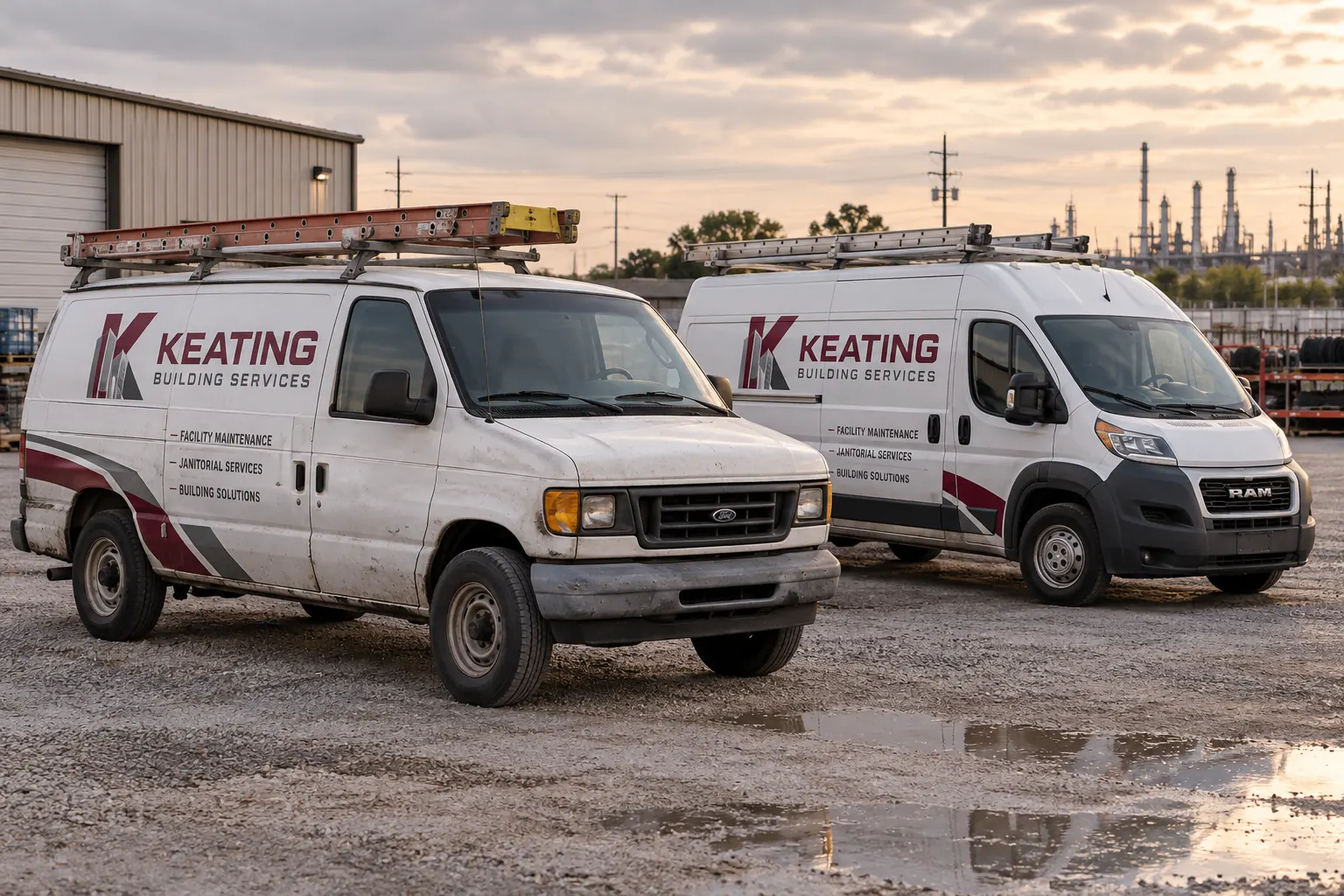
Fictional project-planning illustration; not a completed customer installation or measured project result.
Scenario: a new identity across vehicles with different histories
Consider a business updating its name treatment on older vans that remain in service. The fictional Keating Building Services image illustrates a coherent identity on different generations. The planning question is how to organize a sensible review when paint, previous graphics, repairs and expected retention differ by unit.
Start with the current inventory and ask the operator which assets are expected to remain, change role or leave. Treat those as buyer planning inputs rather than promise a future vehicle life. The rebrand objective may be shared, but the appropriate next action can differ between units. A single instruction to make every van match does not explain the actual condition, coverage and commercial decisions the buyer needs to make.
| Decision | Record to retain | Purpose |
|---|---|---|
| Unit condition | Old graphics, finish concerns, repairs and unknowns | Review each relevant starting surface. |
| Intended use | Operator retention plans and their uncertainty | Explain the buyer purpose without promising future asset life. |
| Coverage options | Actual faces, amounts and preparation assumptions | Compare defined work rather than a low guessed price. |
| Readiness decision | Separate vehicle work and responsible owner | A new appearance does not repair the substrate. |
| Current status | Accepted/completed scope and open unit decisions | Track progress without declaring every asset finished. |
Build a unit condition record before choosing the extent of work
Photograph the overall vehicle and close views of current graphics, visible finish concerns and known repairs. Record previous work and treatments where the history is available and mark unknowns openly. Do not use the cleanest van as evidence that every asset in the group has the same starting surface.
Use preparation planning to organize the questions. Decorative graphics are not a repair for an unsound body or coating. Keep any separate vehicle work and its owner visible before asking for a new layout to solve the appearance. The actual product and surface review should concern each relevant unit or genuine condition group.
Connect retention plans to the scope discussion
Record the operator current intention for each unit and the uncertainty behind it. A vehicle expected to leave may need a different identity discussion from one planned to stay, but the buyer should confirm that intention before turning it into a commercial instruction. Avoid assigning an arbitrary age limit that retires every vehicle from a graphic program.
Discuss what information must remain current and how the asset will be used while those decisions are resolved. Keep the branding question separate from mechanical or financial advice about replacing the vehicle. The graphics brief should explain the proposed duration and purpose without guaranteeing a service life, resale benefit or cost saving that the project record cannot support.
Compare coverage alternatives on the actual starting finish
Consider the intended faces, available clear areas and desired message for each configuration. A restrained lettering or partial-coverage option may be worth comparing with broader coverage, but none should be assumed suitable before the surface and product review. The new identity still needs to read clearly and describe the real business.
Use the coverage worksheet to keep actual options, entered amounts and exclusions together. Do not invent a low cost to make an older vehicle appear easy to update. Explain which removal, preparation, design and installation tasks each option includes and which questions remain unresolved before the buyer compares the commercial amounts.
Make old-graphic removal and concealed condition explicit
Identify the existing film and installation history where records exist. Provide close photographs of lifting, cracking, adhesive or repaired areas without assuming they all have one cause. Ask the proposed scope to explain inspection needs and how changed conditions would be addressed if earlier information proves incomplete.
Use removal planning for the handoff questions and retain the actual written product or supplier terms relevant to the proposed work. An old purchase date does not prove a new system can be installed over existing graphics or that removal will reveal a perfect finish. Keep readiness decisions and separate repair responsibilities clear before production release.
Use the shared identity with unit-specific accepted exceptions
Retain one current logo and message hierarchy while fitting the actual body types and chosen coverage. Record which units receive a full new scope, a limited defined update or another agreed action. These are buyer decisions tied to the actual condition and purpose, not categories invented from the apparent age of a vehicle in a photograph.
Use the design standard to keep the accepted exceptions understandable. Link each asset to its actual file and approved data. A later replacement vehicle should be surveyed and fitted separately even when it takes over the same role and internal unit reference. Shared operational function does not establish identical body geometry or surface readiness.
Retain a current record for replacement and phased rebranding
Record the accepted scope, configuration, product references, condition notes and installed photographs for each completed unit. Keep future decisions and unresolved vehicles visible rather than label the entire fleet finished from a group image. Update the record when the operator retention plan or vehicle condition changes.
For a similar enquiry, send the aging-fleet brief with the actual inventory, current photographs, old-graphic history, planned use and preferred timing. Explore other planning examples if the main challenge is a new fleet or isolated damage. This scenario does not claim a completed Keating project, guaranteed removal result, extended vehicle life or measured savings.
Frequently Asked Questions
Plan a Similar Project with Your Actual Equipment
Send current photographs, vehicle quantities, logo files, coverage preferences and timing. Identify old graphics and paint concerns so the project review can address the actual equipment.
Explore planning resources or request your commercial wrap quote.
