
Full Commercial Vehicle Wraps
A full commercial wrap gives the business a large, coordinated visual presence across the vehicle’s agreed exterior surfaces. The useful starting point is a clear company identity, a readable service message and a coverage drawing for the actual body. Pelican Wraps helps turn those decisions into a defined design, preparation and installation scope for working vehicles and fleets.
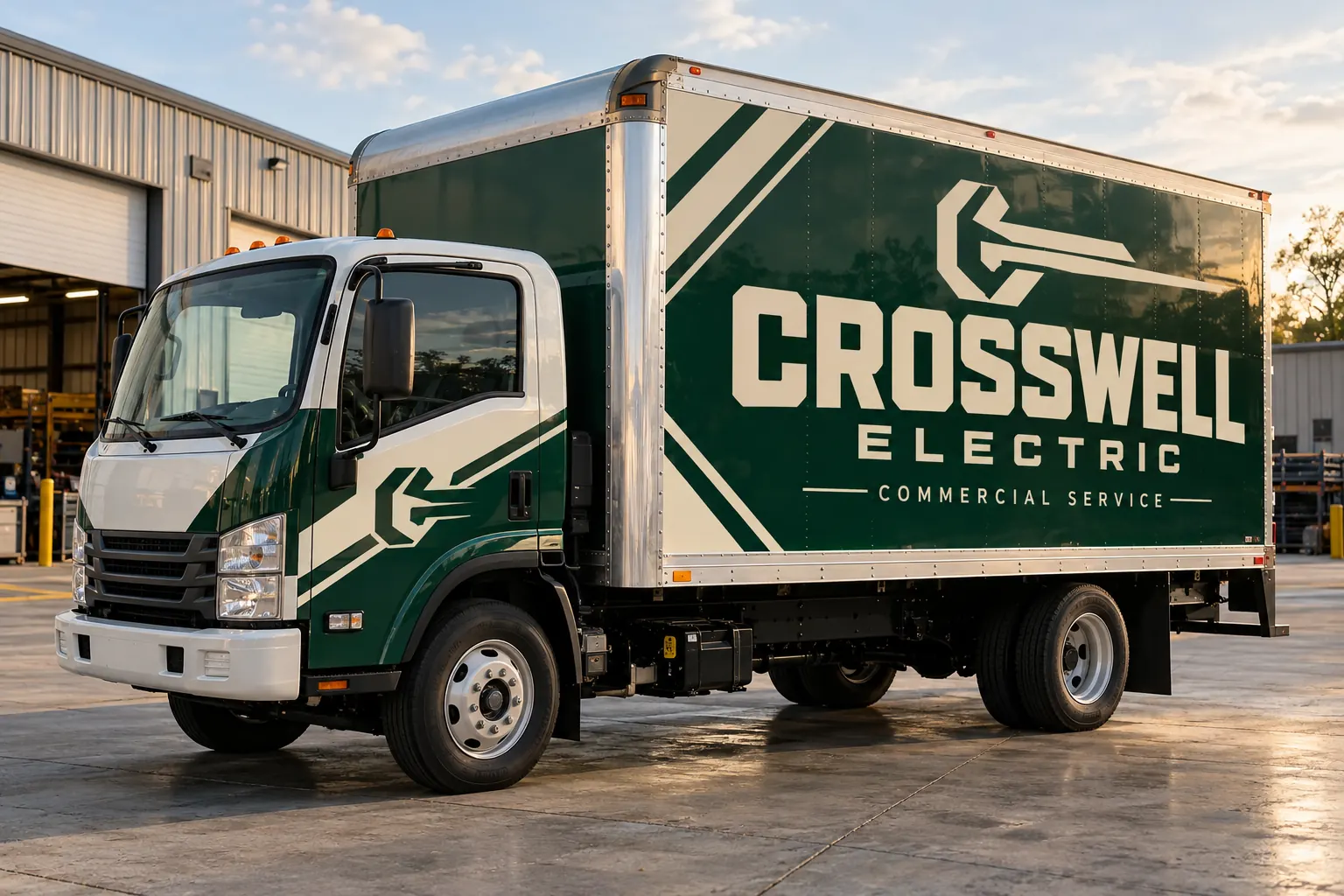
Fictional commercial wrap design concept; not a completed customer installation.
Choose full coverage for a clear business reason
Full coverage can be worth considering when the existing paint color competes with the brand, when several differently colored vehicles need one identity, or when a large body should carry a continuous design. Decide which of those problems you are solving. The goal is to make the company easier to recognize, with a message that remains useful from the side and rear.
Compare the full-wrap option with partial coverage and lettering on the same equipment. Keep the business name, service priority and contact route consistent across the comparison. This separates the value of additional printed area from the quality of the design itself and makes the proposal easier to assess.
Define exactly what full means on your vehicle
A full-wrap label does not identify every included surface. Request a scope showing the cab, body sides, rear doors and any other areas being considered. Roof surfaces, bumpers, mirrors, trim, glass and door jambs should be addressed explicitly if they matter to the project. Different body styles offer different usable areas and access conditions.
Provide photographs of the actual vehicle with racks, liftgates, handles and equipment visible. Explain which doors open during normal work and whether removable bodies or attachments are involved. A design drawing needs to match those details. For a box truck, review the cab and cargo body separately instead of assuming that a large side panel defines the entire installation.
Make the identity readable before adding detail
Give the business name a deliberate place in the layout, then add the service description and preferred contact route. Review how much can be understood in a brief encounter. A continuous printed design still needs hierarchy and quiet space. Filling the entire vehicle with equal-size messages can make the offer harder to recognize.
Use the rear view as its own communication task. Doors, hardware and body proportions can change what fits there. Check the contact details, spelling and approved service wording on every final view. If photographs or detailed illustrations are part of the concept, confirm their role in the message and the production assets available. They should support the business identity rather than hide it.
Assess the finish and existing graphics early
Tell the shop about existing film, previous paint repairs and visible surface concerns before the quote is finalized. Include close views of damaged or lifting areas along with the overall photographs. A full wrap is a graphics installation; it does not establish that an unsuitable finish has been repaired. Preparation and any separate body work need an agreed responsibility.
Ask the proposal to distinguish removal, cleaning, required preparation and the new film system. The relevant manufacturer documentation should be checked against the actual application. 3M’s vehicle application guidance includes pre-installation surface review. Product selection and written project terms should reflect the inspected equipment, rather than a universal lifespan or paint-protection promise.
Approve the material and production scope together
Review the intended film and laminate system, included design work, print preparation and installation scope as a complete proposal. Finish preference is one decision; suitability for the body and intended use is another. Tell the project contact how the vehicle operates, how long it is expected to remain in the fleet and what conditions it encounters.
Keep a record of the approved proof and any accepted exclusions. If several units are involved, match the correct layout to each body group. Confirm who can authorize changes after approval. A late contact-number change or a different replacement body can affect the work, even when the broad visual direction stays the same. Use the proposal and revision record as the reference for production.
Plan full-wrap work around fleet availability
A full-wrap program needs a practical release order when vehicles must keep working. Identify which units can be unavailable together and which provide essential coverage. Keep artwork approval, vehicle preparation and the installation appointment as separate milestones. A target launch date is useful context, but the operational plan needs confirmed dependencies.
For a mixed fleet, preserve the brand system while adapting the layouts to each body. Retain unit photographs, approved revisions and material details for later additions or panel review. Explore fleet graphics management when repeat orders are likely. A new unit should begin with the installed standard and a fit check, rather than an unverified copy of an older vehicle file.
Request a full-wrap recommendation with usable details
Send the year, make, model, body configuration, quantity and current photographs. Include the approved identity, service message, artwork status, preferred finish and any surfaces you specifically want included. Explain the existing graphics, paint concerns and timing constraints. Mark uncertain measurements honestly so the review can identify what remains to be checked.
Request a full commercial wrap proposal once the business objective and equipment are clear. Pelican Wraps is based in Harvey; confirm inspection, access and vehicle-release arrangements for the project. If you are still choosing coverage, use the full-versus-partial guide and ask to compare defined options instead of guessing the right package.
Frequently Asked Questions
Turn Your Vehicle Details Into a Clear Project Brief
Send current photographs, vehicle quantities, logo files, coverage preferences and timing. Identify old graphics and paint concerns so the project review can address the actual equipment.
Explore planning resources or request your commercial wrap quote.
