
Fleet Rebranding With a Controlled Changeover
A fleet rebrand changes more than the logo on a vehicle. It changes the identity customers see while your crews continue working. Pelican Wraps helps commercial operators organize old-graphic removal, new layouts, vehicle availability and approval records into a defined project. Start with the fleet you actually own, the changes already approved and the date the new identity needs to appear.
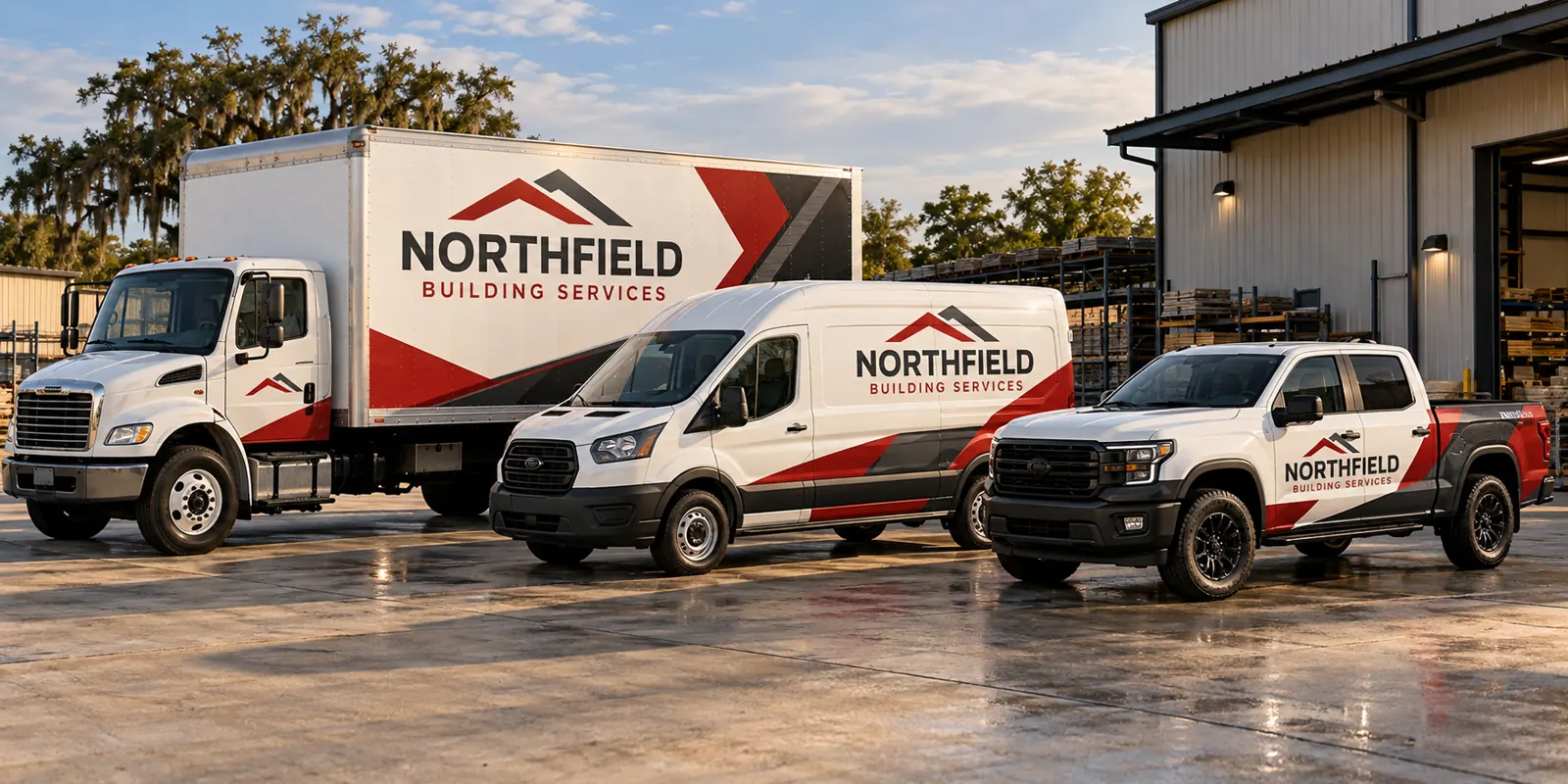
Fictional commercial wrap design concept; not a completed customer installation.
Define what is changing before designing a vehicle
Write down whether the project changes the business name, logo, colors, contact details, service offering or all of these. A new logo with the same phone number is a different production problem from a merger that changes the legal name, dispatch route and vehicle assignments. Confirm the approved identity and business wording before a designer starts adapting it to every vehicle.
Separate launch requirements from preferences. Identify the vehicles that must carry the new name first, any units leaving the fleet and any temporary wording that needs separate approval. Assign one person to consolidate feedback. A written decision list prevents an attractive first proof from becoming the wrong standard for the rest of the rollout.
Build a vehicle register that the project can follow
Create one row per vehicle, with its unit identifier, year, make, model, body configuration, current graphics, operating base and person responsible for release. Photograph both sides and the rear. Include replacement bodies, leased equipment and trailers rather than treating them as details to discover after production starts. Mark vehicles that are scheduled for sale or replacement so their graphics can be scoped deliberately.
Use the register to group similar equipment, not to assume identical fit. Door hardware, wheelbases, refrigeration units and service bodies may differ within the same model family. The fleet planning guide explains the information that makes these comparisons useful before a proposal is finalized.
Review the existing film and finish separately
Old graphics need their own assessment. Record how much film is present, whether it is cracking or lifting, and whether the underlying finish has been repaired. A photograph can reveal concerns, but removal scope may still depend on inspection. Do not assume the original paint will look uniform after a long-used graphic is removed or that a new wrap can repair a damaged surface.
Keep removal, cleaning, paint repairs and new graphics as distinct items in the scope. Ask who will perform each task and which discoveries would require approval before continuing. This gives the fleet manager a way to respond to unexpected preparation work without quietly changing the installation plan for every remaining unit.
Approve one brand system, then adapt each body
Choose a pilot vehicle that represents an important part of the fleet. Approve the message hierarchy, logo proportions, color references and contact treatment, then check how that system works on the other body types. A box truck has different reading areas from a service van; repeating the identity does not mean stretching one file across both.
Review the rear and passenger side as carefully as the main presentation view. Check door-open conditions, racks and other equipment. Link every final proof to the correct unit or vehicle group. The coverage comparison can help decide where full coverage is useful and where a more selective approach supports the rebrand.
Phase the release around operating capacity
A useful rollout has a release order, an approval owner and a recovery plan. Ask operations which vehicles can be unavailable together and which provide essential coverage. Confirm preparation and artwork readiness before reserving those units. A target launch date does not establish the installation time required for every vehicle.
Decide how the business will handle the interval when old and new identities coexist. Customer communication, uniforms, signs and online listings may have their own schedules. Keep those responsibilities visible without assuming they are included in the wrap proposal. Use the installation scheduling guide to turn the unit register into a practical release sequence.
Keep a closeout record for every completed unit
Record the installed artwork revision, material system, completion date, approved contact details and photographs for each unit. Mark vehicles that were deferred or received a different coverage scope. A fleet is rarely frozen after a rebrand; additions, collision repairs and lease returns continue. The closeout record becomes the starting point for those decisions.
Explain who can authorize future changes and who retains the approved files. A replacement panel should begin with a known design revision rather than a driver’s photo of an old truck. If a vehicle is replaced with a different body, request a new fit review. Consistency comes from controlled information as well as recognizable graphics.
Send a rebrand brief that can become a proposal
Submit the vehicle register, current photographs, old-graphic condition, new brand files, coverage preferences and launch priorities. Identify whether installation is being planned at the Harvey shop or whether another arrangement needs review. State the equipment locations and transportation responsibilities; a service-area page does not establish another branch or a confirmed mobile installation option.
Ask the proposal to distinguish design adaptation, removal, preparation, production and installation. Confirm exclusions and the decisions still needed. Request a fleet rebrand review when the project has enough detail to discuss. If the identity is still being developed, say so clearly so graphics production is not scheduled against unfinished artwork.
Frequently Asked Questions
Turn Your Vehicle Details Into a Clear Project Brief
Send current photographs, vehicle quantities, logo files, coverage preferences and timing. Identify old graphics and paint concerns so the project review can address the actual equipment.
Explore planning resources or request your commercial wrap quote.
