
Choose the Right Fleet Graphics Program
A fleet request may involve a first branded vehicle, an organized rollout, a company rebrand or a single damaged panel. Those are related needs with different scopes. This directory helps you select the right conversation, understand the information to collect and connect a commercial graphics program to the vehicles your business actually operates.
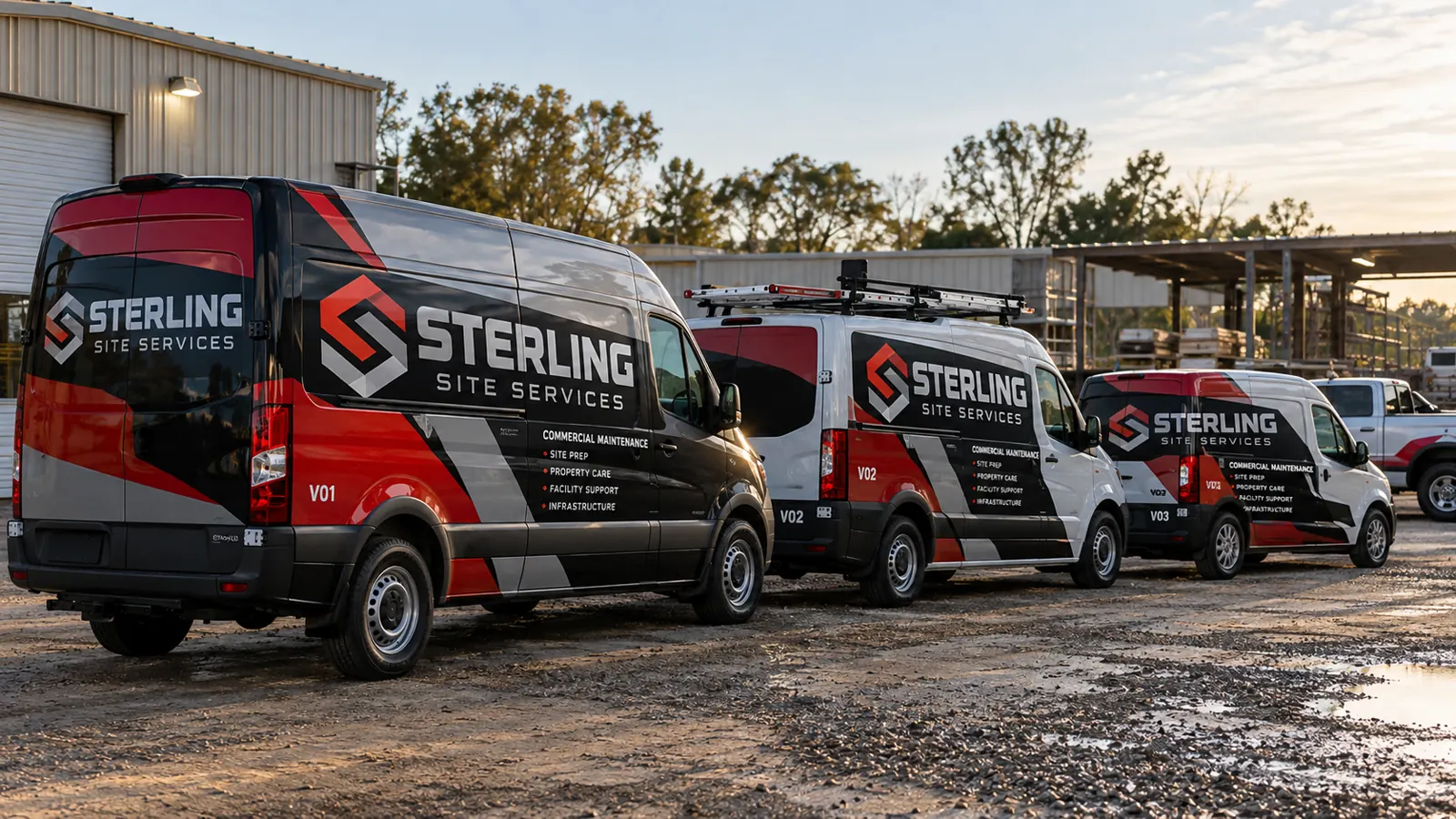
Fictional commercial wrap design concept; not a completed customer installation.
Begin with a shared identity across the equipment
Use Fleet Wraps when the business needs a coordinated identity across new or existing vehicles. The program begins with the equipment inventory, message priorities, coverage and operating constraints. A single initial vehicle can establish the standard for later units if those future needs are identified from the start.
Keep the name, colors, service wording and contact route consistent while adapting their placement to each body. A mixed program should not force a pickup, high-roof van and cargo box into identical artwork dimensions. Review representative units together so the standard stays recognizable when the physical layout changes.
Choose a rebrand when the identity itself is changing
Fleet Rebranding addresses changes to the company identity, approved message or existing fleet appearance. Start by identifying which units will receive the new standard and what older graphics remain. State whether the change will happen at once or through a visible transition period.
Collect the updated logo, approved business wording and any branch-specific details before production. Disclose old graphics and paint concerns because removal and preparation are part of the scope. A rebrand should have a controlled approval path, so newly printed units do not receive contact information or a graphic version that is already being retired.
Manage additions and variations after the first rollout
Use Fleet Graphics Management when the business needs continuity across purchases, replacements, departments or locations. The useful starting point is a record of what was approved, which body uses each file and what varies between units.
Retain unit identifiers, installation dates, body details, coverage notes, product references and care instructions. Agree on the production-file arrangement. A later request can then be classified as a repeat installation, a new body adaptation or a change to the brand standard. That distinction is more useful than treating every additional vehicle as an unrelated new design.
Review installation coordination as a defined scope
Fleet Installation Coordination is the route for discussing equipment and operating locations beyond a straightforward local appointment. Describe where the units are, who controls access and how they can be released. The actual delivery and installation arrangement needs to be agreed for the program.
Pelican Wraps is based in Harvey. A service-area description does not establish a separate branch or guarantee that every site has the same installation setup. Discuss the scope before assuming on-site work, transport, timing or another provider’s involvement. Keep the equipment standard and approval record consistent across whichever arrangement is actually confirmed.
Use a damage review for a specific repair need
For an existing wrapped unit, begin with Fleet Damage and Panel Replacement. Supply the unit number, retained artwork information and photographs of the full surface as well as the affected area. Describe body repairs or replacement panels that change the underlying fit.
A small visible damaged area does not automatically define a small replacement scope. Existing print may have aged, the material may need review and the body may have changed. The project review should determine whether a section, panel or wider area is appropriate instead of promising an invisible match from a photograph alone.
Connect the program to actual vehicle services
A program describes how work is organized; the vehicle service describes the physical application. Use the vehicle directory to identify vans, pickups, box trucks, trailers, buses or specialty units. Supply a breakdown by body version so the estimate can distinguish standard repetitions from adaptations.
For buying decisions, compare coverage options and the fleet planning guide. The scheduling guide explains the information needed for release windows. Keep those decisions connected: the right visual standard must also fit the equipment and the operator’s availability.
Turn the selected route into a qualified project brief
Tell Pelican Wraps whether the immediate need is a first unit, rollout, rebrand, repeat addition or repair. Include the vehicle inventory, current photographs, available artwork, desired coverage, known condition concerns and timing. Identify missing information instead of guessing at dimensions or hiding an unresolved approval.
The quote brief starts the review; it does not need to solve every production decision in advance. Clarifying the actual equipment and business goal helps establish the remaining measurements, scope and approvals. Confirm the proposal, artwork release and installation arrangement before vehicles leave service, and keep the accepted standard available for the next unit the fleet adds.
Frequently Asked Questions
Turn Your Vehicle Details Into a Clear Project Brief
Send current photographs, vehicle quantities, logo files, coverage preferences and timing. Identify old graphics and paint concerns so the project review can address the actual equipment.
Explore planning resources or request your commercial wrap quote.
