
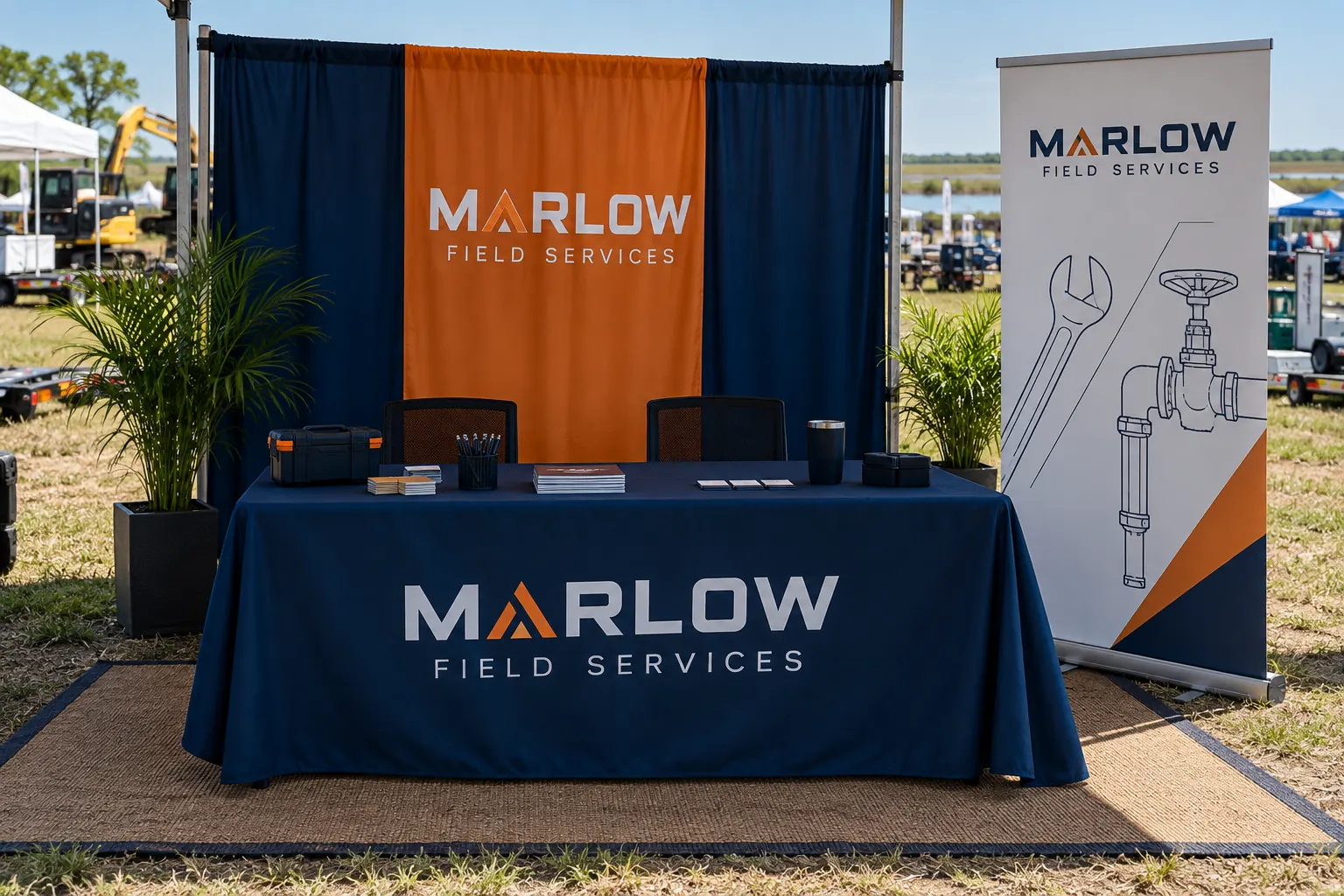
Fictional commercial graphics design concept; not a completed customer installation.
Define the event goal before the display list
A trade event display should help an unfamiliar visitor identify the business and understand a relevant reason to speak with the team. Decide whether the priority is introducing a service, recruiting a partner, supporting a launch or directing visitors to a demonstration. A single focused message gives the design a useful hierarchy.
Describe the audience and the intended next action. A banner beside an equipment demonstration has different information needs from a backdrop behind a reception table. Separate the identity visible from the aisle from the details the representative can explain in conversation. This makes it easier to choose a manageable display package instead of filling every available surface with the same long paragraph.
Map the booth and the ordinary viewing positions
Obtain the venue space dimensions and any display requirements, then sketch where the table, demonstration, seating and visitor route will sit. Include neighboring booths or structures that can obstruct the view. Note whether the display will be seen from one side, several aisles or behind a presenter.
Photograph existing hardware and record its make, model and graphic specifications if it will be reused. A product described only as a standard banner may have different dimensions or attachment needs from another display. The artwork should be built to the actual agreed production specification, including any required finishing areas, rather than copied into an approximate shape after approval.
Choose a coordinated set that the team can operate
A backdrop can establish identity while a roll-up display explains a service and a table cover connects the front of the booth. Use each item deliberately and preserve enough room for people and equipment. A visually impressive arrangement on a rendering should still be practical for the team that transports and assembles it.
Record who carries the items, what transport is available, how cases are stored and who performs setup. For outdoor use, review the actual hardware, fixing method and venue requirements with the responsible party. Do not assume a printed fabric or banner automatically provides a safe outdoor installation. The graphic and the support system are related parts of the event scope with different requirements.
Write artwork for the aisle before the close conversation
Lead with the approved company name and a concise description or event message. Keep secondary information subordinate and avoid placing critical text where the table, equipment or a standing person is likely to hide it. Review the composition in the planned booth arrangement, including the normal visitor approach.
A QR code or website can support a next action, but it needs a clear reason for someone to use it. Verify the destination and test the supplied code in the proposed output before approval. Keep a readable alternative contact route where appropriate. Do not rely on an untested code as the only way a visitor can learn which business is exhibiting.
Separate reusable identity from changing campaign details
If the display will travel to several events, keep enduring business identity on the items intended for repeated use. Put dates, event-specific offers or short-lived messages on elements that can be updated separately. Record which file version belongs to each event so an old promotion does not reappear at a later show.
Use approved identity assets that connect with the commercial vehicle fleet and business signs. The display can share that visual system while using a layout appropriate to a temporary booth. Verify factual service claims and any partner logos before production; a compelling display does not need invented customer results, affiliations or qualifications.
Work backward from delivery and setup dependencies
Record the event date, venue delivery restrictions, required arrival date and the time needed for the team to receive and check the items. Include artwork review and hardware decisions in that schedule. An event deadline in an enquiry should trigger a feasibility discussion, not be mistaken for a confirmed production promise.
Name one final approver and supply source artwork using the commercial artwork handoff guide. Check spelling, contact routes, display dimensions and finishing requirements before approval. Ask the quote to distinguish printed graphics, hardware, artwork, delivery and installation or setup where applicable. Those details make it possible to compare packages that may otherwise look similar in a small photograph.
Inspect and organize the kit before the next event
On receipt, check the graphics and hardware against the item list with enough time to raise questions before the event. Keep the assembly instructions and the approved artwork references with the kit. Where practical, rehearse the booth arrangement so the team knows how the displays fit around its table and equipment.
After use, inspect and store the items according to the relevant product guidance. Record damage and changes needed for the next appearance. For an initial plan, send an event graphics brief with the venue dimensions, item list, existing hardware details and event date. The signs and graphics overview helps connect temporary displays to the wider business identity.
Frequently Asked Questions
Turn Your Site Details Into a Clear Project Brief
Send current site photographs, an item schedule, logo files, dimensions and timing. Identify existing graphics and surface concerns so the project review can address the actual location.
Explore planning resources or request your business graphics quote.
