
Fire Protection Contractor Vehicle Graphics
Fire protection contractor vehicle graphics should identify the business and the work a customer can actually request. A mixed fleet may include inspection vans, installation trucks and supervisor vehicles, each carrying different equipment and answering different calls. Start with those roles, then choose the message and coverage for each body. Keep business branding, credentials and operational markings under their appropriate approval owners.
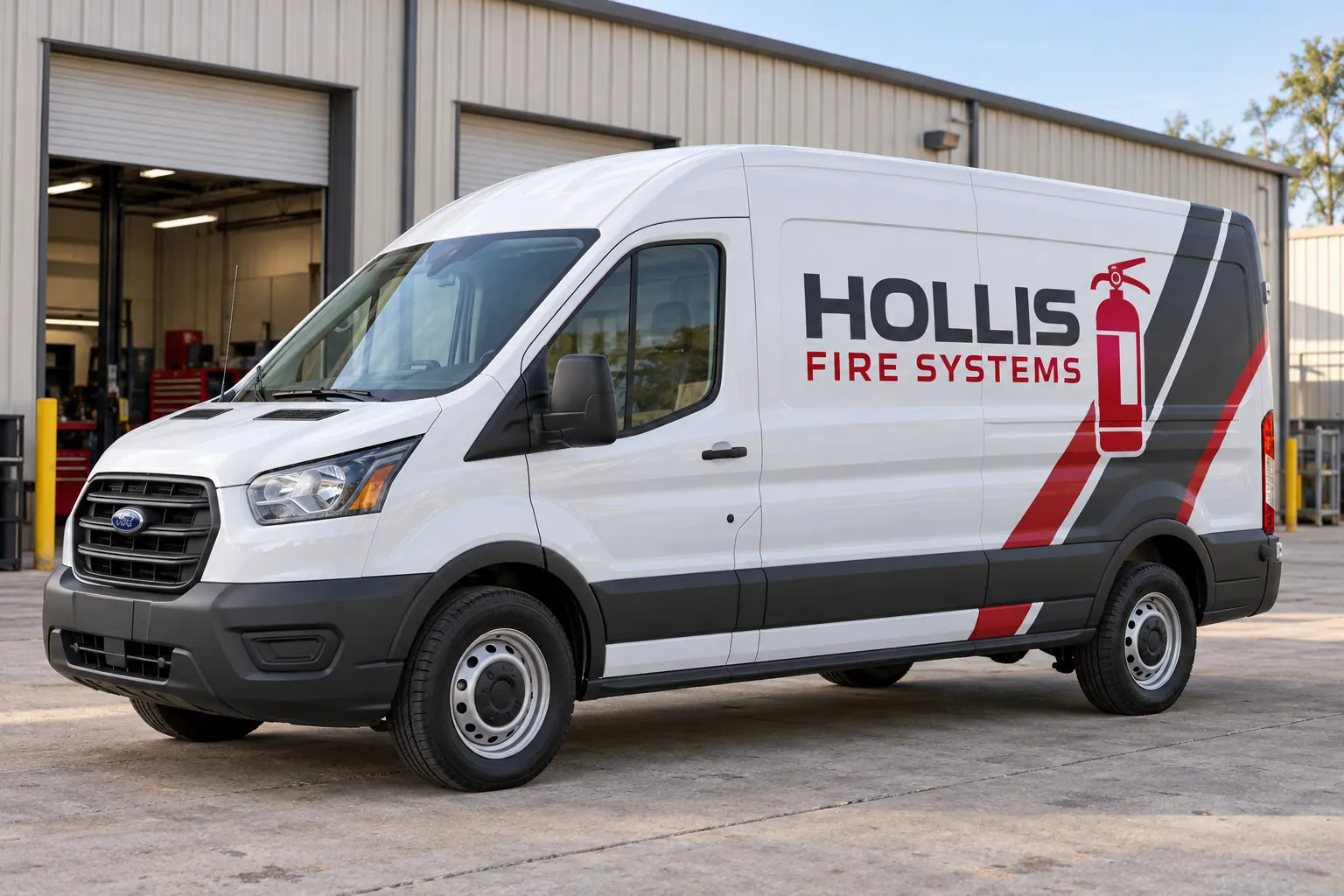
Original fictional commercial planning concept; not a completed customer installation.
Separate your service roles before writing the vehicle copy
List the services your company actually offers and assign them to the relevant vehicles. An inspection route van may need a concise service description, while an installation truck may represent a different department. A single crowded list can make both vehicles harder to understand. Decide whether the fleet needs one shared descriptor or a controlled version for each role.
Ask the person responsible for business operations to confirm the words. “Inspection,” “installation,” “maintenance” and “emergency service” carry different expectations for a customer. If a response promise has not been approved and supported by the business, leave it out of the artwork. A clear, accurate description is more useful than an ambitious line nobody can verify.
Keep contractor identity distinct from official authority
Choose a commercial identity that is clearly your own. Do not borrow a public agency seal, department badge or emergency vehicle appearance to make the van seem authoritative. If the business wants a qualification or manufacturer mark on the layout, provide the current authorized artwork and evidence that the proposed use is permitted for this business and this project.
The graphics review should identify who checks those claims before a proof is approved. A logo placement decision does not establish a license, certification or authorization. Keep a record of the wording supplied and the person who released it. This matters when a later reorder is handled by someone who did not attend the original design discussion.
Photograph the van as technicians actually use it
Provide current photographs of both sides, the rear and the front, plus close views of racks, ladders, external storage and existing decals. Include the equipment that normally travels on the vehicle when it affects what a viewer can see. An empty-body stock image can conceal a rack that blocks the proposed company name or a compartment used throughout the day.
Identify the unit and body configuration in the photo filenames. Record planned hardware changes before the layout is finalized. If the rack or service body will change, the supplier needs the actual intended configuration or a clearly labeled open question. A proof should not quietly turn an uncertain equipment arrangement into an assumed final vehicle.
Give the business name and next action a clear order
Choose the first thing a customer should recognize: usually the company identity and a short service category. Then choose a practical contact route approved by the business. Review side and rear layouts independently, because the available surfaces and viewing conditions differ. Keep essential wording away from handles, door gaps and other features that interrupt the message.
For the fictional Hollis Fire Systems concept shown here, the name and extinguisher symbol provide a restrained commercial identity. The illustration is a starting point for discussing hierarchy, not a measured template or a completed installation. Your own design should follow your approved identity, the actual body and the services your team is prepared to discuss.
Choose coverage by the problem it needs to solve
Door lettering can establish identity on an otherwise plain vehicle. A partial treatment can connect larger side panels while keeping a substantial amount of the original body color. Broader coverage may support a more extensive visual system, but it also changes the surfaces and details that must be included in the project assessment. Ask for clearly described options against the same vehicle list.
Compare the included sides, rear treatment, artwork work, existing graphic removal and installation arrangements. Do not compare two totals without checking those scope differences. If the fleet includes several body styles, request the relevant adaptations explicitly. One attractive van proof does not define the layout or commercial scope for every truck in the company.
Plan installation around service availability
Identify which vehicles can be released, who controls their keys and who can authorize a change in the sequence. Describe the real constraints without promising the entire fleet on a date operations cannot support. Ask the graphics provider to confirm the work arrangement after reviewing the units and proposed scope. Keep vehicle release decisions with the person responsible for dispatch.
If certain units must remain available for customer work, explain that constraint in the quote request. Record the agreed handoff contact, location and approval dependencies. A tentative date should remain tentative until the actual project arrangement is confirmed. Avoid building customer response commitments around an assumed graphics turnaround that has not been assessed.
Control department variations and future additions
Create a reference linking each approved vehicle version to its department, body and contact wording. If an inspection unit and an installation unit use different descriptors, make that difference visible in the file names and unit register. Retain the final approved proofs so a future reorder starts with a known decision rather than an old email attachment.
When the fleet adds a new model or changes a service line, review the relevant version again. Do not enlarge an older layout onto a different body without current information. Keep retired contact lines separate from active files, and identify who can approve replacements. This reduces uncertainty when a branch manager needs one additional van rather than a full fleet rebrand.
Send a quote package that exposes the important decisions
Include the actual unit list, photographs, business logo files, approved service wording and desired coverage. Note existing graphics, known surface concerns and any equipment changes. Identify the person who approves brand content and the person who releases vehicles. If you need options, describe the decision each option is meant to answer instead of asking for an undefined range of designs.
Use the broader fleet service page for the overall program and this page for fire protection contractor messaging and operating details. A Pelican Wraps project inquiry can begin with one representative vehicle, provided the remaining body types and quantities are stated. Mark unconfirmed information clearly so the review can address it before artwork or scheduling decisions depend on it.
Frequently Asked Questions
Take the Next Step with a Clear Project Brief
Continue with the resource that matches your next decision:
- Fleet Wraps
- Van Wraps
- Service Body Truck Wraps
- Fleet Wrap Design Standards
- Request a Quote
- Industries
Send the actual vehicle or surface photographs, quantities, approved brand files, requested coverage and timing constraints. Identify open questions so the project review can address your equipment and business needs.
