
Water Treatment Service Vehicle Graphics
Water treatment service vehicle graphics should distinguish your company, the equipment work it offers and the correct contact route. Residential service, commercial equipment support and delivery work may require different messages. Define those roles before choosing coverage. Keep water-quality promises, product affiliations and certification wording under explicit business review, then adapt the approved identity to the actual vehicle and its working equipment.
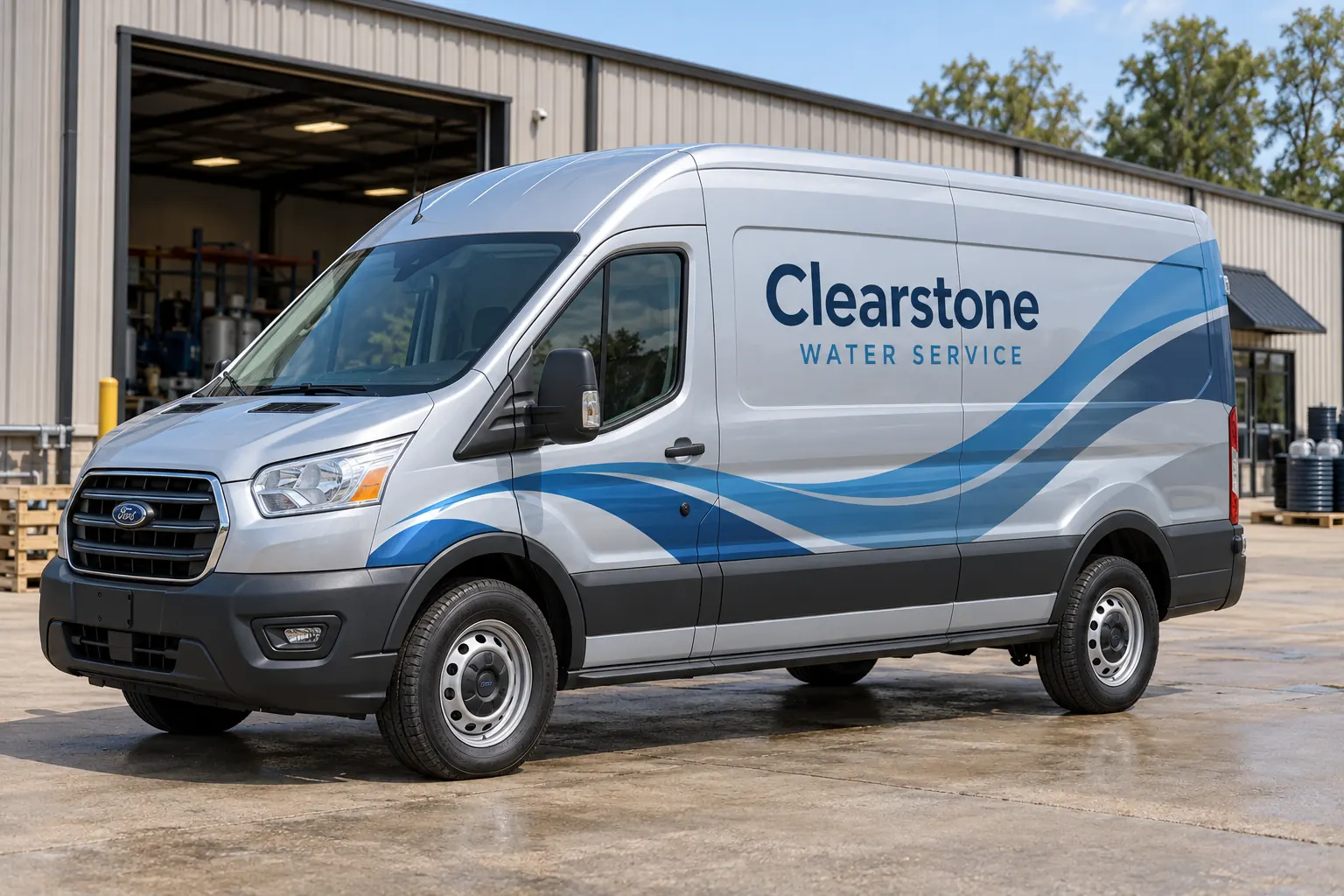
Original fictional commercial planning concept; not a completed customer installation.
Separate equipment service from outcome claims
Write an accurate description of the work the business performs. A vehicle can identify a service category without making a broad promise about water safety, health or treatment results. Ask the responsible business contact to review every proposed claim and explain what is actually being offered. Leave uncertain language out of the production brief until it is resolved.
If a specific product mark or certification is proposed, provide the current authorized asset and usage conditions. Do not use a familiar seal as a decorative sign of trust. The company should control the evidence and permitted wording. A graphics proof can show the requested placement, but it does not establish the underlying qualification or the performance of an installed system.
Identify which team each vehicle represents
List the fleet roles: equipment service, installation support, route delivery or another actual function. Decide whether one shared descriptor is accurate for all of them. If a delivery unit and a service van need different wording, create controlled variants rather than adding every service to every vehicle. Confirm that the customer contact route matches the intended type of inquiry.
Record quantities and body configurations for each role. A cargo van with stored equipment, a utility pickup and a delivery truck have different surfaces and operating patterns. The quote should make those differences visible. This helps the supplier assess the relevant layouts and prevents one attractive service van concept from being treated as the complete fleet specification.
Build a survey around the actual exterior equipment
Provide current views of both sides, front and rear, with details of racks, exterior cabinets, windows and existing graphics. Identify the actual vehicle and body, including any planned fit-out changes. Explain what equipment normally obscures panels or requires access. The project needs a realistic account of the visible body, not only a clean manufacturer image.
For tanks, trailers or separate equipment assets, identify them independently if graphics are requested on them. Supply photographs and ownership information rather than assuming they are included with the vehicle. Ask for surface and condition questions to be reviewed against those actual assets. Similar color or shape does not establish that several different surfaces can receive the same treatment.
Use a restrained visual theme with accurate wording
Water-inspired colors and shapes can support recognition, but the company name and service description should carry the message. Avoid adding unverified “pure,” “safe” or health-related statements simply because they suit the visual theme. Ask whether a viewer can identify the business and understand the next action without interpreting an image as a technical promise.
The fictional Clearstone Water Service concept uses blue geometric movement and a simple identity. It is an original planning illustration, not a customer installation or evidence about treatment results. Your actual design should follow your approved brand and claims policy, with the layout assessed against the real body and equipment rather than copied from the picture.
Choose the public contact route by service role
Confirm whether the vehicle should direct customers to equipment service, delivery scheduling or a general inquiry destination. Use one controlled source for the exact public information. If different teams need different details, identify the approved variants and the units they cover. Avoid letting a temporary driver number become a permanent public contact simply because it appeared in an early draft.
Review side and rear information independently against the same source. Door divisions and hardware can interrupt wording even when the text itself is correct. Keep the essential action clear and group related information together. Detailed equipment specifications and service terms belong in the appropriate customer materials, not compressed into a crowded strip at the bottom of a van.
Compare coverage without hiding asset differences
Request defined options for the actual fleet. Identify the surfaces included, the body-specific artwork adaptations and any removal of existing graphics. Ask how condition review, preparation and installation arrangements are addressed. A lettering option and a broader partial design should be compared with their full descriptions rather than only their visual size or quoted totals.
If a separate trailer or delivery body is involved, state its quantity and requested treatment explicitly. Identify whether the cab and body share the same brand version and contact line. Keep equipment ownership and proposed future use visible where they affect permissions or the intended scope. Those decisions help make the proposal usable for purchasing and operations.
Schedule around routes and equipment readiness
Provide real vehicle release windows and a contact who controls the service or delivery schedule. Explain fixed route commitments without assuming an installation duration. Ask the provider to assess the proposed work arrangement after reviewing the actual units and coverage. Keep tentative dates linked to the outstanding artwork, surface and operational decisions.
If new equipment or exterior storage is planned, identify when the final configuration will be available for review. Do not approve dependent placement against a body that will change without discussing that dependency. At handoff, confirm the unit reference and approved version so a similar-looking substitute is not treated as an identical asset.
Retain the approved message for future fleet changes
Keep the final proof, approved claims and product-mark references with the unit and body list. Identify who controls updates when a service line, affiliation or customer contact changes. Separate retired versions from current reorder files. This is especially useful when one branch adds a van while another continues using an older body configuration.
For a Pelican Wraps inquiry, send the actual asset list, current photographs, brand files, verified wording and desired coverage. Flag equipment changes and timing constraints. Use the broader utility, van and fleet resources for the overall program, then make the water-service role and claim approvals explicit so the project discussion can produce a defined, accurate scope.
Frequently Asked Questions
Take the Next Step with a Clear Project Brief
Continue with the resource that matches your next decision:
Send the actual vehicle or surface photographs, quantities, approved brand files, requested coverage and timing constraints. Identify open questions so the project review can address your equipment and business needs.
