
Reusable Delivery Tote Graphics
Reusable delivery tote graphics begin with the container and its actual handling cycle. The first buying task is to identify the tote, the purpose of the exterior identity and the conditions that any proposed treatment must be assessed against. Build that brief before requesting a large quantity. Keep company recognition, internal asset information and product-handling requirements separate so each decision has a clear owner.
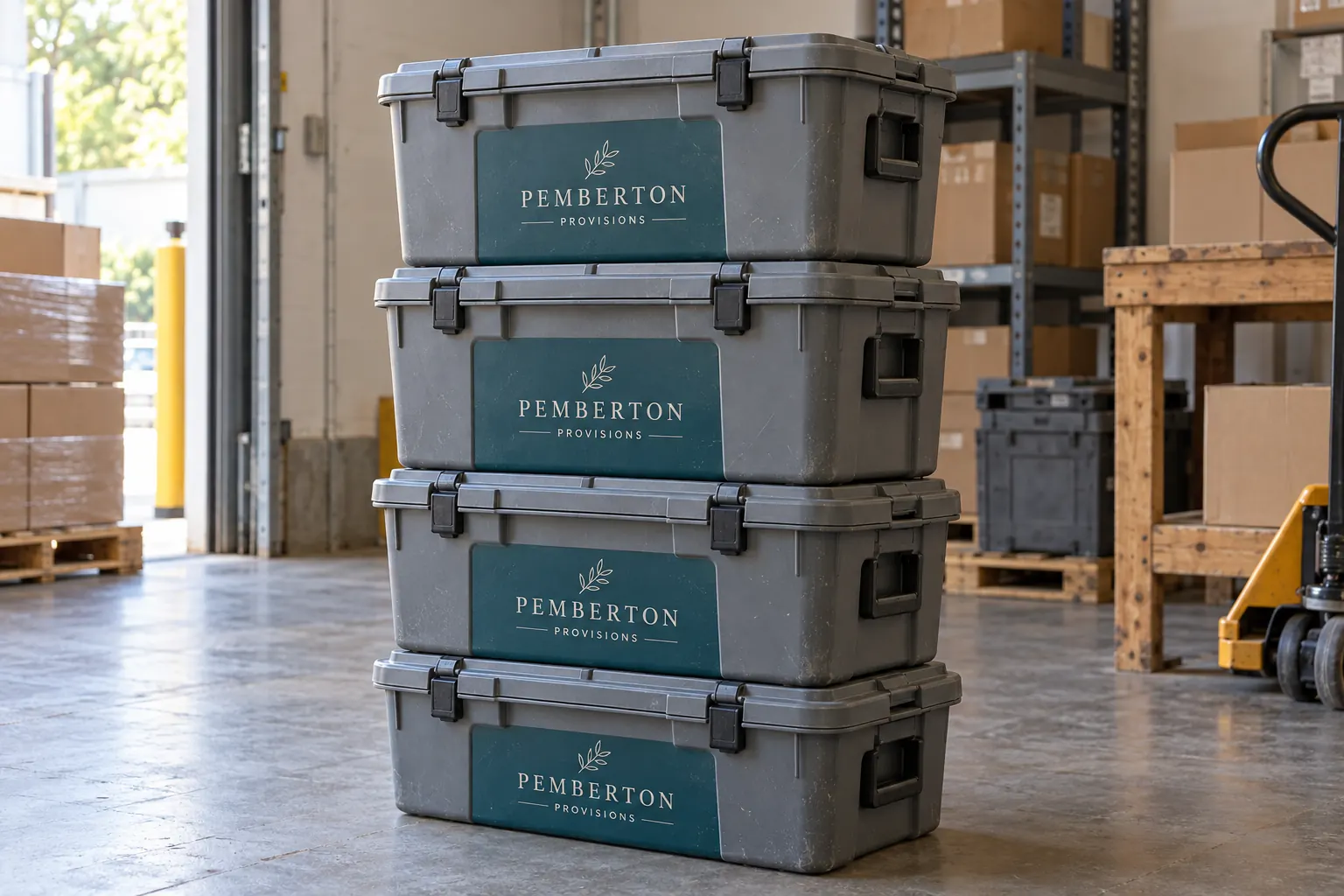
Original fictional commercial planning concept; not a completed customer installation.
Define what the exterior identity must accomplish
Decide whether the tote needs a company name, an approved return instruction, an internal unit reference or another specific message. Rank those purposes instead of placing every available detail on a small panel. A tote used between depots may need a different information hierarchy from one handed to a customer. Identify who reads the message and what action they should take.
For the fictional Pemberton Provisions concept, a restrained exterior company panel illustrates business recognition. It does not establish a material choice or a handling approval. Your brief should state the actual use and intended message, allowing a provider to review the request without assuming that all reusable containers or delivery operations are equivalent.
Identify the exact tote rather than its general appearance
Record the manufacturer or supplier reference where available, model, approximate overall size and the specific exterior area proposed for graphics. Supply clear photographs of that area, its texture, edges, handles and any molded features. Include different tote versions as separate groups. Two grey containers that stack together may still need different project information.
Provide the relevant container instructions through the responsible operating contact. If the material, coating or existing treatment is unknown, state that uncertainty. Do not infer a suitable graphics system from color or appearance alone. Ask the provider what additional information, sample or assessment is needed before a treatment is selected or a large order is defined.
Describe the handling cycle in ordinary operational terms
Write down where totes travel, how they are stacked, where hands or equipment contact them and how they are returned. Identify areas that rub against another tote or are routinely grasped. Use actual observations and photographs rather than a generic statement that the containers are “heavy duty.” The review needs the specific conditions relevant to the proposed exterior area.
Describe cleaning and storage through the company’s approved operating information. Provide actual product instructions or other relevant requirements to the supplier when needed; do not invent a universal cleaning or exposure specification. The graphics discussion should identify what must be assessed, not assume that an attractive label concept establishes compatibility with every part of the handling cycle.
Keep operational and product information under the right owner
Ask operations to identify existing labels or information that must remain visible and unchanged. If the tote is used in a regulated or product-sensitive process, the responsible business contact should define the applicable requirements and permitted locations. Do not ask a graphics designer to guess whether an existing label can be covered or whether an exterior decoration satisfies a product-handling rule.
Separate public company identity from customer addresses, temporary route details and internal inventory records. Include only the information required for the selected purpose. If a return instruction is proposed, confirm the current wording and destination through the business. The artwork should not create a new return process that the depot has not agreed to support.
Choose the quantity basis before requesting a total
Count containers by actual model and proposed message version. Distinguish the current quantity available for assessment from a larger planned purchase. Identify whether replacement totes may arrive in a different configuration. A single total without those distinctions can make it unclear whether artwork, assessment and production are being requested for one known item or several unresolved variants.
If you want a limited initial review or sample discussion, state that purpose explicitly. Ask the provider what can be assessed and what evidence is needed before broader quantities are considered. A small reviewed example can inform a decision, but its result should be recorded with its actual conditions rather than treated as a universal promise for all future containers.
Review a proposed layout against real tote use
Check that the company name and any approved instruction are understandable on the chosen exterior area. Review handles, molded ribs and panel interruptions. Consider the normal stacked position and the views available to the intended reader. Ask operations to identify handling conflicts rather than approving the design solely from a flat artwork image.
Record the layout reference, container version and open questions. Keep message approval separate from material and application decisions. If the proposed area conflicts with a normal grip or an existing required label, revise the brief and seek the relevant assessment. The purpose is to expose the issue before a large order depends on an assumed usable panel.
Create a replacement and version record
Keep the active wording, approved layout reference and exact tote group together. Identify who can authorize a message change or a new container version. When replacement totes are purchased, check whether the actual model and exterior area still match the reviewed reference. Do not reorder solely because the new container has a similar color and nominal size.
For a later concern, retain factual photographs and describe the observed condition, handling context and relevant dates. Ask for the issue to be reviewed without assuming a cause or promising a particular outcome. A clear record is more useful than an undated photograph accompanied only by a request to send the same labels again.
Draft a brief a supplier can assess
Use the working record below to collect the tote identity, message purpose, exterior area, handling information, quantities and approval owners. Download the text and retain photographs and relevant instructions through your normal project process. The record is a buyer’s handoff, not an automatic order or a confirmation that a particular treatment is available or appropriate.
For Pelican Wraps, send the actual container information and ask whether the proposed work can be assessed within the project. Include approved brand files and identify unresolved operating requirements. Use the broader logistics resource for fleet context while keeping this inquiry focused on the specific reusable container, exterior identity and evidence needed for a defined next decision.
Draft and Download Your Working Record
Draft your entry, then download a copy before leaving. Send any project decision through the communication process agreed with your supplier.
Frequently Asked Questions
Take the Next Step with a Clear Project Brief
Continue with the resource that matches your next decision:
Send the actual vehicle or surface photographs, quantities, approved brand files, requested coverage and timing constraints. Identify open questions so the project review can address your equipment and business needs.
