
Food & Beverage Fleet Graphics
Food and beverage companies use vehicles for different jobs: deliveries, catering, mobile service and distribution. The graphics should reflect that job while keeping the brand recognizable. Pelican Wraps plans commercial vehicle and trailer branding around readable messages, working equipment and the way customers actually encounter your business.
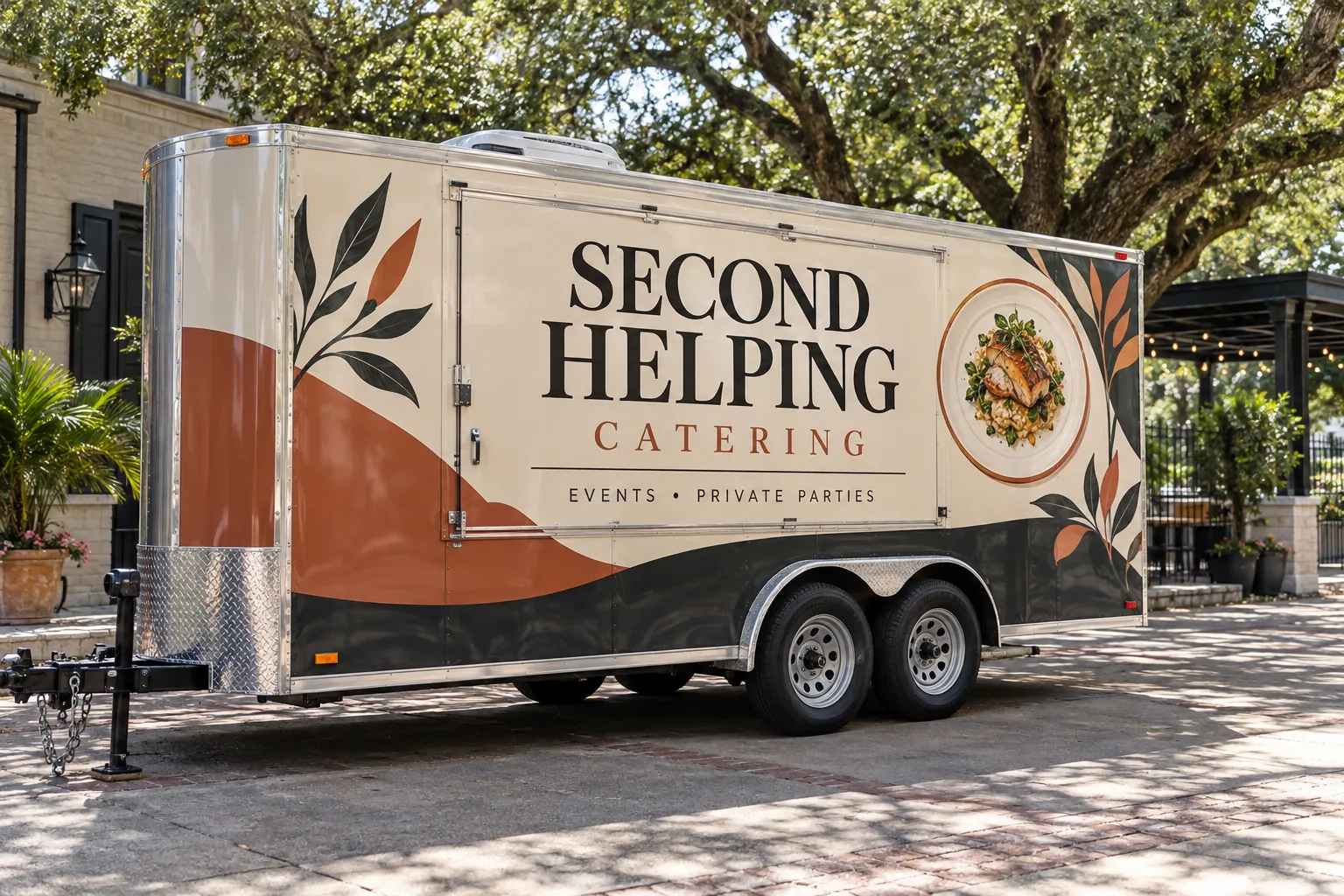
Fictional commercial wrap design concept; not a completed customer installation.
Separate delivery branding from the point of sale
A delivery truck needs a clear identity while moving through traffic and arriving at customer properties. A catering trailer or food truck may also act as a point of sale when parked. Decide which role the equipment plays before asking a design to do both jobs equally across every surface.
On a delivery unit, the name, product category and contact route may be the primary priorities. On a serving unit, the customer’s approach, service window and ordering area need their own composition. Keep those purposes related, but give each surface a defined role rather than filling it with every possible message.
Choose food imagery that supports the name
Appetizing imagery can help identify the offer, but too many images can weaken the brand. Start with one clear visual direction and review whether the business name remains readable against it. A photograph that looks attractive on a phone may become a distracting texture when enlarged across a truck.
Use photography the business owns or has permission to use commercially. Confirm that it accurately represents the product or service. If an illustrative concept is used during design, keep its purpose clear and replace or license the final artwork as required before production.
Design for service windows and operating hardware
Photograph concession windows, hatches, vents, handles, doors and any equipment mounted to the body. Include the vehicle in both its closed travel position and its normal service position. A word placed across a hatch can disappear when the unit is ready for customers.
Agree on what must stay visible during service and what can live on the travel-facing side. Review the rear separately because doors and hardware change the layout. The proof should reflect the actual equipment rather than relying on a smooth rectangle with the functional details removed.
Keep permanent identity separate from changing offers
Menus, seasonal products and promotional messages may change more often than the main vehicle branding. Decide which information deserves a permanent place in the wrap and which needs a replaceable format. A stable identity can remain useful even when the company changes a product line, event package or ordering method.
Check the exact contact route before approval. If customers should book catering, identify the correct destination rather than using an unrelated retail message. If the business serves multiple markets, confirm whether the same phone number, brand name and service wording apply to every vehicle.
Adapt the brand to the delivery equipment
A refrigerated box truck, cargo van, dry trailer and concession unit have different surfaces. Keep the identity consistent while adapting the coverage and composition to each. Record refrigeration equipment, side access, liftgates and existing identification that affects the usable design area.
Disclose paint repairs, corrosion, old graphics and other surface concerns before production. A wrap does not correct an unsound body finish. Include the intended cleaning routine and operating exposure in the material discussion so the chosen system and care instructions can be reviewed for the application.
Schedule around deliveries and booked events
List the periods when each unit can leave service and identify any event that makes a delivery date critical. Keep artwork approval, preparation and installation as separate milestones. If an event date is fixed, communicate it early and confirm the practical scope rather than assuming an unfinished design can be installed immediately.
For a fleet, approve a representative unit and keep a clear version record. New equipment, branch variations and damaged-panel requests should refer back to that standard. Fresh photographs remain important because a replacement trailer or refrigeration body can change the usable panel arrangement.
Build a focused food-business graphics brief
Send the vehicle inventory, current photographs, approved business wording, logo, image permissions, desired coverage and timing. State whether the priority is delivery identity, booked catering, a serving window or a coordinated distribution program. This context helps the design and installation scope support the business’s actual operation.
For serving vehicles, review food truck wraps. For equipment pulled behind a vehicle, compare commercial trailer graphics. Distribution operators can also use the beverage distribution guide and refrigerated truck planning page. Start a project review with Pelican Wraps in Harvey once those details are organized.
Frequently Asked Questions
Turn Your Vehicle Details Into a Clear Project Brief
Send current photographs, vehicle quantities, logo files, coverage preferences and timing. Identify old graphics and paint concerns so the project review can address the actual equipment.
Explore planning resources or request your commercial wrap quote.
