
Truck Service Crane Graphics Planning
Truck service crane graphics planning should distinguish the business identity on the service vehicle from the equipment information and operating process around the crane. Record the actual body, crane configuration and proposed areas before requesting a layout. A useful brief shows what needs review and who controls the relevant information. It does not authorize equipment changes, invent clearances or turn a commercial concept into a crane operating specification.
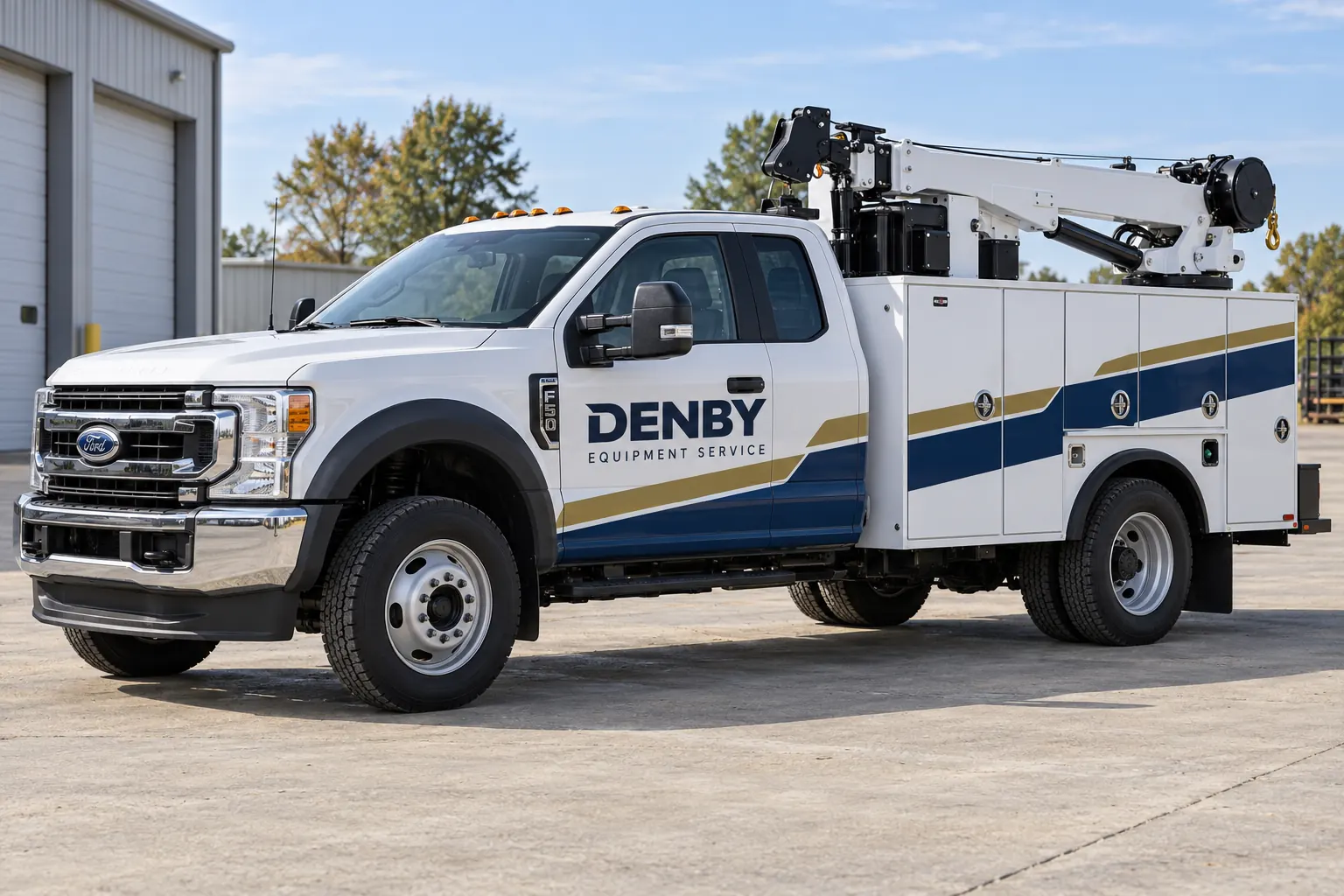
Original fictional commercial planning concept; not a completed customer installation.
List the vehicle body and equipment separately
Record the unit and actual service-body configuration, then identify the crane or relevant equipment reference through the responsible fleet contact. State which areas are proposed for graphics: cab, compartments, defined body panels or another explicit request. Do not let the phrase crane truck graphics imply that every equipment surface is included or suitable for treatment.
Provide current overall photographs and details of relevant compartment doors, handles, equipment mounts and existing graphics. Identify planned changes and known condition concerns. A shared chassis description does not establish the service body or equipment arrangement. Keep the actual vehicle, requested areas and supporting evidence connected so the provider can assess the right project.
Define the company message for the ordinary parked view
Choose the company name, accurate service descriptor and public contact action. Identify the ordinary relevant view in which the business wants that message understood. A service body can contain several competing visual elements, so decide what is essential before adding decorative themes or a complete list of capabilities to every available space.
The fictional Denby Equipment Service concept illustrates a restrained identity on a vehicle with a stowed service crane. It is not an operating arrangement, an equipment approval or a measured template. Your actual brief should explain the message and current configuration without inferring from the image that a particular area, spacing or treatment is appropriate for your truck.
Use equipment references supplied through the responsible process
Ask the fleet or equipment owner to identify instructions, labels and features relevant to the proposed graphics areas. Retain the applicable source and review contact. Do not ask the designer to decide which equipment information can be hidden, recreated or moved. Business artwork and equipment requirements should be linked in the project record while keeping their approval roles distinguishable.
If the relevant instruction or configuration is unknown, mark it pending. Do not fill the gap with a dimension or rule borrowed from another truck. The graphics brief can still identify the proposed coverage and open question. Its purpose is to give the appropriate reviewer a clear decision to resolve before dependent placement or work is treated as approved.
Collect relevant configuration evidence without directing operation
Use current views supplied through the company’s authorized safe process. Identify which ordinary parked configuration the photographs show and what they establish about visibility. Do not ask unfamiliar staff to deploy equipment, move loads or create a new operating position for a design review. Equipment access and handling remain within their actual responsible process.
Describe the visible message conflict factually. A stowed component may obscure a side area, or a compartment arrangement may divide the intended wording. Record the unit, view and message element involved. Keep those observations separate from any equipment clearance or technical question so the provider can discuss the visual objective without being asked to infer an operating requirement.
Review body compartments and proposed equipment areas distinctly
A coordinated service-body layout can share the company identity across several fixed panels while respecting the actual divisions. Provide the relevant door and latch details and ask the essential wording to be reviewed against them. Do not treat a service body as one uninterrupted rectangle or require a name to cross hardware simply to preserve an early concept.
If branding on equipment itself is requested, identify it as a separate proposed area needing actual review. Supply the relevant owner information and current references. Do not assume that a treatment discussed for the cab also establishes suitability for another component. Keep the provider’s actual available scope and any unresolved question clear before comparing proposals.
Define scope and release around the actual unit
List the requested areas, quantities and body versions. Ask how artwork adaptation, existing graphic work, condition assessment and installation arrangements are addressed. Identify the operational release contact and actual constraints. A desired date should remain distinct from an agreed project arrangement, particularly where equipment or other vehicle work remains pending.
If another truck is substituted, review its body, equipment and approved wording before treating it as the same request. Keep the relevant proof reference and actual unit visible at handoff. Similar company colors do not establish that every compartment, equipment arrangement or condition matches the original survey. Record any changed scope through the responsible project process.
Retain a traceable equipment-aware brief
Use the working record below to collect the unit and equipment references, proposed areas, photographs, supplied instructions, message concerns and review owners. Save the text and retain the actual supporting evidence through your normal project process. The record is an administrative layout handoff, not a technical clearance calculation, diagnostic tool or authority to operate or modify equipment.
For Pelican Wraps, send current photographs, approved identity files, requested coverage and the equipment-source record relevant to the proposed areas. Identify open decisions and release constraints. Use the broader service-body and fleet resources for the overall program. A focused brief lets the graphics discussion follow actual evidence while equipment requirements and business approvals remain with their appropriate owners.
Draft and Download Your Working Record
Draft your entry, then download a copy before leaving. Send any project decision through the communication process agreed with your supplier.
Frequently Asked Questions
Take the Next Step with a Clear Project Brief
Continue with the resource that matches your next decision:
- Service Body Truck Wraps
- Fleet Wraps
- Commercial Vehicle Photo & Measurement Guide
- Request a Quote
- Vehicle Wraps
Send the actual vehicle or surface photographs, quantities, approved brand files, requested coverage and timing constraints. Identify open questions so the project review can address your equipment and business needs.
