
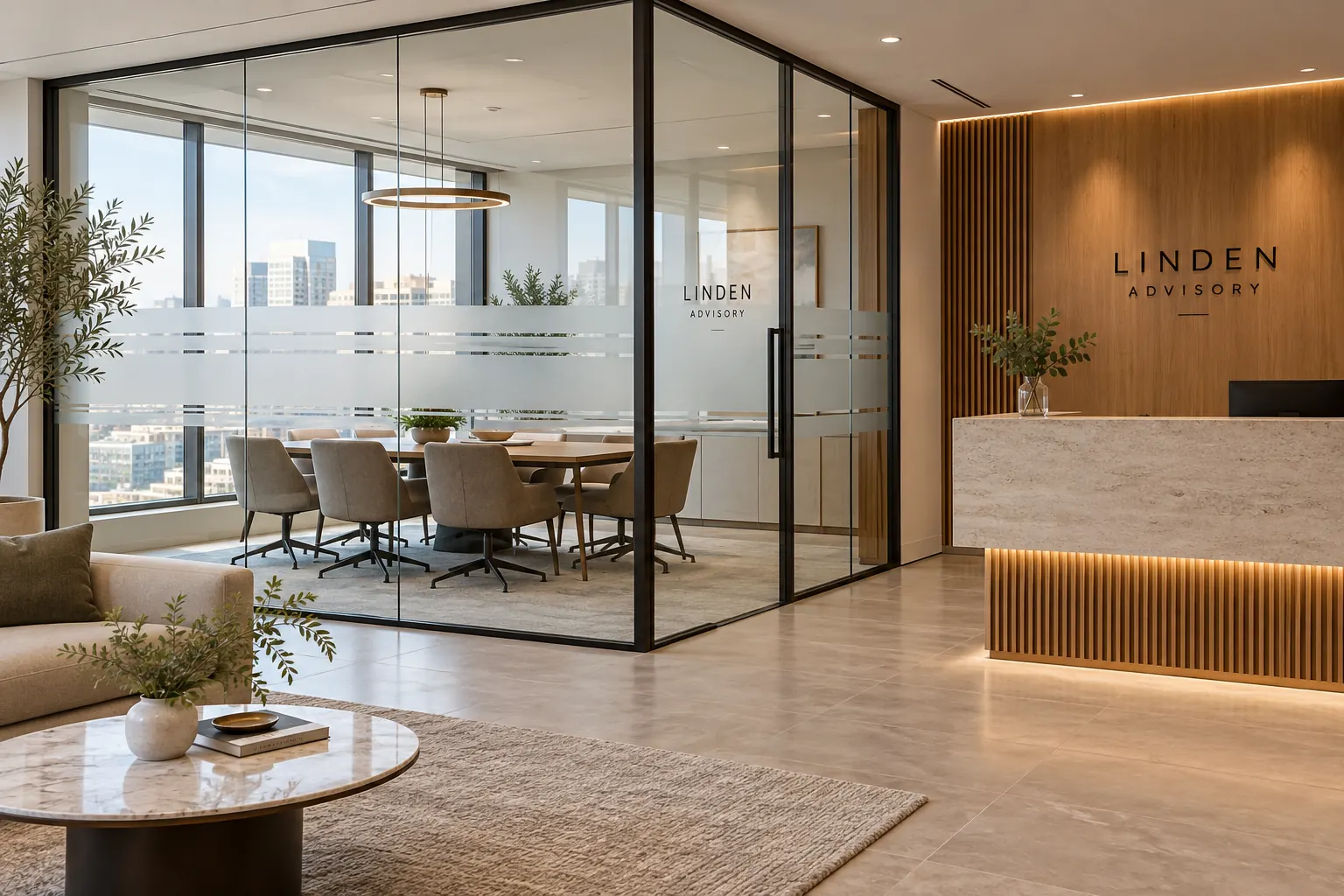
Fictional commercial graphics design concept; not a completed customer installation.
Start with the room problem instead of a film name
Describe what needs to change: sightlines into a meeting room, an exposed reception area, a distracting view or a particular light-management concern. Record where the observer and room occupants normally stand or sit. A film selected only from an attractive sample may not address the actual reason the project began.
Separate essential functional needs from preferred appearance. A decorative privacy band and a whole-window light-control treatment serve different purposes. Note the areas that should remain visually open and the business activities that need screening. This gives the product review a concrete brief and prevents the project from treating every architectural film as one general solution to privacy, glare and other unrelated concerns.
Distinguish decorative privacy from other film categories
Architectural window films include different product families. The 3M architectural light-control overview distinguishes light-management options and decorative privacy appearances. Review the current product information for the specific proposed treatment rather than extending one category description to every available film.
Do not treat a decorative frosted design as a security system, an energy-saving calculation or a guaranteed one-way view. If the brief involves a technical performance requirement, state it explicitly and establish the appropriate specialist and product review. Keep the proposal clear about the actual selected product, application and supported scope. Appearance alone cannot demonstrate a performance outcome for a particular building.
Create a glazing record for the actual property
Label each pane or glass area in a photograph and record its dimensions. Include doors, partitions, frames and existing film. Supply available glazing specifications, building records and any relevant warranty or property-management requirements. Mark unknown details for resolution rather than guessing the glass construction from a photograph.
Product compatibility should be reviewed against the real glazing and application conditions before installation is finalized. Identify access to the relevant glass surfaces and any restrictions in occupied rooms. For several offices or floors, keep a room and pane schedule so the proposed product and coverage can be traced to each location. One meeting-room image cannot establish that every pane in the building has the same construction or use.
Review sightlines, lighting and coverage together
For privacy planning, identify which view should be screened and the height and width of the area involved. Review the room from its ordinary occupied positions and from outside. A band can be visually effective in a rendering while leaving an unintended sightline from a seated position or an adjacent corridor.
Discuss appearance under the relevant lighting conditions and review suitable samples where needed. Avoid approving a whole property from a small digital color swatch. Record any clear areas needed for visibility or other building requirements and have the responsible property contact review them. A measured coverage drawing gives the final approver a more useful basis than a general request to frost all the glass.
Coordinate decorative film with the business identity
A restrained logo or pattern can connect meeting rooms and reception without turning every glass partition into advertising. Use the approved business identity and keep critical wayfinding information clear. If the main objective is promotional storefront messaging, use the separate commercial window graphics page to plan that design scope.
For interior identity across several surfaces, consider how the glass treatment relates to wall murals and reception graphics. Each surface needs its own technical and layout review. Maintain one artwork record and identify which elements are shared across rooms. This helps future additions match the accepted design without assuming that all glass sizes and sightlines are identical.
Define approval, access and technical responsibilities
Name the person who approves appearance and the responsible property contact who supplies the glazing information and consent. Where a technical requirement is involved, identify the person who accepts the product selection against that requirement. Resolve those responsibilities before treating an attractive sample as a complete approval.
Record business hours, room availability, furniture or access restrictions, existing-film removal and the target schedule. Ask the proposal to identify the selected product, coverage, preparation and installation scope. Keep uncertain glazing or property requirements visible as dependencies. A quoted decorative treatment should not silently expand into an assurance about security, thermal performance or building compliance that has not been assessed for the job.
Keep a pane-by-pane record for care and future changes
Retain the installed product reference, pane schedule, accepted pattern, coverage dimensions and care information supplied for the chosen system. Photograph the finished arrangement and identify the location in each record. These details support future room changes and prevent a replacement order from relying on a discontinued draft or an approximate memory of the privacy band.
Report damage, edge changes or glazing concerns with the pane reference and current photographs. Removal or replacement expectations should be reviewed against the product and property conditions. For an initial project, send a commercial glass film brief describing the room problem, glazing information and desired appearance. The applications overview provides related commercial graphics options when the project includes other surfaces.
Frequently Asked Questions
Turn Your Project Details Into a Clear Brief
Send current photographs, quantities, logo files, dimensions and timing. Identify existing graphics, required specifications and surface concerns so the review can address the actual equipment or site.
Explore planning resources or request your commercial graphics quote.
