
Vehicle Wrap Materials & Installation Planning
The film name alone does not define a commercial wrap. The printable film, adhesive, ink, laminate, vehicle finish and installation conditions must work together. Use this guide to ask better questions before approving a fleet graphics specification. Pelican Wraps can review your vehicles, intended coverage and operating requirements from Harvey, Louisiana.
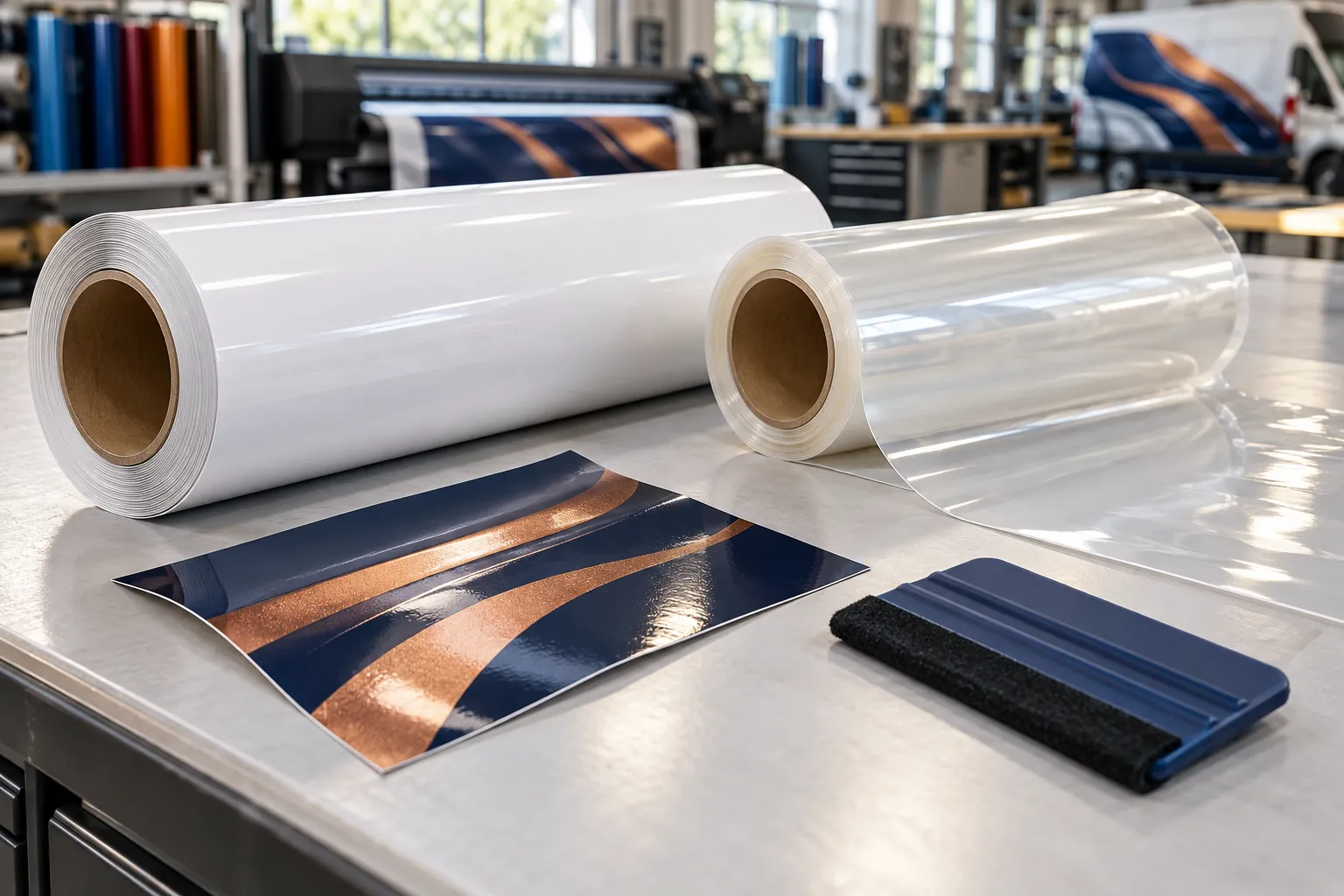
Illustrative materials scene; not documentary shop photography.
Specify the application before choosing the film
Begin with a vehicle list and photographs rather than a favorite product name. A flat trailer side, a deeply recessed cargo van panel and a compound boat hull are different surfaces. Record the body material, paint condition, existing graphics and hardware. Identify where the graphics will stop, which panels require an appearance change and whether the job includes window film or reflective elements.
Write down the intended use as well. A temporary promotional graphic and a long-term fleet identity ask different questions about removability, appearance and replacement. The goal is a suitable documented specification, rather than the same material on every surface simply because it is familiar.
Treat printable film and laminate as a system
Printed commercial graphics commonly combine an image-bearing film with a protective overlaminate. Ask for the proposed film and laminate names in the estimate, including the intended finish. Compatibility matters: a product described as premium does not automatically make it appropriate for every ink system, contour or exposure.
When comparing proposals, compare the whole assembly and application. A material warranty, print-system warranty and installation commitment may cover different issues. Keep the actual product information with the approved proof and invoice so future additions or repairs can be evaluated against the original specification.
Cast, calendared and specialty products
Cast and calendared describe manufacturing approaches; they are starting points for discussing performance rather than complete project specifications. Product families differ, and individual bulletins define approved surfaces and installation methods. Ask why a proposed film suits your vehicle’s shape and planned service.
Reflective films, perforated window films and architectural products belong in separate parts of the scope when used. Do not assume a matching color means identical handling, visibility or maintenance requirements. Review safety markings and window restrictions with the responsible vehicle owner before incorporating those areas into the design.
Inspect the paint before covering it
Film follows the surface underneath it. Rust, dents, peeling clear coat, unstable repairs and textured coatings require inspection and may change or limit the work. A wrap is a graphic finish, rather than a substitute for repairing an unsound substrate. Photograph questionable areas and identify previous repainting when requesting a quote.
For fresh paint, obtain the coating manufacturer’s curing requirements and tell the installer which paint system was used. A surface that feels dry may still need additional curing before graphics are suitable. Avoid choosing a universal waiting period from an unrelated vehicle or an online comment.
Plan around seams, rivets and working hardware
Bring close photographs of hinges, rivets, roll-up doors, latches, refrigeration units and access panels. Those details influence panel layout, trimming and the boundaries of the printed message. Place important words where they remain readable when the equipment is used normally.
A fleet proof should show more than an attractive uninterrupted side rectangle. Review the rear, cab and both sides, and identify different body versions. For equipment that changes between closed and operating positions, include both states. The artwork and production plan should reflect those differences before the vehicle arrives.
Make installation and handover part of the specification
Agree on vehicle arrival condition, removal responsibilities, available access and the approval contact. Identify whether old adhesive, accessories or damaged paint need additional review. Keep installation timing separate from artwork approval so a late proof does not become an unexpected vehicle outage.
At handover, keep care instructions for the actual installed material and record any areas excluded from coverage. For a fleet, retain unit numbers, installation dates, approved files and product references. This record makes a later repair or additional vehicle a defined follow-up rather than a new investigation.
Use manufacturer instructions for the specific product
Manufacturer guidance is useful for confirming material selection, preparation and care. It does not establish that a particular business holds an installer certification, and this guide makes no such certification claim. Ask for current documentation when certification or a named warranty is required in your procurement process.
Read the 3M fleet-film selection overview and the Avery Dennison technical-information library. The selected product’s current bulletin should guide project-specific decisions. For budgeting, continue to the commercial wrap cost guide; for preparation, use the vehicle preparation guide.
Frequently Asked Questions
Turn Your Vehicle Details Into a Clear Project Brief
Send current photographs, vehicle quantities, logo files, coverage preferences and timing. Identify old graphics and paint concerns so the project review can address the actual equipment.
Explore planning resources or request your commercial wrap quote.
