
Box-Truck Fleet Rebrand: A Planning Example for Different Body Lengths
This educational scenario shows how a fictional logistics identity could be organized across different box-truck bodies. Follow the decisions and records that make a repeatable rebrand; the illustration does not document a completed customer installation or measured result.
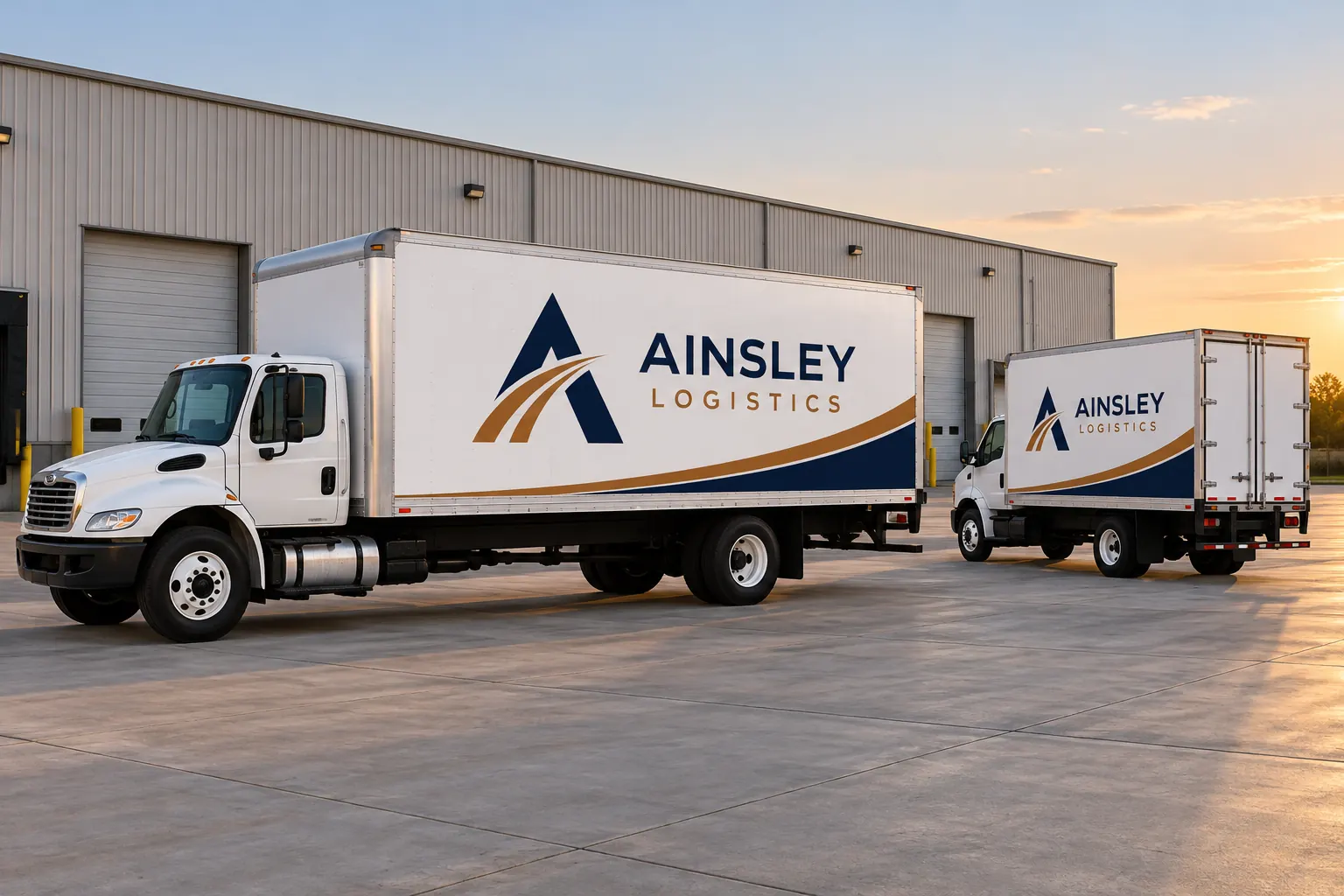
Fictional project-planning illustration; not a completed customer installation or measured project result.
Scenario: one identity, more than one usable box side
Consider a buyer replacing an inconsistent identity across long and short box bodies. The working objective is a recognizable company name and coordinated graphic language, while fitting each actual face. The fictional Ainsley Logistics illustration shows the design idea, not a surveyed fleet, confirmed quantity or installed project.
The first project decision is which vehicles genuinely repeat. Ask for body dimensions, overall photographs and details of seams, rails, doors and liftgates. Keep the cab identity and cargo-body identity in the same brief, with their coverage stated separately. The buyer can then commission an organized rebrand rather than request one large file that happens to look attractive on the longest truck.
| Decision | Record to retain | Purpose |
|---|---|---|
| Body configuration | Length, height, side construction and rear equipment | Assign the actual units to the correct fitted sheet. |
| Identity hierarchy | Lead name, supporting message and contact action | Adapt spacing without distorting the master identity. |
| Starting condition | Old graphics, repairs and unresolved surface questions | Define removal and readiness before release. |
| First configuration acceptance | Approved dimensions, layout version and operator clear areas | Record which decisions can repeat and which remain open. |
| Later unit handoff | Unit reference, accepted sheet and installed photographs | Support a new body or damaged-panel review. |
Create configuration groups before drawing the master layout
Build a schedule with unit reference, body length and height, side construction, rear-door type and relevant equipment. Label each photograph and distinguish measurements that are estimated from those verified for production. A short box with a liftgate may need a different rear sheet even when its side design resembles a longer unit.
Use the inventory worksheet to keep the grouping practical. Select a representative survey for each genuine configuration and retain the exceptions. Do not let the largest body become the accidental standard for everything else. The accepted group map tells the designer what can repeat and tells the buyer where additional fitting or condition review is needed.
Keep the name hierarchy while adapting the composition
Choose the company name as the lead element and define the supporting service or contact message. On a shorter side, rearrange clear space and supporting graphics rather than stretch or compress the master logo. On a longer body, use the additional area deliberately without adding so much copy that the fleet stops looking like one identity.
Review the actual side and rear faces as separate reading tasks. Use box-truck standards to connect shared identity with fitted placement. A consistent system can have different panel boundaries and spacing while retaining the same recognizable hierarchy. The useful acceptance question is whether each layout performs its role on its own equipment, not whether every background stripe occupies an identical percentage.
Separate old-identity removal from the new graphic scope
Collect photographs of current graphics, paint concerns and known body repairs. Identify which units have older identity versions and where the available records are incomplete. The removal and readiness scope may differ across the fleet even when the proposed new appearance is consistent. Keep those starting conditions attached to each group or exception.
Compare box-truck coverage using the actual named material proposal and body-detail review. Ask the commercial response to distinguish removal, preparation, design, production and installation where relevant. The planning example does not assume all old graphics can be covered or every panel is ready; those are decisions to resolve from the actual vehicles before release.
Use the first configuration review to close repeat questions
Choose the first actual configuration for a complete fit, text and scope review. Confirm the body dimensions, critical wording, protected equipment and product assumptions before treating its file as repeatable. If the review changes spacing or coverage, update the configuration standard and record the accepted version before later units use it.
This is a decision gate, not a promise that the first unit will establish every possible exception. Keep other body types open until their own relevant questions are checked. Have the brand contact approve appearance and the operational contact approve unit data and clear areas. A concise record of what was accepted is more useful than an email saying the trucks look good without identifying which layout it concerns.
Phase the release around working truck availability
Ask the operator which trucks can leave service together and who controls transport and access. Record proposed windows by unit or batch and identify removal, repair or artwork dependencies. Use the release planner to connect proposed windows and outstanding dependencies in one record.
Keep target dates separate from supplier-confirmed availability. If the first configuration review is incomplete, do not label every later batch ready simply to preserve an early calendar. The rollout should connect available trucks, approved files and suitable starting condition. That makes a schedule change understandable and helps avoid sending a differently equipped unit against the wrong production instruction.
Retain a rebrand standard that supports the next truck
At handover, connect each unit to its accepted configuration sheet, artwork version, product reference and installed photographs. Record which faces changed and any relevant exclusions. When a new body length joins the fleet, review it as a new fit question instead of assuming the nearest existing file can be resized without consequence.
For a similar enquiry, send the box-truck rebrand brief with the inventory, current identity, photographs, proposed coverage and release constraints. Browse other planning scenarios if the fleet problem is different. The desired output is a clear repeatable record and accepted commercial scope; this example makes no claim of completed work, reduced downtime or measured lead growth.
Frequently Asked Questions
Plan a Similar Project with Your Actual Equipment
Send current photographs, vehicle quantities, logo files, coverage preferences and timing. Identify old graphics and paint concerns so the project review can address the actual equipment.
Explore planning resources or request your commercial wrap quote.
